Every records manager eventually asks the same question about RFID:
What will it cost?
The honest answer is that it depends on the size of your archive, the number of doors and rooms you want to monitor, and how much automation you need. It is also far more affordable than most teams expect, especially when you plan it in phases.
This guide breaks down the real cost of implementing RFID for document archives, shows where the money goes, and explains how to judge the return before you commit.
The Short Answer
An RFID file tracking deployment can start at a few thousand dollars for a small office. Enterprise installations with multiple readers, sites and thousands of tags cost more. Across the wider RFID industry, a system can start around $5,000 at the low end and reach hundreds of thousands of dollars at the high end, scaling with readers, antennas, tags and deployment scope.
For archives, the useful question is what you will save in staff time, audits, lost files and compliance risk. Cost per file is the number to work out.
What You Are Actually Paying For
1. RFID tags and labels
Every folder, box or archive carton needs a tag. This is usually your largest line item by volume, though it is a small cost per file. Printed passive UHF labels run roughly $0.08 to $0.25 each, and price falls with quantity. Labels priced at $0.15 to $0.25 at 1,000 units can drop to $0.04 to $0.07 at 100,000 or more. Jumping from small batches to 10,000 units can cut the per-tag cost roughly in half.
Tags can go on folder fronts, side tabs or top tabs. Combined RFID and barcode labels can be printed with your own unique ID and folder data, so one label does both jobs.
2. Readers and antennas
- USB desktop reader for check-in and check-out at a counter. This is the lowest-cost entry point, and it can scan single folders or stacks, boxes and carts at once.
- Fixed readers and antennas at file-room doorways for passive tracking. Fixed UHF readers commonly cost $1,500 to $3,000, and antennas add about $50 to $300 each.
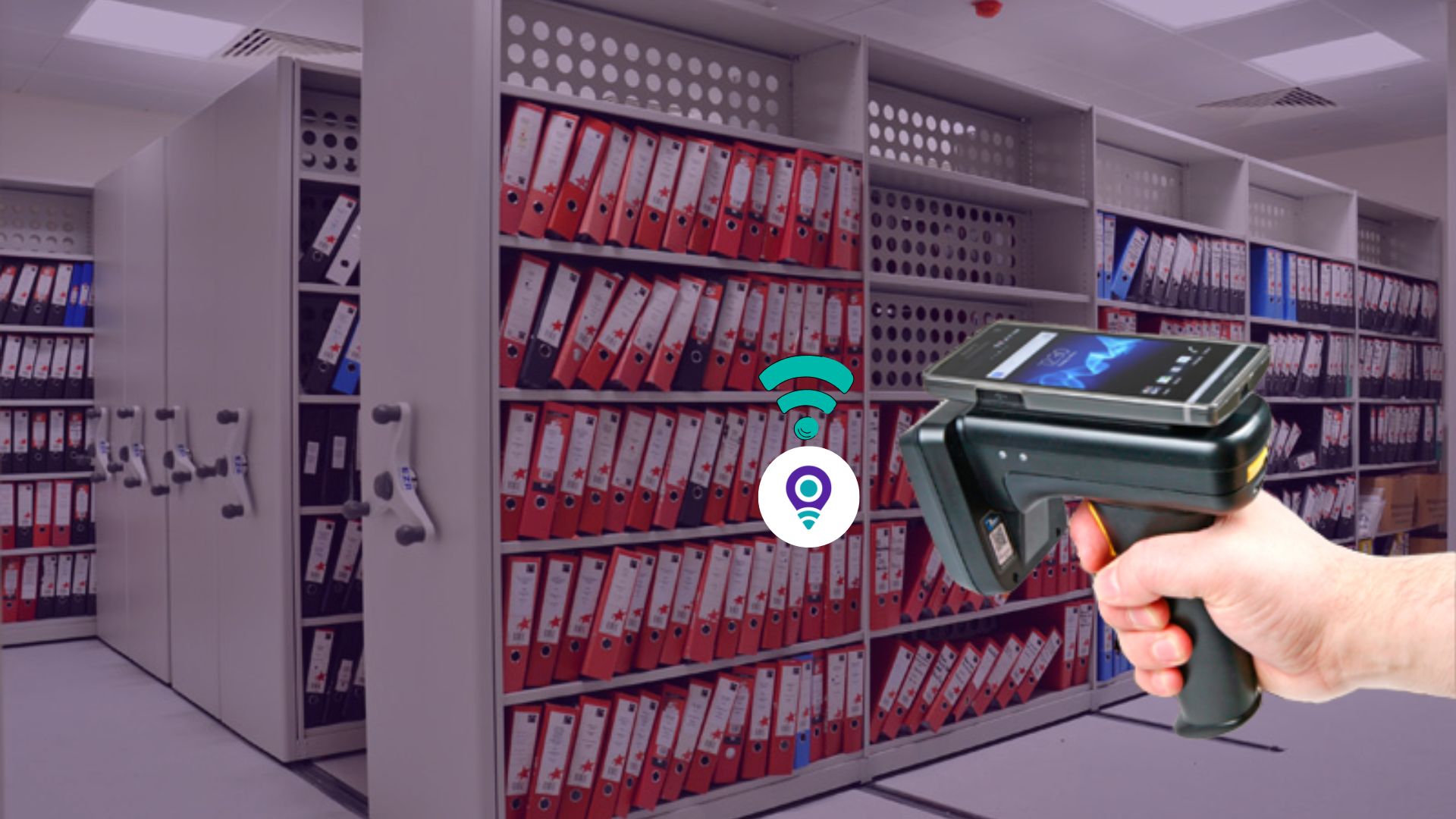
- Handheld mobile scanners for inventory and Find-a-File searches. Handheld readers typically cost between $500 and $2,500.
3. Label printers and encoders
If you want to print and encode your own labels in-house, industrial RFID printers generally cost $1,500 to $5,000. Buying pre-encoded labels on rolls avoids this cost.
4. Tracking software
Software is what turns tag reads into answers: where a file is, who has it, when it moved. Look for a platform that covers file check-in and check-out, parent-child relationships between documents, files and archives, user privileges, retention scheduling, task lists and a complete audit trail. Software is usually a licence or subscription. Confirm whether reports, users and locations are unlimited or charged separately.
5. Installation, integration and training
This covers mounting antennas at doorways, network connections, importing your existing records index, and training staff. Integration with an existing case or records management system can raise the project cost, but it also removes double data entry.
6. Ongoing costs
Budget for software support or subscription, occasional tag replacement, and periodic audits. Most RFID file tags are reusable. When a folder is retired, the tag can be re-encoded and reassigned, which lowers long-term cost.
Illustrative Hardware Budget by Archive Size
These are order-of-magnitude examples built from the ranges above. They are not a quote, and they exclude software and installation.
| Small office | Mid-size archive | Large / multi-site | |
|---|---|---|---|
| Files/boxes | Up to ~5,000 | ~25,000–50,000 | 100,000+ |
| Tags (at ~$0.05–$0.25) | ~$250–$1,250 | ~$1,250–$12,500 | ~$5,000–$25,000+ |
| Readers | USB desktop reader | USB reader, 1–2 doorway readers, 1 handheld | Multiple doorway readers, several handhelds |
| Best fit | Barcode/RFID check-in and check-out | Passive doorway tracking and audits | Real-time tracking across rooms, floors and sites |
The pattern is that tag cost grows with volume but stays small per file, while reader cost grows with the number of doors and rooms you want to automate.
The Hidden Costs Teams Forget
- Tagging legacy files. Applying labels to files already in the archive takes staff or contractor hours. Do this in stages, starting with active and high-risk files.
- Data clean-up. A tracking system is only as good as the index behind it. Duplicate IDs and inconsistent naming should be fixed before you import.
- Site preparation. Doorway antennas need network access, power and sometimes alarms, lights or cameras.
- Change management. Staff must check files in and out consistently, so allow time for training and a short pilot.
RFID vs. Barcode: The Cost Trade-Off
Barcode file tracking is cheaper to start. RFID hardware can cost 5 to 10 times more than barcode equipment up front. The difference is in how each one is read. Barcodes need line-of-sight and one scan at a time. RFID tags can be read automatically and simultaneously, even when files sit inside boxes or cabinets. That means faster audits, batch check-in and check-out, and true real-time visibility.
You do not have to pick one for good. A hybrid approach lets you start with USB barcode scanning at desks and counters, then add RFID doorways and handheld scanners as the archive grows.
Where the Return on Investment Comes From
RFID pays back through savings you can measure:
- Faster retrieval. A handheld Find-a-File scanner reads from 20 feet or more and can check a work area in under 30 seconds. Searches that took hours can take minutes.
- Quicker audits. Inventory files-in-circulation by walking the room with a scanner, not by checking shelves by hand.
- Fewer lost or misfiled records. Every movement is logged with time, date, location and person, so there is an audit trail when a file goes missing.
- Loss and security prevention. Doorway antennas can trigger alarms, lights, email or SMS alerts when an unauthorized file approaches an exit.
- Compliance. Automated retention scheduling and a complete history support legal, government and healthcare requirements.
As a rough guide for asset tracking programs generally, organizations with more than 5,000 tracked assets typically report full ROI within 12 to 18 months. Your own payback depends on file volume, how often files move, and how much time staff spend searching today.
A simple way to estimate it:
Annual savings =
(hours spent searching and auditing per year × loaded hourly cost) + (cost of lost-file incidents avoided)
Compare that with your first-year cost of tags, readers, software and installation.
How to Keep the Cost Down
- Start with a pilot. Tag one department or record series and measure the results before scaling.
- Prioritize by risk and value. Tag active, sensitive and frequently moved files first.
- Buy tags in volume. Per-tag cost falls sharply as order size grows.
- Reuse tags. Re-encode and reassign tags when folders are retired.
- Place antennas where they matter. Doorways, exits and high-traffic zones give you the most visibility for the least hardware.
- Use handhelds before fixed infrastructure if your archive is a single room.
Proof from the Field
- Elanco Animal Health tracks batch record folders, with roughly 70,000 records at its initial site, and moves inactive folders into archives for box tracking.
- Shelby County Sheriff’s Department tracks about 25,000 warrant jackets a year with color-coded labels and USB scanners for check-out and check-in.
- Nationwide Title Clearing combines printed RFID/barcode labels, USB scanning, doorway antennas and mobile inventory to find missing files.
Frequently Asked Questions
It depends on the number of tags, readers and the size of your archive. Small offices can begin for a few thousand dollars, and enterprise installations with many readers and thousands of tags cost more. The return comes from labor savings, faster audits and fewer lost files.
Yes. Most can be re-encoded and reassigned when a folder or box is retired.
No. Many organizations tag high-value or high-risk files first, and use barcodes for the rest.
Yes. Ultra-thin adhesive tags can be applied to single pages or sleeves for item-level tracking.
Get an Accurate Quote for Your Archive
The fastest way to a reliable number is to share five details: total files and boxes, number of rooms or sites, how many doorways you want to monitor, whether you have a case or records system to integrate, and your target go-live date. With those, a records tracking specialist can size the tags, readers and software for your exact archive.
Get an Accurate Quote for Your Archive
The fastest way to a reliable number is to share five details: total files and boxes, number of rooms or sites, how many doorways you want to monitor, whether you have a case or records system to integrate, and your target go-live date. With those, a records tracking specialist can size the tags, readers and software for your exact archive.