Document Management System for Banks with RFID and Barcode Tracking Technology
Banks handle millions of critical documents – Loan files, KYC dossiers, title deeds, compliance records.
IoTFileTracker document management system for banks brings real-time RFID intelligence to every file, every shelf, every movement.
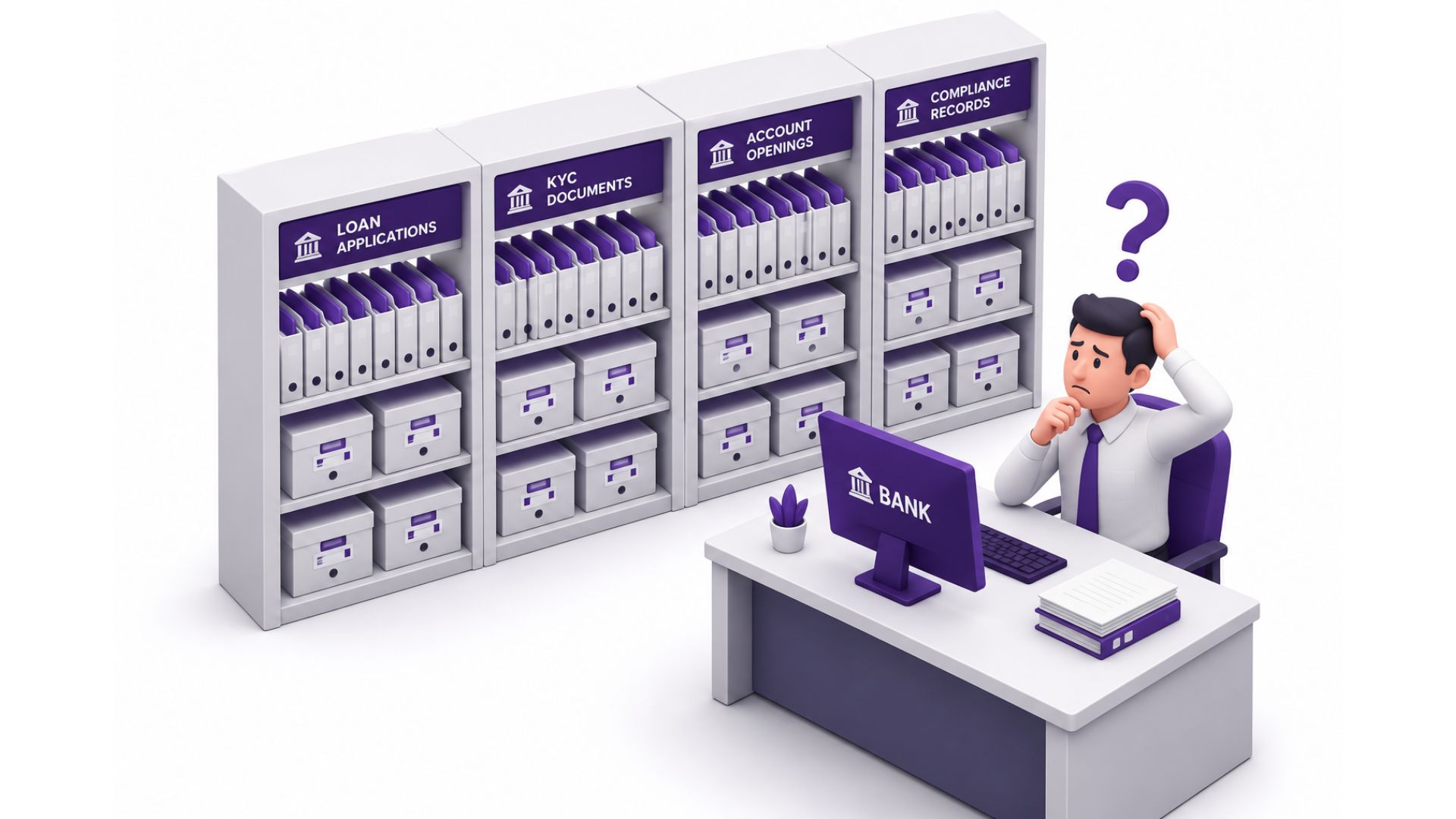
Banks receive a huge amount of physical documents each day. They handle loan applications, KYC documents, account applications and compliance documents. Every file passes through the departments to be verified and approved. Employees monitor files by manual records and file folders. However, many banks still depend on physical records for audits and regulations.
- Why do banks still use paper file tracking systems?
- How do banks track physical documents across branches?
These are some of the questions that come up in day to day operations. Additionally, file folders provide a sense of familiarity and control when conducting audits. Teams handle customer requests, by finding files fast and updating records. Before final approvals, managers review files which slows down processes. Many banks now explore a document management system for banks to improve efficiency.
Nonetheless, the transition to digital systems is still a challenge among many banks. Legacy workflows, compliance risks, and training gaps slow adoption.
- What can banks do to enhance file tracking efficiency?
- What is the best document tracking system for banks?
These long tail searches indicate the actual real operational problems. Moreover, approvals go through numerous checkpoints, which boosts file movement. The staff liaises with the departments to handle customer inquiries and record status. Consequently, service quality and productivity are affected by delays. Thus, banks require improved file management and tracking systems to save time and minimize errors.
What is document management system and How its useful for banks?
- A document management system for banks organizes and tracks physical and digital records. Banks handle loan files, KYC documents, and compliance records daily. Therefore, teams need structured access and fast retrieval.
- A document management solution for banks improves workflow visibility across departments. The staff handle file circulation and document circulation among the verification and approval teams.
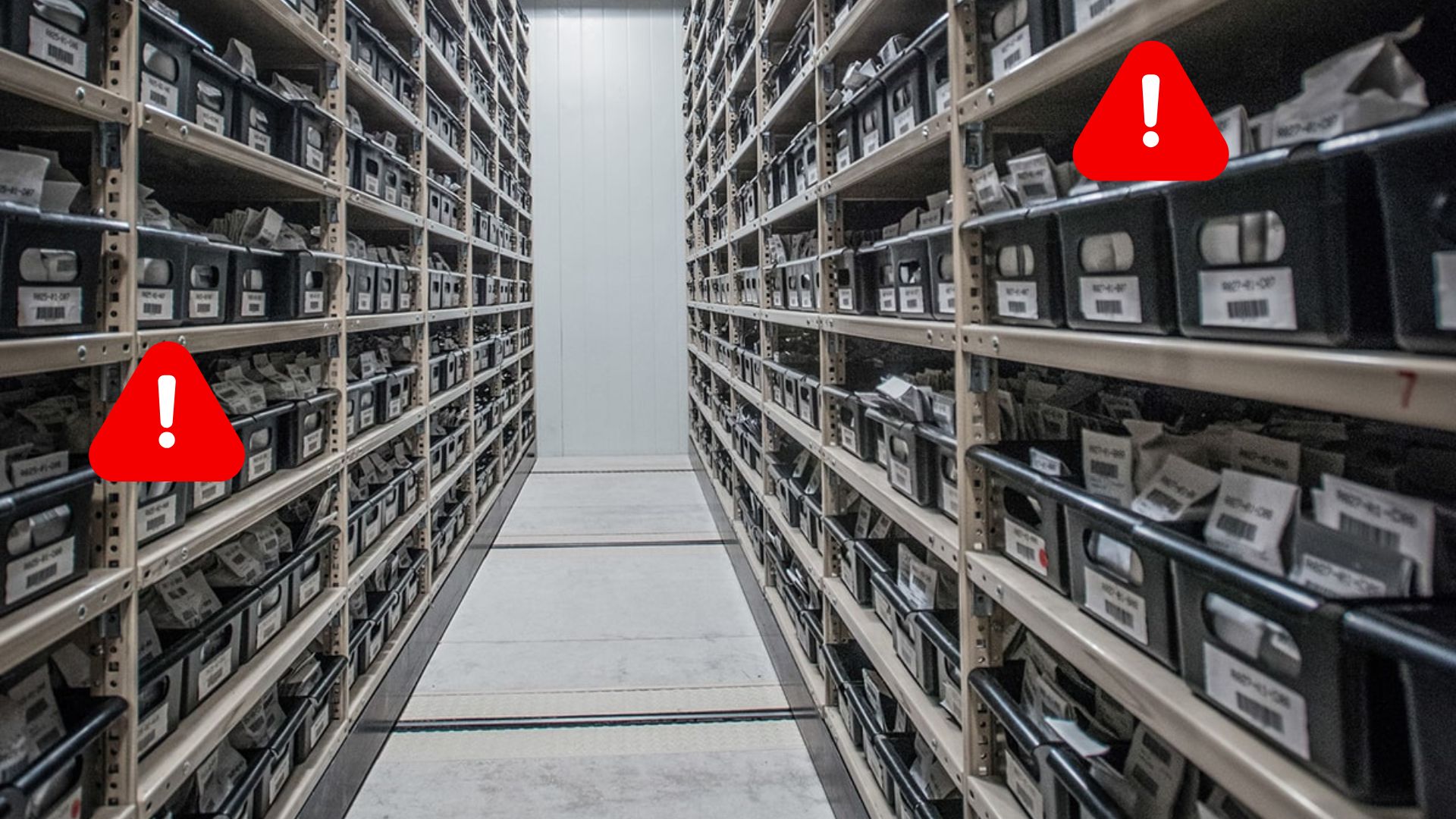
- However, many banks still use manual file management. This slows the operations and adds more delays. How to track documents efficiently remains a common banking challenge.
- The system improves real-time file tracking across branches. It also enhances records management to facilitate audits and compliance.
- Document management for banks supports structured workflows and approval processes.
- The files flow through verification analysis and ultimately approval process. Managers can track status and approve documents without physical dependency. However, banks still face issues with issue tracking document processes. Staff often ask how to track documents during high workloads.
- What is the best document management system for banks with compliance features? This is a common search among banking professionals. Moreover, a modern document management system for banks reduces errors and improves access speed.
- It replaces manual processes with structured tracking. Consequently, banks enhance efficiency and compliance, records management in business operations.
How Barcode and RFID Systems Help in Document Management System for Banks
- A barcode system refers to a system that utilizes printed labels to identify and trace each physical document in real time. It strengthens document management for banking by improving file identification.
- Banks attach barcodes to loan files, KYC records, and compliance documents. Employees individually scan files as they move through.
- Thus, the system changes the location in real time. Moreover, a barcode document tracking system reduces manual errors and improves accuracy. It supports a document tracking system with barcode for fast retrieval and updates.
- Moreover, audit control and accountability are enhanced through barcode scanning. Departments track files across branches with better visibility. Consequently, banks minimize delays and enhance operational efficiency.
- RFID is a system that employs radio frequency tags which are used to track and identify documents without manual scanning. It improves document management for banking with automation and real-time visibility.
- Every file is uniquely identified by an RFID tag. Staff scan multiple files without contact. As such, banks facilitate real time file tracking across departments.
- Furthermore, RFID document tracking system enhances security and control of sensitive records. It supports a document tracking system using rfid for faster processing. Moreover, RFID minimizes manual reliance and enhances compliance.
- Consequently, banks experience quicker approvals, increased precision, and enhanced document management.
Securing Chain of Custody, Audit Readiness, and Asset Protection
In the banking sector, physical documents – including Loan Origination Files, KYC Documentation, Mortgage Deeds, and Compliance Certificates – are high-value assets. Mismanagement of these records leads to regulatory fines, compromised audits, and “Time-to-Funding” delays.
IoTFileTracker provides a military-grade tracking ecosystem designed to bridge the gap between physical paper and digital accountability.
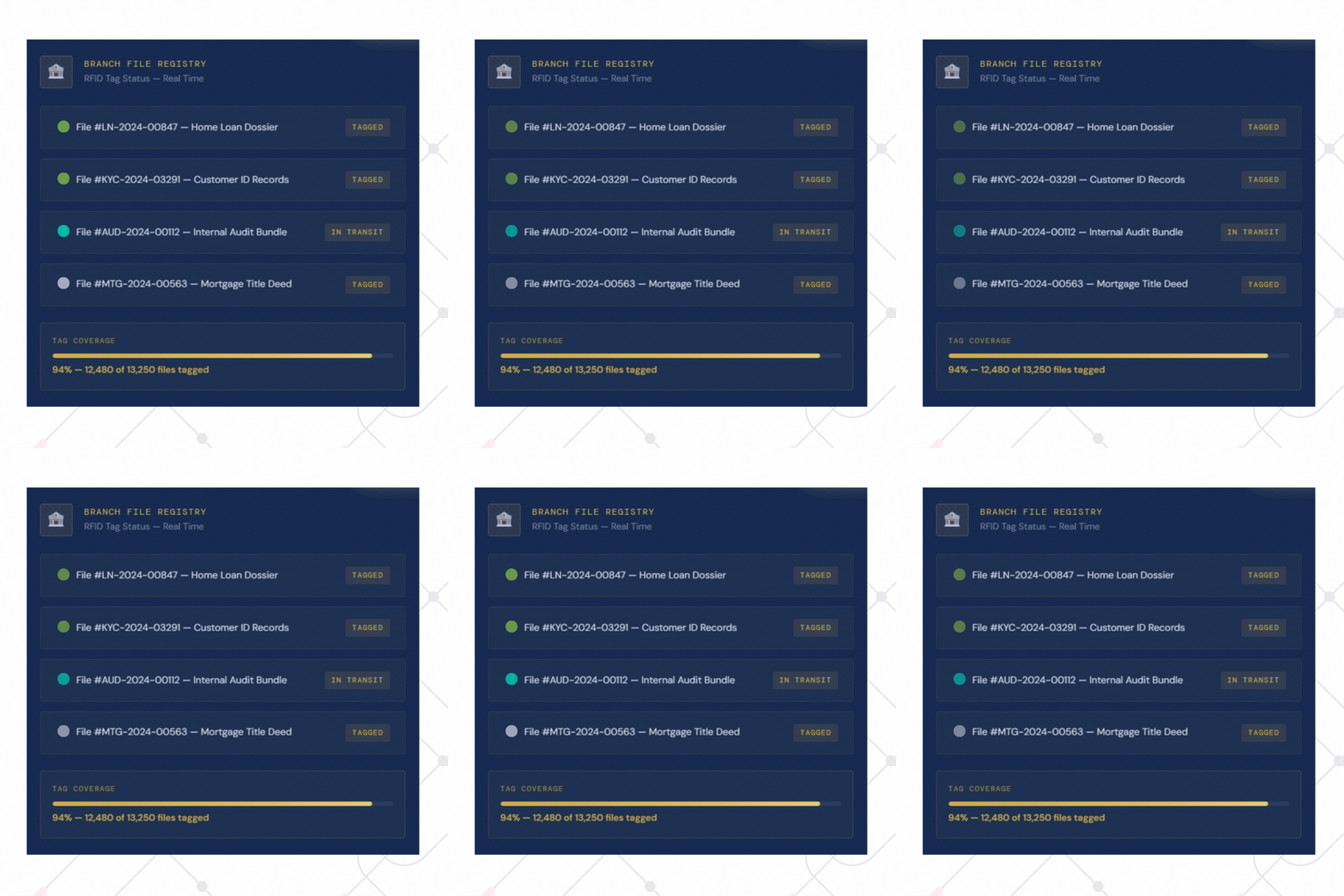
Tag Every File. Know Every Location.
Banks generate thousands of physical records daily — loan applications, collateral documents, audit files. With RFID and barcode tracking technology, every file in your branch or archive becomes a tracked, intelligent asset.
Dual-Technology RFID + Barcode
Each file gets a durable RFID tag and barcode label, enabling passive check-in/check-out at doorways and manual scanning at desks — the most cost-effective combination for banking environments.
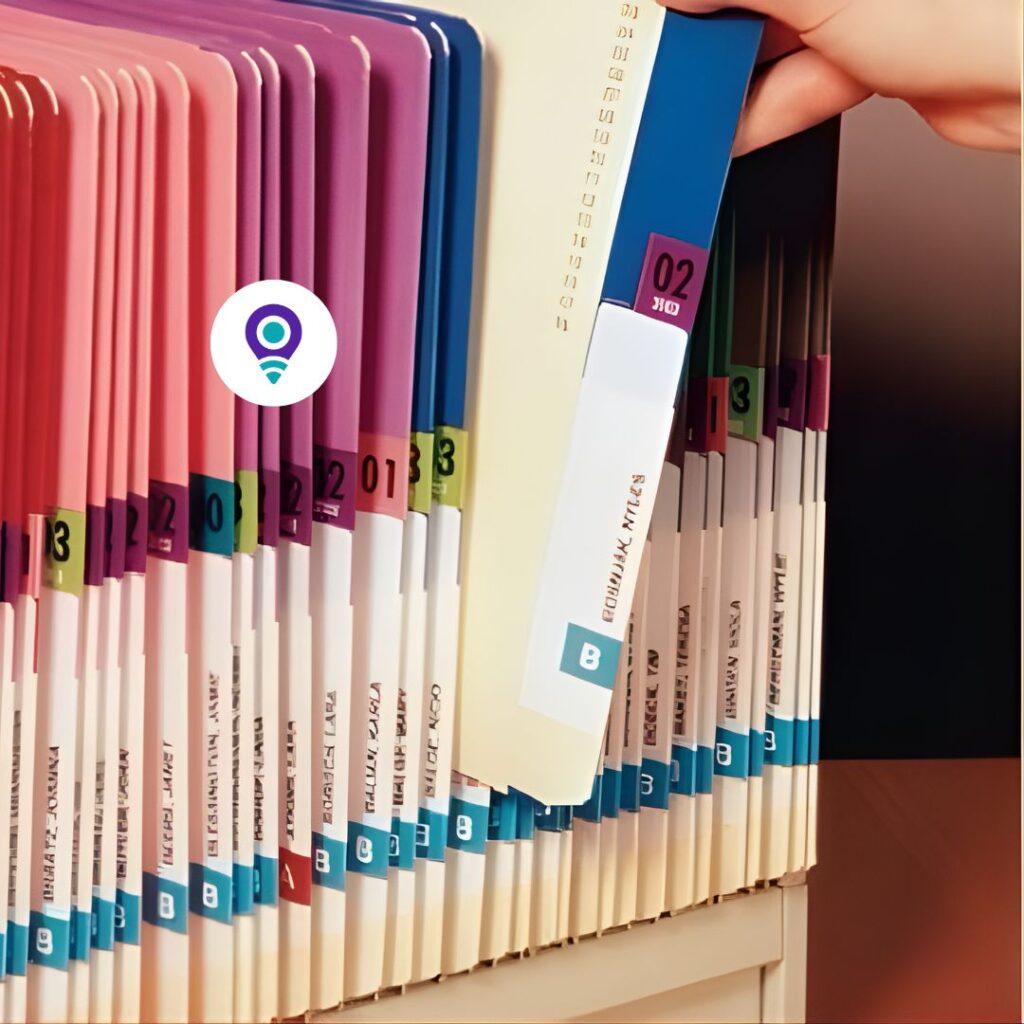
Color-Coded File Intelligence
A proprietary color algorithm assigns unique hues to each digit and letter in your file ID. Staff locate the correct file visually — faster than reading numbers — cutting retrieval time by up to 40%.
Sub-Folder Granular Tracking
Complex banking files (e.g., loan dossiers) often have multiple sections. Track each section independently – “File 1001-A: KYC”, “1001-B: Collateral” – for detailed level visibility.
Hybrid Physical + Digital Records
Attach scanned digital copies directly to each physical file’s database record. When staff query a file’s location, they simultaneously access its digital counterpart in one unified interface.
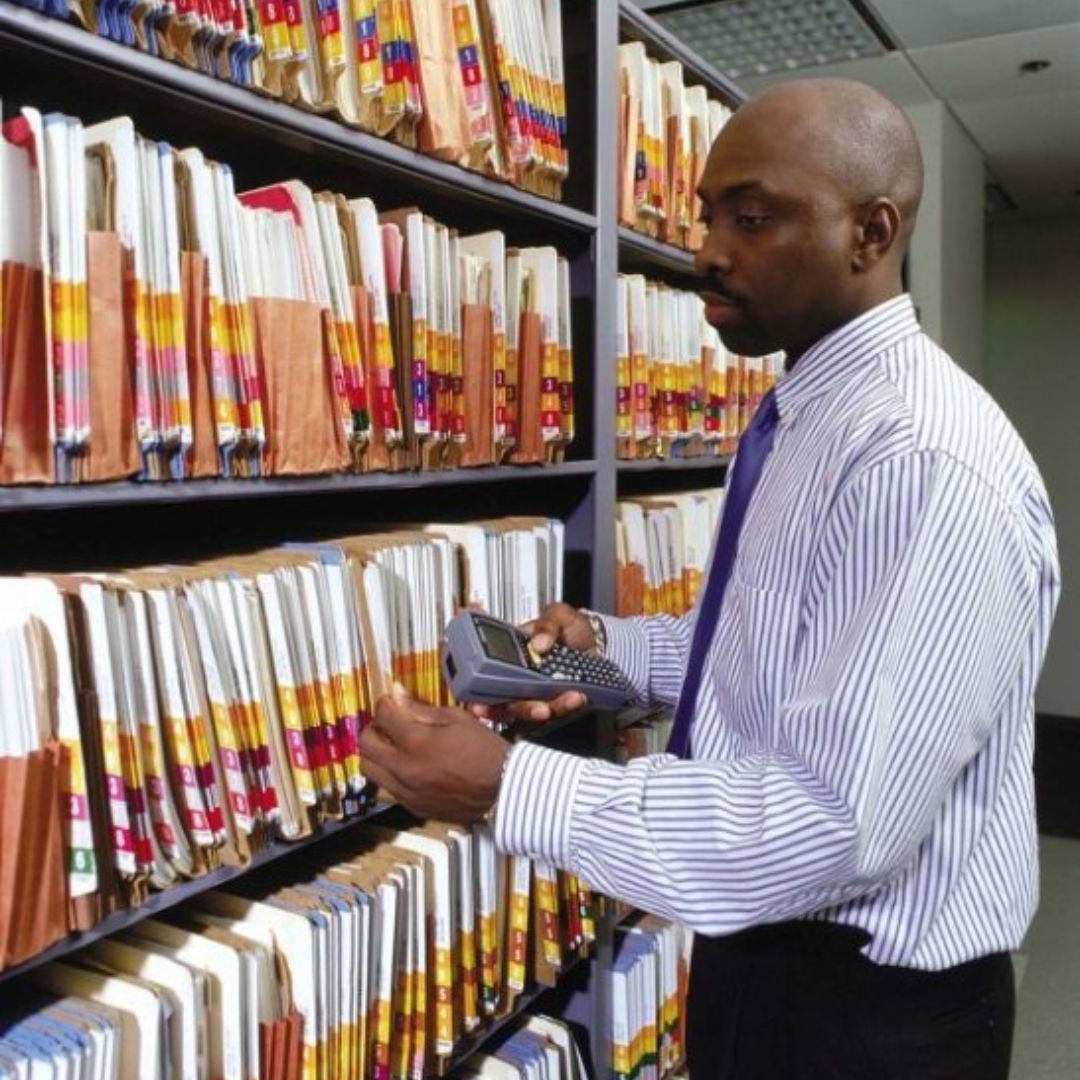
Locate Any File Within Seconds.
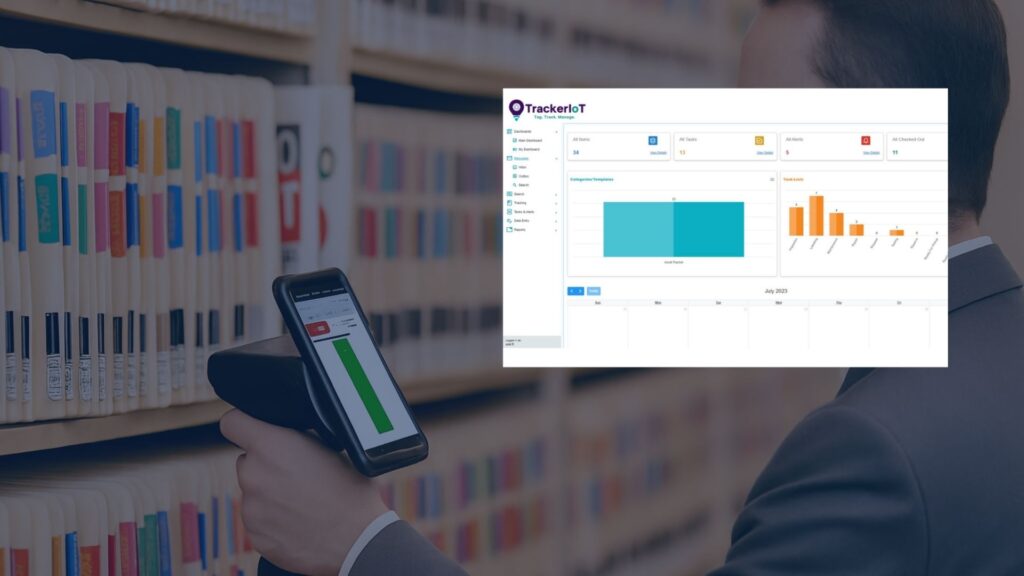
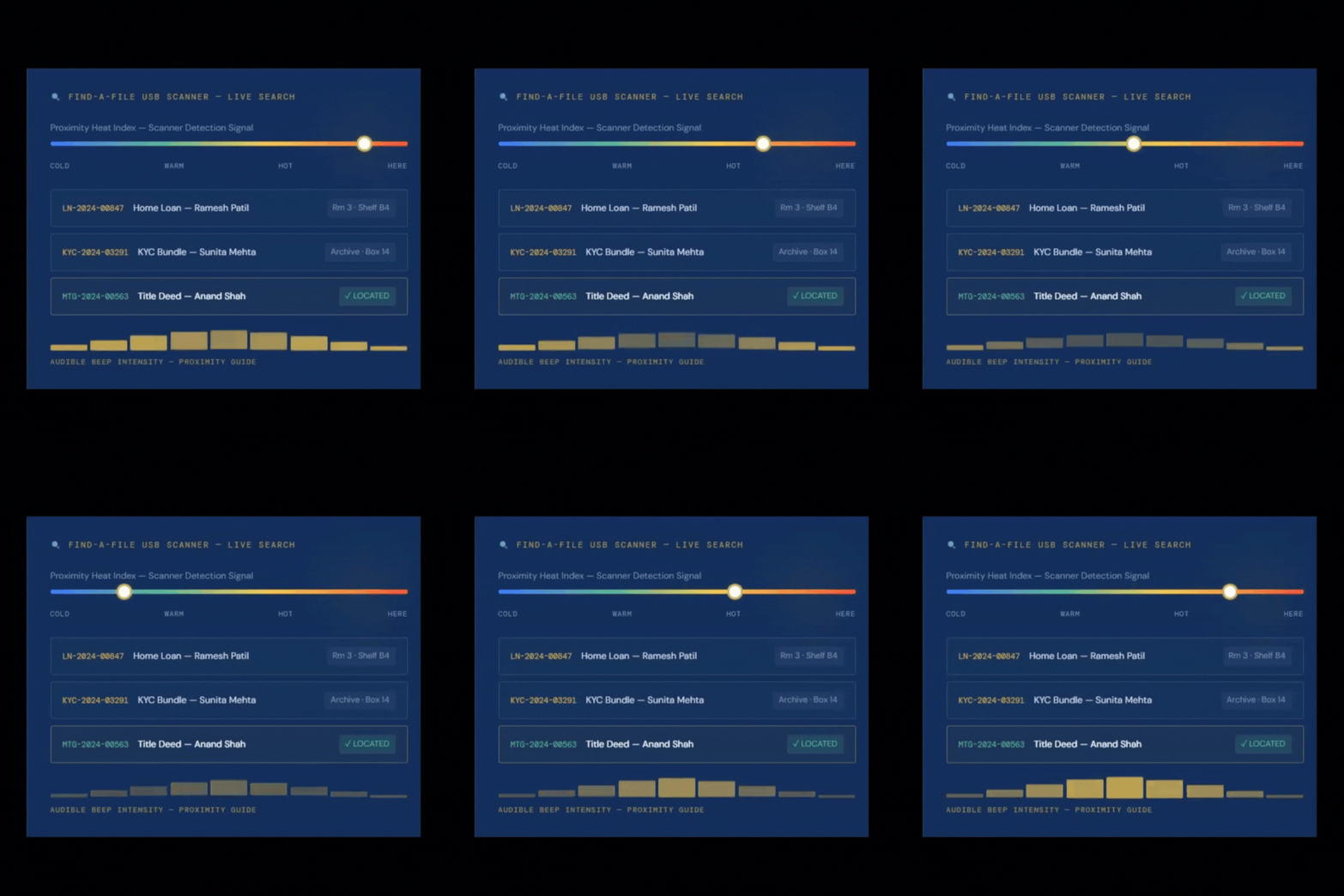
A missing loan file delays decisions and damages customer trust. The IoTFileTracker USB and handheld scanner transforms a hours-long search into a 30-second guided retrieval – even finding files tucked in closed drawers or stacked boxes without line of sight.
20–30 ft RFID Detection Range
The scanner reads through cardboard, wood, and drywall. Staff don’t need to open every cabinet – the signal guides them directly, even in dense archive storage.
Cold–Warm–Hot Proximity Scale
An intuitive color index and escalating audible beeps direct staff straight to the file. No guesswork, no wandering aisles — just instant, confident retrieval.
Multi-File Batch Scanning
Need 50 loan files for a closure ceremony? Scan an entire room in seconds – the scanner reads hundreds of tags simultaneously and updates the central database instantly.
USB Desk Scanner + Mobile App
Desktop USB scanners handle branch check-in/check-out counters. Mobile sleds pair with smartphones for walk-through scanning in vaults, safes, and archive rooms.
Archive & Record Management
Creation to Archive level File Governance
Banking records have legally mandated retention schedules – mortgage deeds, KYC files, audit trails. IoTFileTracker document management system for banks manages the complete lifecycle from creation through active use, deep archiving, and certified destruction.
File Creation & Tagging
Every new file is registered in the system, tagged with RFID/barcode, and assigned metadata — branch, officer, document type, and retention period.
Active File Circulation Tracking
Files move between officers, departments, and branches. Every movement is logged — who has it, when they took it, and where it is right now.
Transfer to Deep Storage
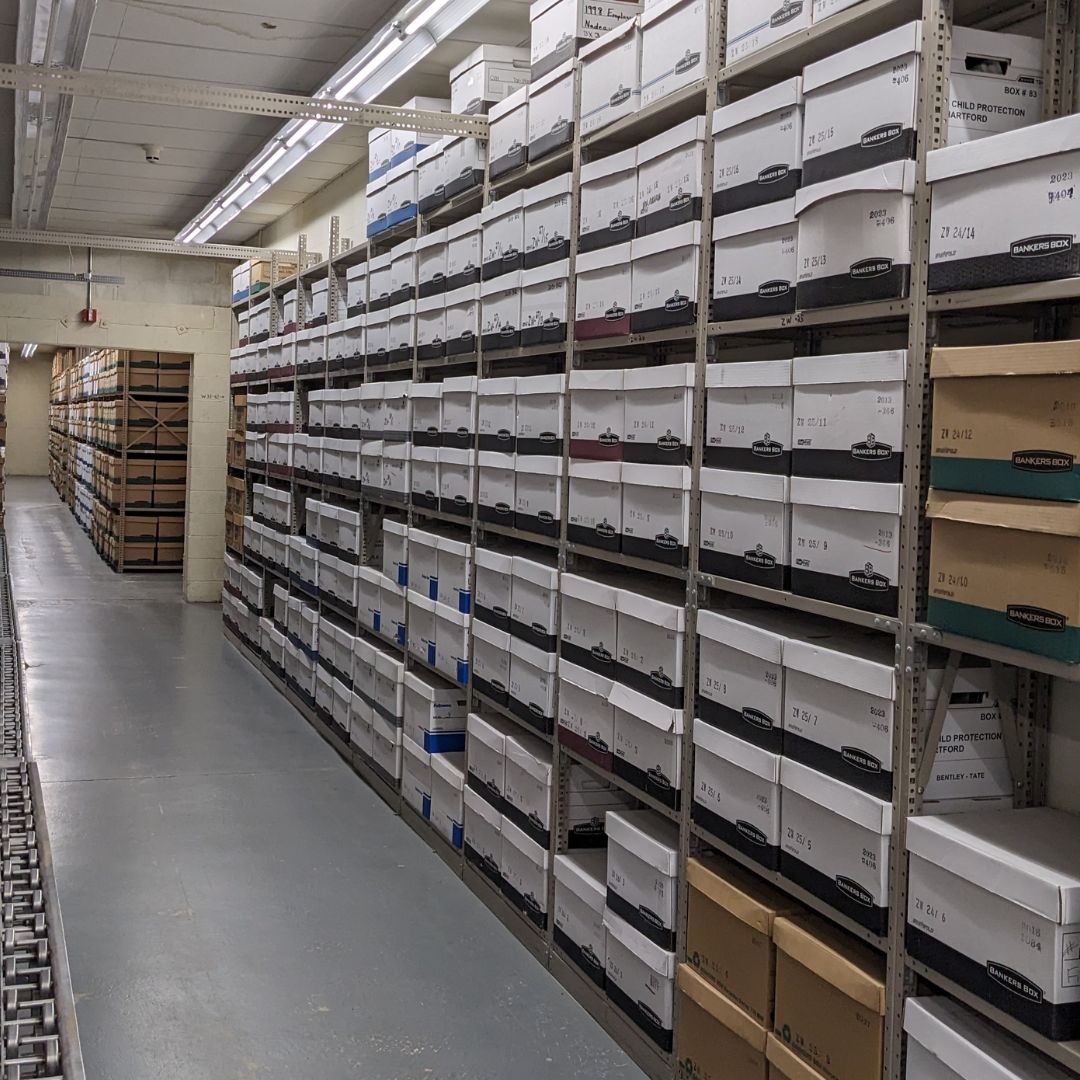
Closed accounts and settled loans are moved to archive. The system maintains exact box and shelf coordinates — no more lost “box lists” taped to cartons.
Retention Alerts & Certified Destruction
Automated schedules alert records managers when files are eligible for purging. On destruction, a Certificate of Destruction is generated for permanent compliance record.

Instant Audit Reports
Generate RBI, internal, or external audit-ready reports in seconds — file history, chain of custody, missing records — all from a single dashboard.

Full-Room Inventory in Minutes
Walk through your archive with a mobile scanner. Hundreds of tags are read per second — a week-long annual inventory becomes an afternoon task.

Automated Retention Scheduling
Set rules by document type — “KYC records: 10 years”, “Loan files: 7 years post-closure”. The system auto-alerts when deadlines approach or are breached.

Offsite & Vault Management
Track files moved to offsite storage, bank vaults, or safe deposit areas. The system maintains exact coordinates across all locations and facilities.

Unlimited Custom Reports
From overdue files to destruction candidates to inventory variance — create custom reports for any branch, officer, or document category instantly.

Core Banking Integration
Connect via API to your CBS, LOS, or document management system. When a loan is created in your main system, it is automatically tracked in IoTFileTracker.
Prevent unauthorised removal of files with superior security
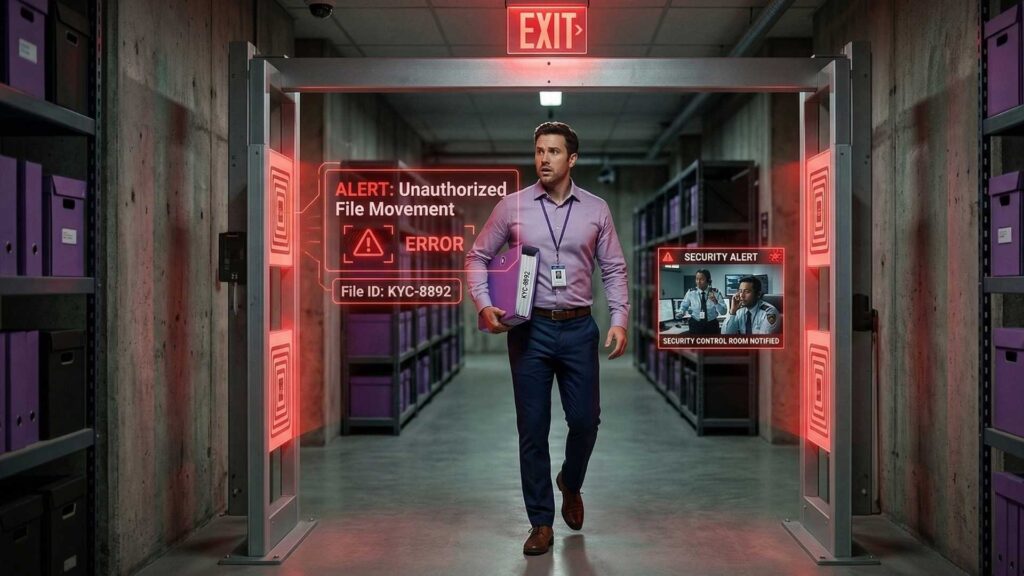
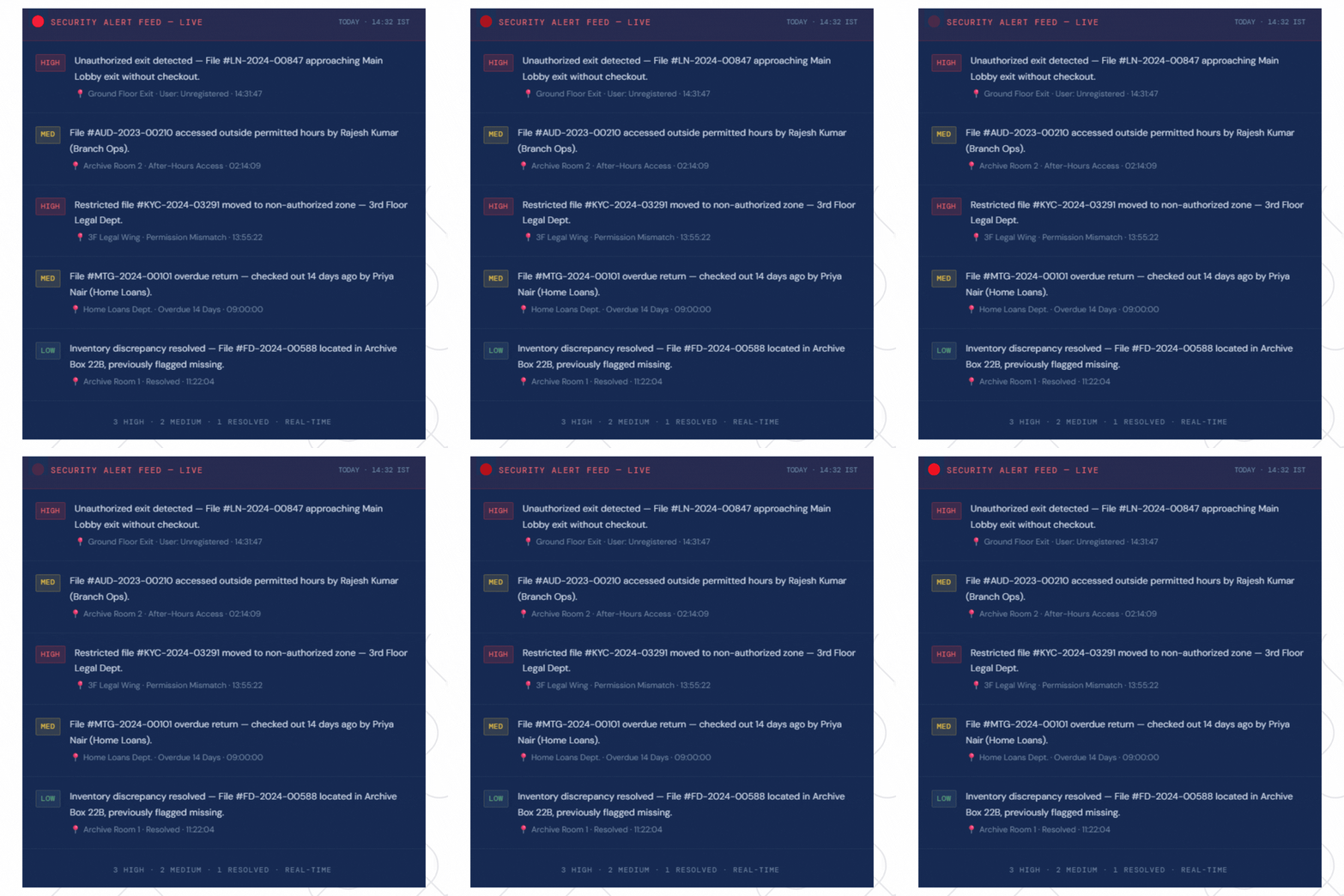
A single missing title deed or leaked KYC file can expose your bank to regulatory penalties and legal liability. IoTFileTracker’s RFID exit portals and instant alert system ensure no sensitive document leaves without authorization . The file is detected automatically.

RFID Exit Portal Alarms
Passive antennas at file room doorways, vault entries, and building exits detect any file leaving a restricted zone without a valid checkout. The rfid document tracking system instantly triggers alarms, flashes lights, and issues voice alerts.
Multi users permission system
Define access rights by role, branch, or document classification. A relationship manager can access customer files; only compliance officers can touch audit bundles. Any mismatch triggers an alert automatically.
Direction-of-Travel Tracking
The rfid document tracking solutions records not just where a file is — but which direction it is moving. From which room, through which corridor, toward which exit. This forensic-level trail is critical for internal investigations.
Immutable Chain of Custody for files
Every interaction — viewing, transfer, return — is timestamped against a specific User ID, creating an unalterable forensic audit log that satisfies the strictest RBI and internal compliance standards.
After-Hours Movement Detection
RFID antennas operate 24/7. Files checked out at night, on weekends, or on holidays are fully tracked – eliminating the blind spots that exist in manual logbook systems.
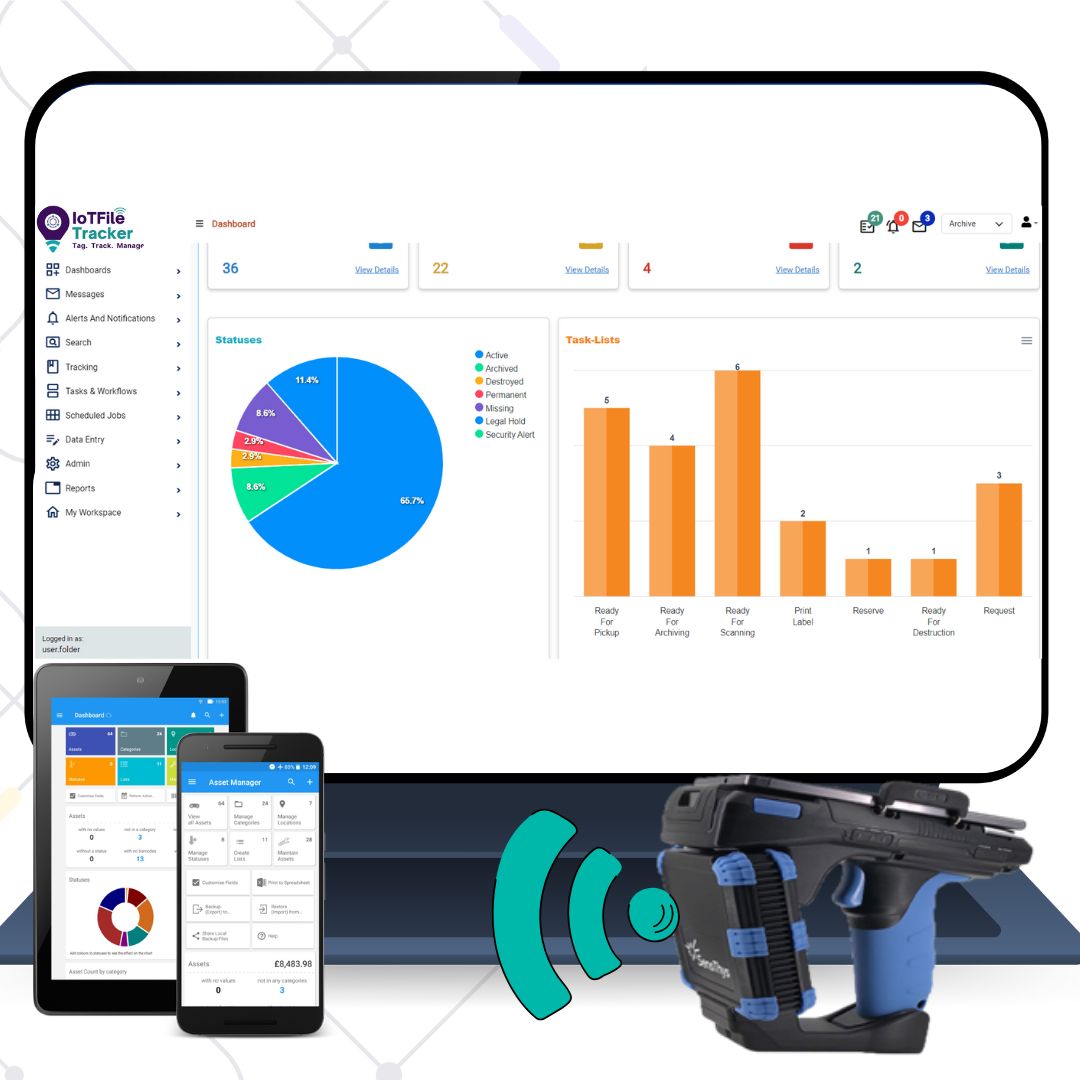
IoTFileTracker Software – Configurable document management system for banks
IoTFileTracker is a mature, production-proven platform designed to handle the rigorous data demands of the financial sector. Unlike unproven custom builds, our software is rapidly configurable to your bank’s specific Chart of Accounts, regulatory tracking rules, internal audit workflows, and multi-branch security policies.
- Multilayered Data Hierarchy: A robust Grandparent-Parent-Child database architecture that maintains a seamless link between Vault/Archive Boxes → Customer Folders → Individual Collateral/KYC Instruments in one coherent hierarchy.
- Core Banking & CRM Integration: Seamless bidirectional integration with your existing Core Banking Systems (CBS) and Loan Origination Systems (LOS) to automatically trigger the creation of physical tracking records the moment a new account is opened.
- Unified Security Labeling: A single interface for high-speed printing of secure labels for loan jackets, credit files, and vault bins—incorporating bank-standard barcodes, RFID tags, and visual color-coding for rapid "Shelf-to-Desk" verification.
- Immutable Audit Trails: A forensic-level history of every touchpoint for every sensitive document. From initial intake at the branch to final disposition or off-site archiving, the system provides an unbreakable Chain of Custody to satisfy internal and external auditors.
- Regulatory Retention & Disposition: Automated file lifecycle management that links file types (e.g., Mortgage Deeds vs. Signature Cards) to specific regulatory retention classifications. The document management for banking system automatically calculates Mandatory Destruction Dates, reducing legal liability and storage costs.
- Real-Time "Vault Status" Reporting: Access unlimited standard and custom reports, including Instant Inventory Reconciliation and Missing Document Alerts, providing a 360-degree view of your physical asset exposure across all branches.
- Extensible Capital Asset Tracking: A scalable module that allows your bank to track IT assets (laptops, servers) and high-value office equipment alongside your physical records, centralizing all asset management within a single secure platform.
FAQ's
What is a Document Management System for Banks, and how does it improve document control?
A Document Management System for Banks is a centralized platform that helps financial institutions capture, track, store, retrieve, and archive physical and digital records throughout their lifecycle. Instead of relying on spreadsheets or manual logs, banks can monitor every document movement, ownership change, and storage location in real time. IoTFileTracker combines barcode and RFID technology with workflow automation to improve document management for banks, reduce misplaced files, strengthen audit readiness, and maintain complete document visibility across branches
How does bank document management reduce the risk of lost customer records?
Modern bank document management creates a digital chain of custody for every file. Whenever a loan file, KYC document, mortgage agreement, or compliance record changes location, the system records who accessed it, when it moved, and where it is currently stored. IoTFileTracker provides real-time tracking, automated movement history, and exception alerts, allowing banks to quickly locate missing records while improving regulatory compliance and operational efficiency.
Why is document management in banking important for regulatory compliance?
Document management in banking helps institutions comply with regulatory requirements by maintaining secure document storage, controlled user access, detailed audit trails, and standardized retention policies. Every document activity is automatically recorded, creating verifiable evidence for internal audits and regulatory inspections. IoTFileTracker helps banks maintain complete document accountability while reducing manual recordkeeping and compliance risks.
How does a document management system for banks support loan processing and customer onboarding?
A document management system for banks accelerates loan processing by organizing customer documents in structured workflows. Loan officers can instantly locate application forms, identity documents, financial statements, collateral records, and approval files without manually searching storage rooms. IoTFileTracker provides document tracking, automated status updates, and secure retrieval, helping reduce processing delays and improving customer service.
What features should banks look for in document management software for banks?
Effective document management software for banks should include barcode or RFID file tracking, role-based access control, document lifecycle management, audit trails, automated notifications, workflow approvals, secure archives, retention management, document indexing, and real-time reporting. IoTFileTracker integrates these capabilities into a centralized platform that provides complete visibility of physical and digital banking records while improving operational efficiency.
How does a document management solution for banks improve file retrieval across multiple branches?
A document management solution for banks enables authorized employees to locate files instantly without contacting multiple departments. Every document location, transfer, and storage history is available through a centralized dashboard. IoTFileTracker supports enterprise-wide document tracking, allowing banks to retrieve customer records faster, reduce duplicate files, and maintain consistent document control across regional offices and branch locations.
How does banking document tracking improve audit readiness?
Banking document tracking creates a complete audit trail by recording every document transaction, including issuance, movement, retrieval, return, and archival. Auditors can quickly verify document history without reviewing manual registers or paper logs. IoTFileTracker automatically captures document movement events, helping banks demonstrate compliance while minimizing audit preparation time.
Can a Document Management System for Banks manage both physical and digital documents?
Yes. A modern Document Management System for Banks manages both paper-based files and electronic records from a single platform. Physical documents are tracked using barcode or RFID technology, while digital records are securely indexed and linked within the same database. IoTFileTracker provides unified visibility into document locations, access history, and retention status, allowing banks to manage hybrid document environments efficiently.
How does document workflow automation improve document management for banks?
Document workflow automation eliminates manual approvals, repetitive document handling, and paper-based tracking processes. It automatically routes documents to authorized users, records every action, and generates notifications for pending tasks or overdue files. IoTFileTracker streamlines document management for banks by improving operational efficiency, reducing processing errors, and maintaining complete document traceability throughout every workflow.
Why should financial institutions implement Document Management System for Banks with real-time document tracking?
Banks handle thousands of customer records, loan agreements, compliance documents, and financial files every day. A Document Management System for Banks with real-time tracking provides instant document visibility, secure access controls, automated audit logs, document lifecycle management, and accurate location tracking. IoTFileTracker helps financial institutions reduce document loss, strengthen security, improve regulatory compliance, and enhance overall records management across the organization.
One Tracking Ecosystem. Infinite Possibilities.
Whether you’re tracking weapons in an armory, files in an archive, assets in production, personnel in the field, or inventory in a warehouse, Tracker IoT unifies them all.
By combining precision tracking with real-time analytics, compliance assurance, and seamless integration, Tracker IoT becomes the central nervous system of your operations — helping you achieve greater visibility, efficiency, and control than ever before.