In the lifecycle of a record, the transition from an “active” state to an “archived” state is often where visibility goes to die. Many organizations view archives as a passive storage problem – a matter of putting boxes in a warehouse and forgetting about them until a subpoena or an audit arrives. This “out of sight, out of mind” mentality is one of the most significant risks in modern information governance.
Unmanaged archives lead to “black hole” storage, where finding a specific document becomes a multi-day scavenger hunt. More critically, poorly tracked archives indefinitely retain records that the organization should have destroyed, which creates unnecessary legal discovery risks and high storage costs. At TrackerIoT, we believe that archives management requires the same rigor as active file management. Through the IoTFileTracker platform, we bring the power of RFID and automated retention logic to long-term storage, ensuring that your records are always visible, compliant, and under control.
What Is Archives Management?
Archives management systematically controls records that users no longer frequently access but organizations must preserve for legal, fiscal, or historical reasons. Unlike active files—which users may move daily—archived records move infrequently, but when someone needs them, the stakes are usually high.
The goal of a modern archive is not just storage; it is “retrievability.” A high-performance archive must provide a clear bridge between the physical box and its digital index. By using IoTFileTracker, organizations can maintain a persistent “Source of Truth” for every container, binder, and file, ensuring that the transition to long-term storage does not mean a loss of control.
Key Insight
At TrackerIoT, we believe that archives management requires the same rigor as active file management. Through the IoTFileTracker platform, we bring the power of RFID and automated retention logic to long-term storage — ensuring that your records are always visible, compliant, and under control.
Challenges in Traditional Archives Management
Most traditional archives suffer from systemic failures that become exacerbated over decades.
Lost Archive Boxes and Poor Indexing
Without a computerized file tracking system, organizations often rely on handwritten labels or spreadsheets to manage their boxes. Over time, these manual logs become inaccurate. Staffs move, mislabel, or stack boxes in the wrong aisles, creating “ghost inventory” that they cannot recover when needed.
Manual Retention Tracking and Compliance Exposure
Keeping records too long is just as dangerous as destroying them too soon. If an organization receives a legal discovery request, they must legally produce any relevant records they still possess—even if they could have destroyed those records years ago. Without automated records retention management, identifies which boxes are “past their prime” is an impossible manual task, leading to massive liability.
Inadequate Chain of Custody
When a user retrieves a physical file from an archive and checks it out to a department, traditional systems often fail to record who took it, when, and when they returned it. This gap in files chain of custody exposes organizations to compliance audits, lost documents, and legal liability.
Inefficient Space Utilization
Without visibility into which records have passed their destruction date, shelves fill with boxes that should no longer exist. This waste of physical storage space creates unnecessary cost — especially in off-site facilities that charge by the cubic foot.
How IoTFileTracker Solves Archives Management with RFID
IoTFileTracker modernizes records archives by treating every container as an intelligent, trackable asset. Whether you are managing standard corrugated archive boxes or specialized binders, the system assigns a unique digital identity to each unit — and tracks its location, contents, retention date, and custody history in real time.
Knowing Exactly Where Every Record Is Stored
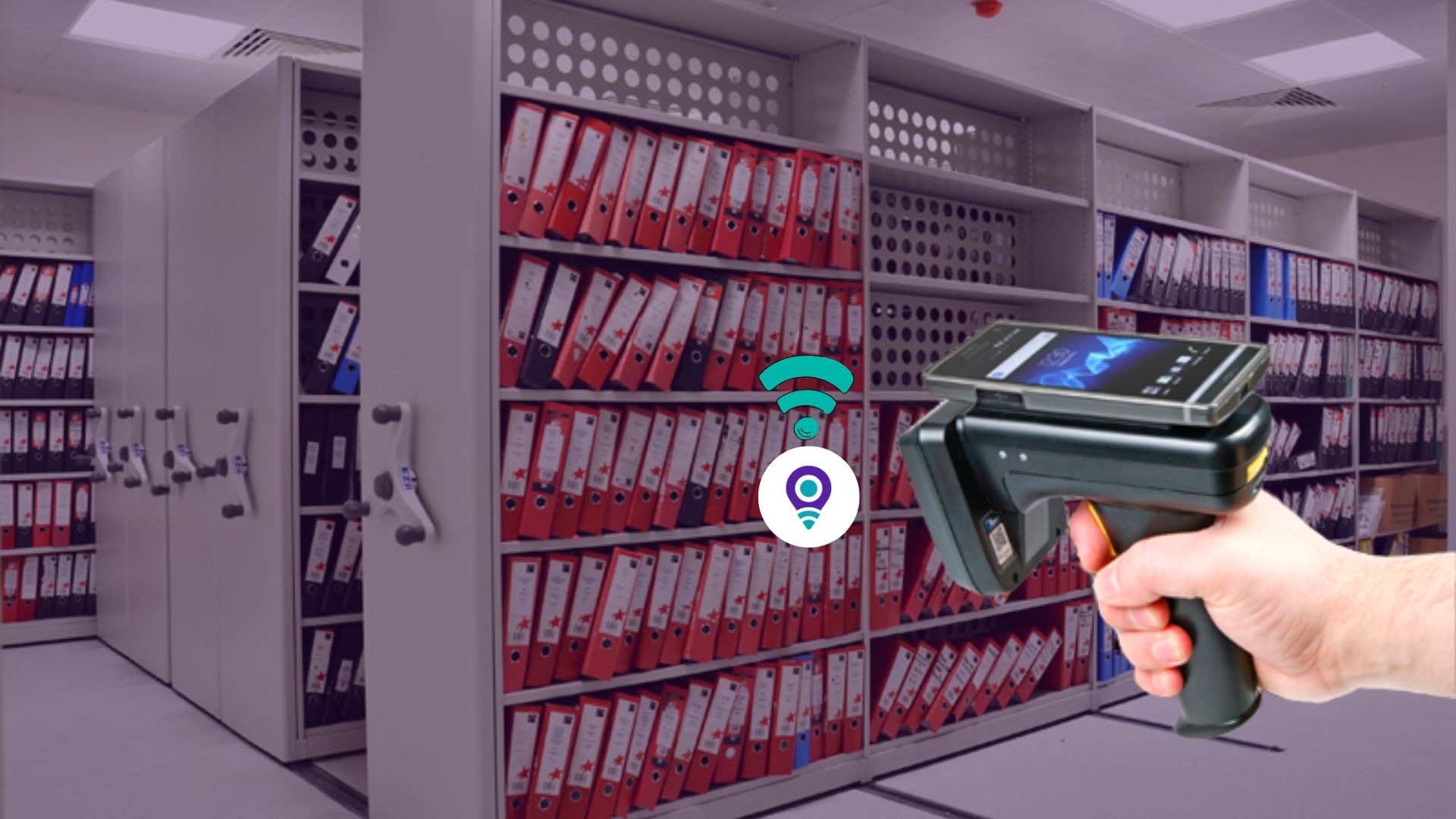
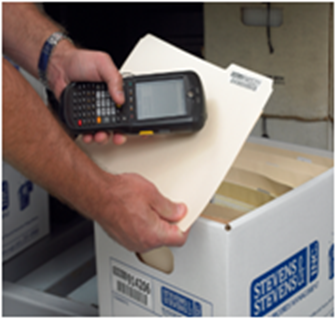
By utilizing fixed RFID gateways or handheld mobile scanners, archives management becomes a matter of digital precision. IoTFileTracker maps the physical layout of your warehouse or file room — providing a searchable 3D view of your inventory. If a user moves a box to a different facility or a new shelf, the system automatically updates its location, maintaining a perfect chain of custody at all times.
Parent-Child Relationship: Files Inside Boxes
One of the biggest frustrations in archival work is knowing that a file is ‘somewhere’ in Box #502, but not being able to verify it without physically opening the container. IoTFileTracker solves this by maintaining a Parent-Child relationship in the database.
The system allows you to associate specific files (the children) with a specific box (the parent). If you need a specific case file from ten years ago, you don’t just search for a box — you search for the file, and IoTFileTracker tells you exactly which box it resides in and where that box is located. This eliminates the ‘black hole’ effect and slashes search times from hours to seconds.
RFID Labeling for Archive Boxes and Binders
To achieve this level of visibility, durable RFID archive labels are essential. IoTFileTracker supports both pre-printed vendor labels and system-generated labels printed on-site using standard label printers.
Best Practices for Long-Term RFID Label Durability
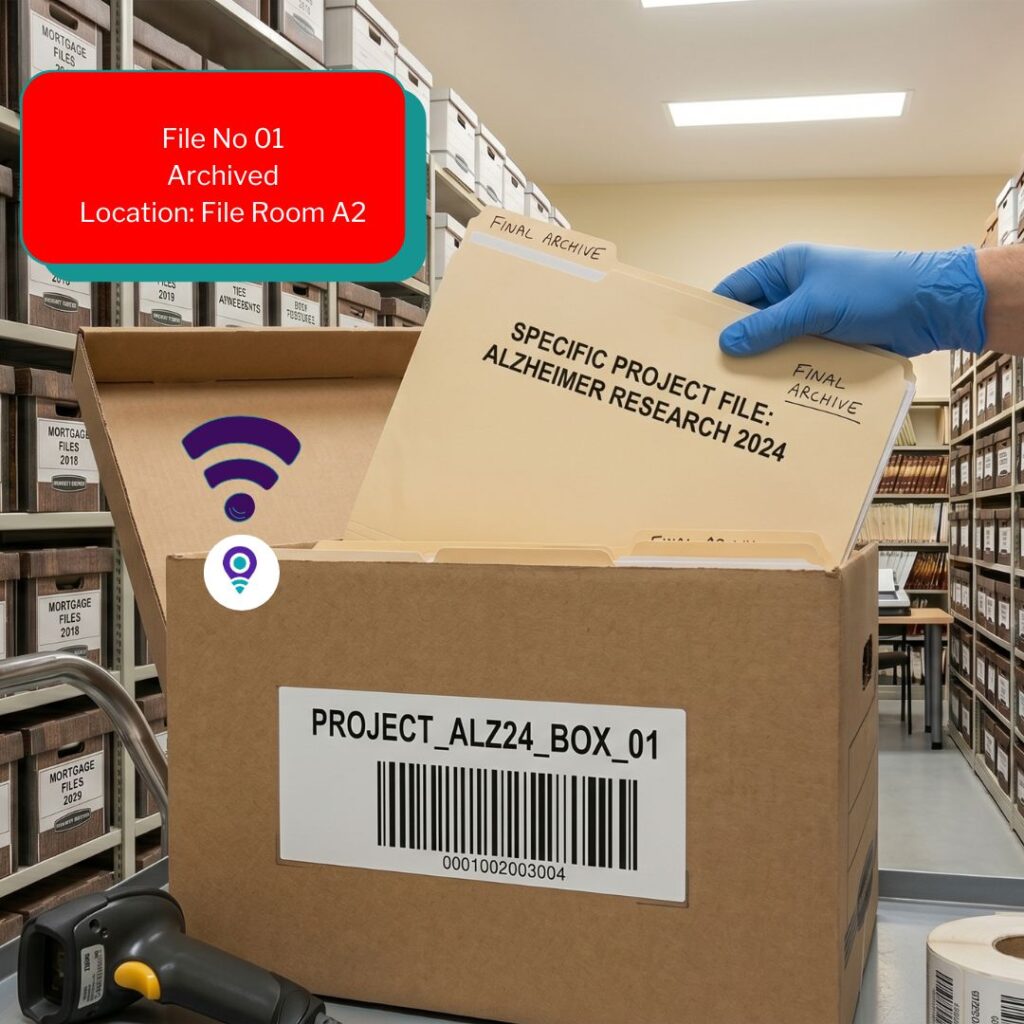
Archive labels must withstand long-term storage conditions. Because boxes may sit for 20 years or more, the adhesive must be high-tack and the RFID inlay must be robust against temperature variation, humidity, and dust. IoTFileTracker ensures that each label contains:
- An RFID chip for automated hands-free scanning
- Human-readable text for manual identification
- A 1D or 2D barcode as a redundant scanning layer
- A unique ID number linked to the central database record
Consistent placement of these labels on the short end of the box ensures that handheld scanners can read entire rows of boxes without staff having to move them – dramatically accelerating inventory and audit cycles.
Automated Retention Schedules and Compliance Management
The core of records management for compliance is the retention schedule. Every record type — HR, financial, legal, patient, and government — has a specific expiration date dictated by law, regulation, or organizational policy.
IoTFileTracker automates the tracking of these dates. When a file or box is created in the system, the armorer assigns a retention code. The software then continuously monitors all retention dates across the archive and triggers automated notifications when records have reached the end of their legal lifecycle.
Retention Codes by Record Type
| HR / Employment Records | 7 years after termination (varies by jurisdiction) |
| Financial / Accounting Records | 7 years (IRS requirements) |
| Legal Contracts | 10 years after contract expiry |
| Medical / Patient Records | 10 years after last date of service (HIPAA) |
| Government / Public Records | Permanent or as defined by state statutes |
| Corporate Tax Records | 7 years minimum |
On-Demand Destruction Eligibility Reporting
The most satisfying part of an efficient archive is a legally defensible Destruction Day. However, organizations must ensure that destruction is documented – with auditable proof that the records were legally eligible for disposal at the time of destruction.
IoTFileTracker provides on-demand destruction eligibility reporting. With one click, a records manager can generate a complete list of every box and file that has met its retention requirement. This report serves as:
- A legal checklist authorizing the destruction event
- A record of which files were destroyed and on what date
- A final, permanent audit trail covering the entire record lifecycle — from creation to compliant destruction
Once the records are certified as destroyed, IoTFileTracker updates the record status permanently. The chain of custody closes cleanly, the shelf space is reclaimed, and the organization’s legal exposure is eliminated.
Find a File Technology: Locating a Specific Record in Seconds
Even in the best-organized archive, individual files can be misplaced – filed in the wrong box, mislabeled, or relocated during a facility move. IoTFileTracker’s ‘Find a File’ technology eliminates the frustration of manual searching by guiding staff directly to the item’s physical location.
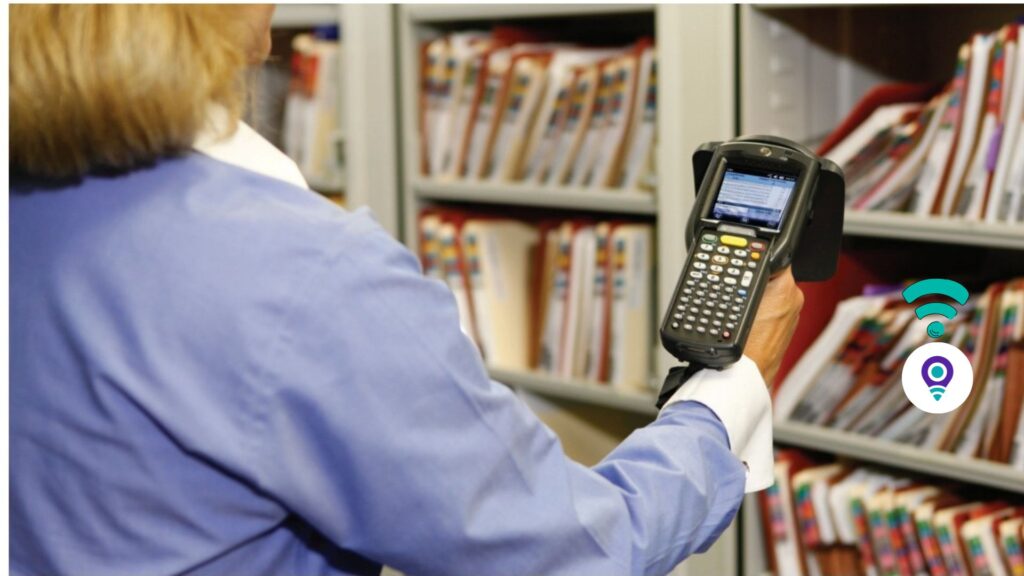
When a file is flagged as needed but its location is uncertain, the system provides real-time proximity guidance:
- Staff carry a mobile RFID scanner through the archive aisles
- The scanner reads RFID tags within its range and cross-references them against the database
- A cold-to-warm-to-hot color indicator on the scanner screen shows directional proximity
- An audible beep frequency increases as the user approaches the tagged item
- A 0–100 numeric proximity index provides a precise, unambiguous location score
This technology means a misplaced file in a 10,000-box warehouse can be located in under two minutes — without unpacking a single box or disrupting surrounding records.
Chain of Custody: The Foundation of Defensible Records Management
In regulated industries, chain of custody is not optional — it is the legal backbone of your records management program. Every time a physical file leaves the archive, is transferred between departments, or is retrieved for litigation, a documented, unbroken chain of custody must exist.
IoTFileTracker enforces and records chain of custody automatically:
- Every file check-out is logged with the borrower’s identity, date, time, and purpose
- Return events are time-stamped and linked to the original transaction
- Transfers between facilities or departments create an auditable custody transfer record
- The complete custody history of any file is available in a single-click report
This automated custody trail eliminates the risk of ‘lost in transit’ scenarios and provides a legally defensible record of every physical document’s whereabouts throughout its lifecycle.
Connecting Physical Archives to Digital Records: Hybrid Document Management
One of the most pressing challenges in modern records management is bridging the gap between physical archives and digital systems. Many organizations maintain paper records that predate digitization — and yet need to be discoverable, indexed, and retrievable alongside their electronic counterparts.
IoTFileTracker supports a hybrid approach:
- Each physical box or file record can be linked to a scanned digital version in the system
- Metadata tags — client name, matter number, date range, department — make physical files searchable by the same criteria as digital documents
- Integration with electronic document management systems (EDMS) allows a single search interface to surface both physical and digital records simultaneously
- QR codes or barcodes on box labels allow staff to instantly pull up the digital index entry using any smartphone
This hybrid approach future-proofs the archive. As digitization programs advance, IoTFileTracker provides the bridge between the physical legacy and the digital future — without requiring a costly, disruptive conversion project.
Archive Storage Systems and Shelving Optimization
Efficient archives management is also a physical engineering challenge. Long-term records storage often utilizes high-density shelving systems to maximize usable space within a given facility footprint.
- High-density mobile shelving: Mobile carriages that eliminate unnecessary aisles, increasing storage density by up to 50% compared to static shelving
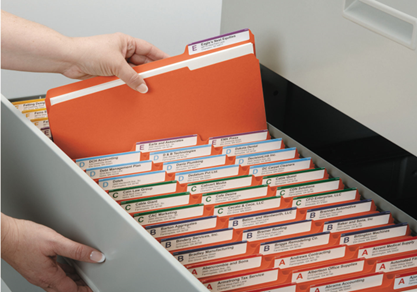
- Specialty archive boxes: For organizations using color-coded, side-tab folders, specialized boxes allow folders to stand upright with tabs visible — enabling staff to retrieve a file without unpacking the entire container
- Barcode and RFID location mapping: IoTFileTracker maps every shelf, row, and position in the file storage system, creating a digital twin of the physical layout
Combined with IoTFileTracker’s real-time location tracking, these physical optimizations mean that even a warehouse holding hundreds of thousands of boxes remains fully searchable and navigable.
Industries That Depend on Strong Archives Management
Effective archives management is not a luxury — for the following industries, it is a legal and operational necessity:
Government and Public Sector
State and local agencies must manage decades of public records, land titles, court documents, and administrative files with absolute transparency and public accountability. IoTFileTracker provides the audit-ready visibility required by public records laws and Freedom of Information requests.
Healthcare and Medical Records
Healthcare organizations must retain patient files for many years after the last date of service — often across multiple storage facilities. HIPAA compliance requires documented chain of custody and controlled access. IoTFileTracker enforces both automatically.
Legal and Law Firms
Law firms manage vast discovery archives, original contracts, and case files that must be instantly accessible for future litigation. A single lost document in a legal archive can have multi-million-dollar consequences. IoTFileTracker eliminates that risk.
Corporate Finance and HR
Finance and HR departments manage tax records, employment files, and regulatory filings that require strict compliance-driven retention and destruction workflows. IoTFileTracker automates the entire lifecycle from receipt to compliant disposal.
Banking and Financial Services
Banks and financial institutions face stringent document retention requirements from regulators including the SEC, FINRA, and OCC. IoTFileTracker’s automated retention scheduling and audit-ready reporting supports compliance across all these mandates simultaneously.
Frequently Asked Questions: Archives Management with IoTFileTracker
Records management covers active documents currently in use. Archives management covers inactive records that must be retained for legal, historical, or compliance reasons but are no longer part of daily operations. IoTFileTracker handles both – providing a seamless system from active use through long-term archival to compliant destruction.
Retention periods vary by record type and jurisdiction. Common periods range from 3 years for general correspondence to 10 years for patient records and 7 years for financial records. IoTFileTracker’s retention scheduling module allows organizations to configure retention codes for every record category, with automated alerts as deadlines approach.
Yes. The Parent-Child relationship database links individual files to their containing box. A search for any file instantly returns the box it resides in and the exact shelf location of that box. Staff can retrieve the correct box, open it, and find the file — without opening multiple containers or conducting a manual search.
Yes. IoTFileTracker supports multi-site deployments and can track records across multiple locations — on-site, off-site, and third-party storage facilities. When a box is transferred between locations, the system updates its record automatically via mobile scanner confirmation.
RFID enables hands-free bulk scanning — entire rows of archive boxes can be inventoried without staff having to manually scan each label. RFID tags are read automatically by fixed gateways when boxes pass through doorways or checkpoints. Barcode systems remain available as a redundant layer for items where RFID tags are not practical.
Operational and Cost Benefits of Modern Archives Management
Transitioning to IoTFileTracker for your archives yields measurable ROI from day one:
- Reduced search time: No more ‘fishing’ for boxes — digital precision leads staff directly to the record in seconds, not hours
- Improved compliance: Automated retention prevents over-retention liability and premature destruction exposure
- Better space utilization: Identifying destruction-eligible records frees valuable shelf space for new files — delaying or eliminating the need for warehouse expansion
- Reduced retrieval costs: Fewer man-hours spent searching means lower operational overhead per retrieval event
- Audit readiness: Complete digital audit trails mean that any regulatory inspection or legal discovery request can be responded to rapidly and with full documentation
- Scalable infrastructure: IoTFileTracker scales from a single file room to a global network of warehouses without requiring additional hardware per location
The Future of Archives Management: Smart Archives
The future of the archive is a ‘Smart Archive’ — where sensors continuously monitor environmental conditions, inventory health, and retention status in real time. As organizations move toward lifecycle-based records governance, IoTFileTracker remains the central hub connecting the creation of a file to its eventual, compliant destruction.
Emerging capabilities on the IoTFileTracker roadmap include:
- Environmental monitoring: Temperature and humidity sensors integrated with the archive tracking database
- AI-assisted retention classification: Automated assignment of retention codes based on document metadata
- Predictive space planning: Analytics dashboards projecting when current shelving capacity will be exhausted based on intake rates and destruction schedules
- Blockchain-anchored audit trails: Immutable chain of custody records anchored to a distributed ledger for maximum legal defensibility
Conclusion: Archives Should Never Be Where Visibility Goes to Die
Archives are not a passive storage problem — they are a critical component of your organization’s institutional memory and legal protection. By applying the same rigorous tracking logic to long-term storage as to active files, organizations maintain full visibility, keep operations lean and compliant, and remain audit-ready at all times.
IoTFileTracker provides the visibility, compliance automation, and physical location control needed to transform a dusty warehouse of forgotten boxes into a high-performance, defensible information asset.