RFID file tracking for accountants, and records management for CPA firms
File Management System for Accounting and Tax Firms
Track client tax files, audit working papers, payroll records, and archived accounting documents with barcode/RFID file management. Improve security, retrieval, and compliance.
Track Every Client File, Tax Record, and Audit Working Paper
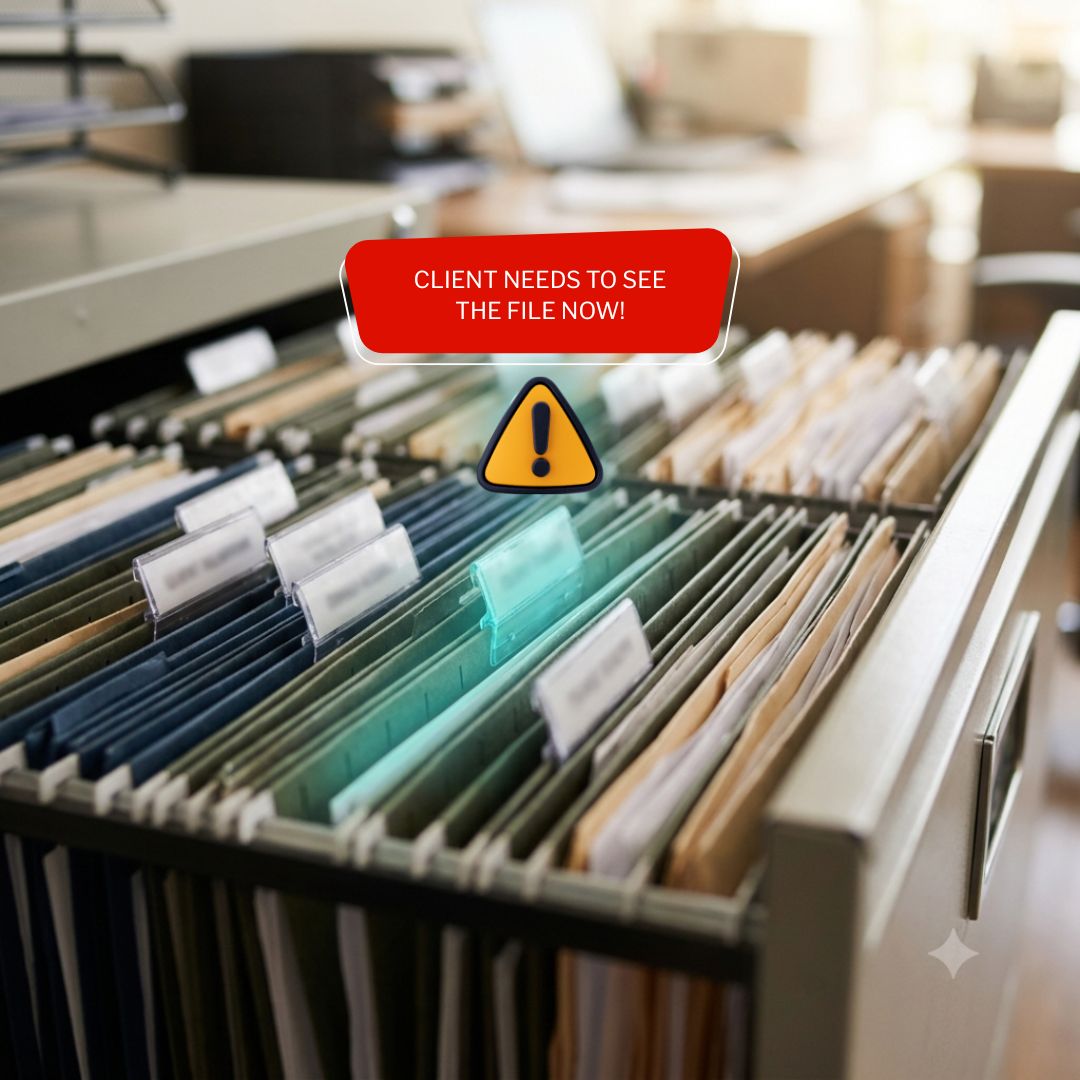
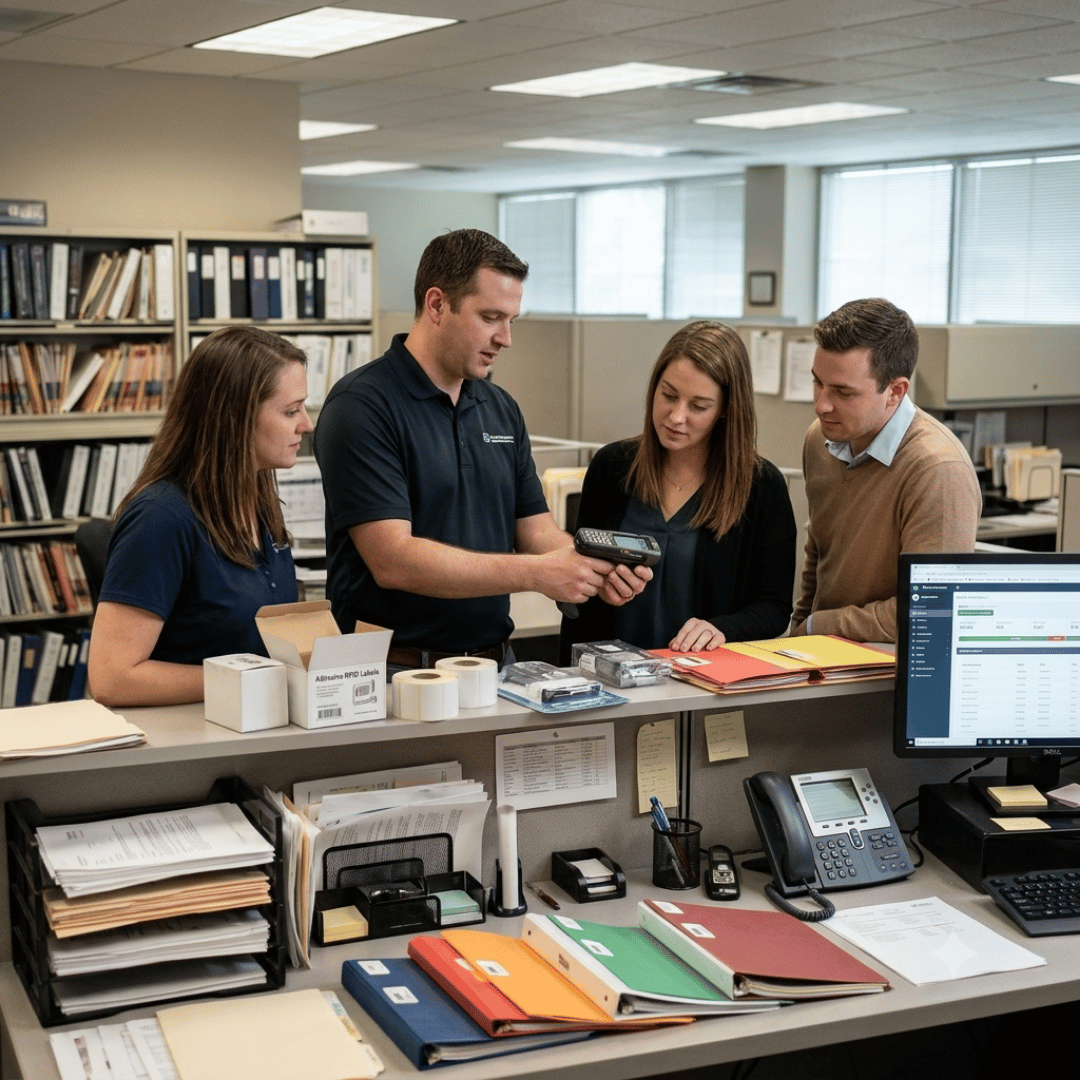
Accounting and tax firms manage high volumes of confidential client records—tax returns, payroll files, bank statements, invoices, general ledgers, contracts, and audit working papers. A missing or misplaced file can delay filings, disrupt audits, create client-service issues, and increase compliance risk.
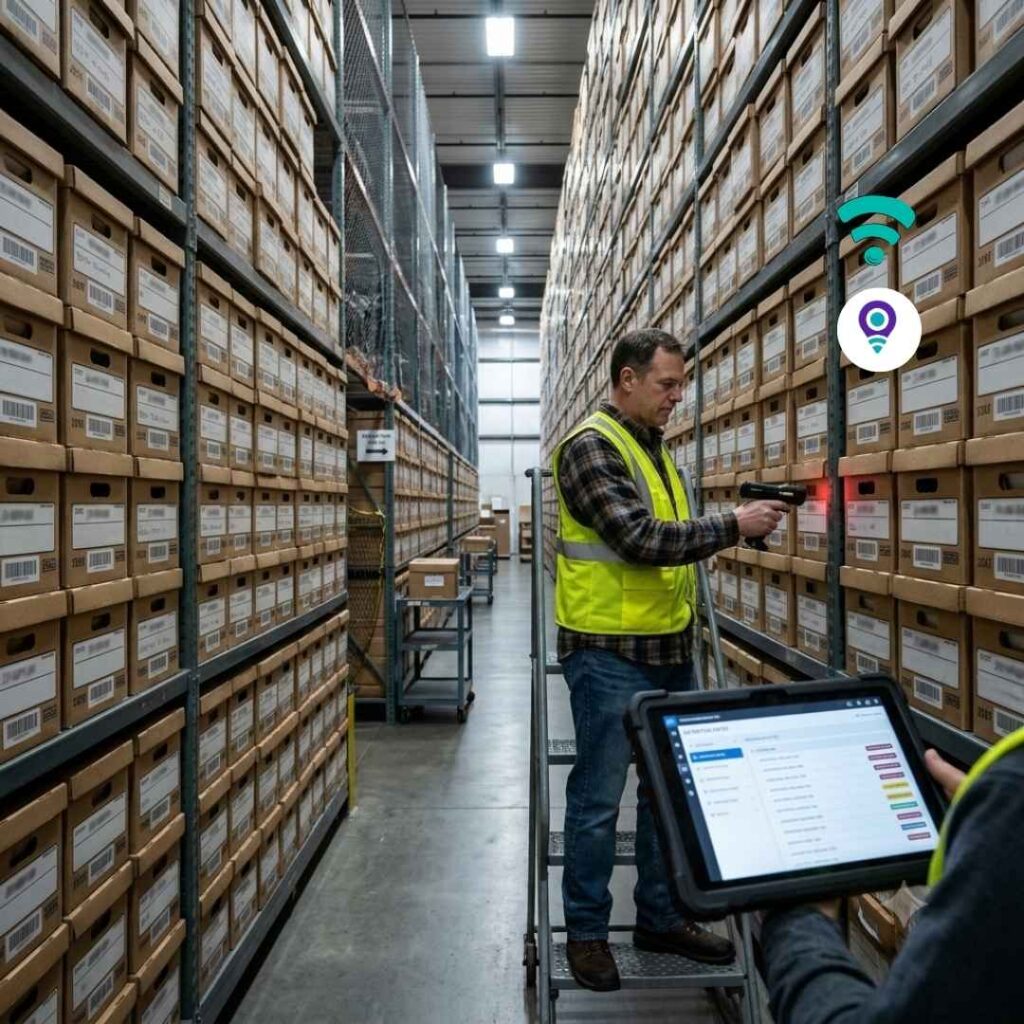
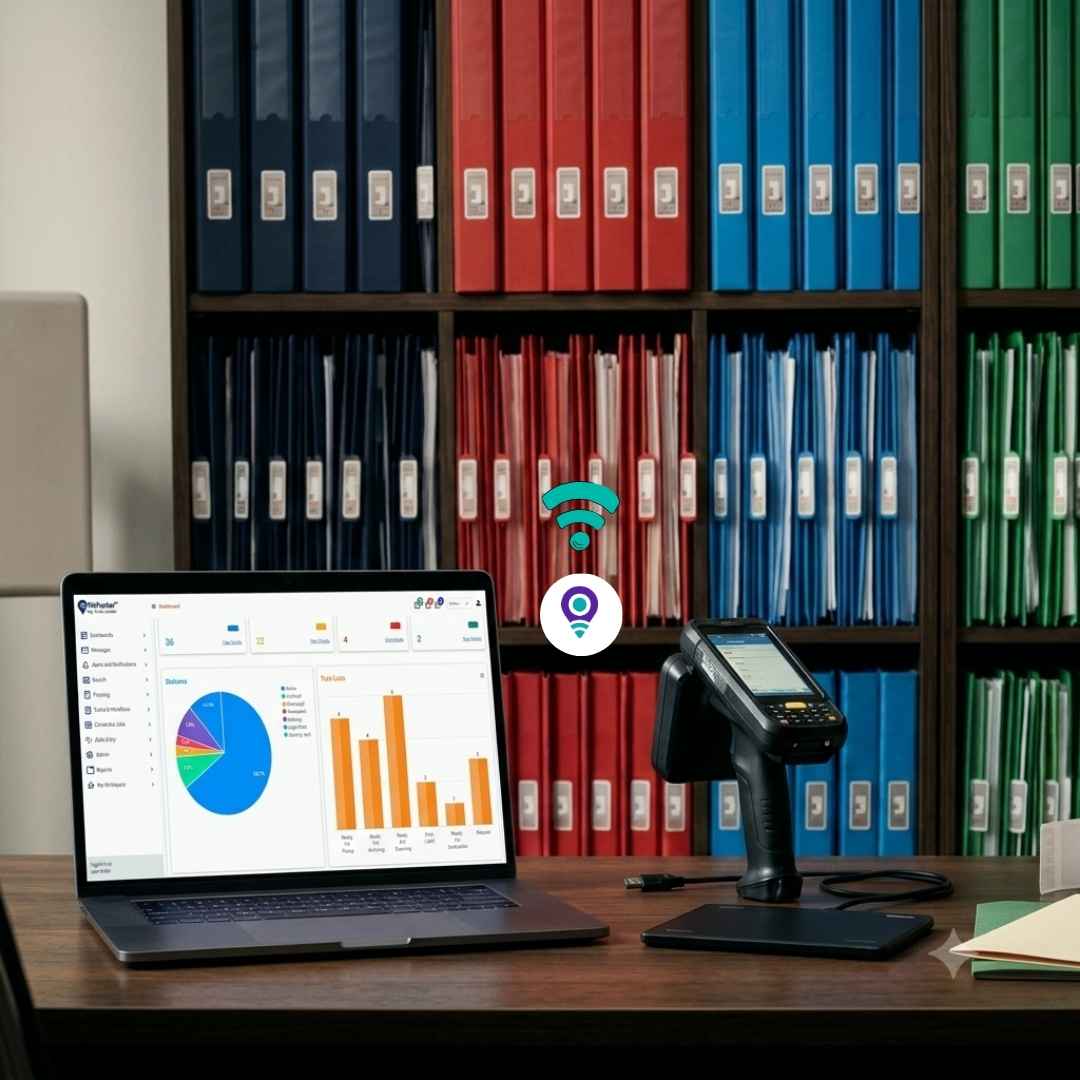
IoTFileTracker is a file management system for accounting and tax firms that gives your team real-time visibility into physical client files, archive boxes, and hybrid paper-digital records. Using barcode and RFID tracking, staff can check files in and out, locate misplaced folders, maintain chain-of-custody records, manage retention, and complete file audits faster.
Why Accounting Firms Need File Tracking
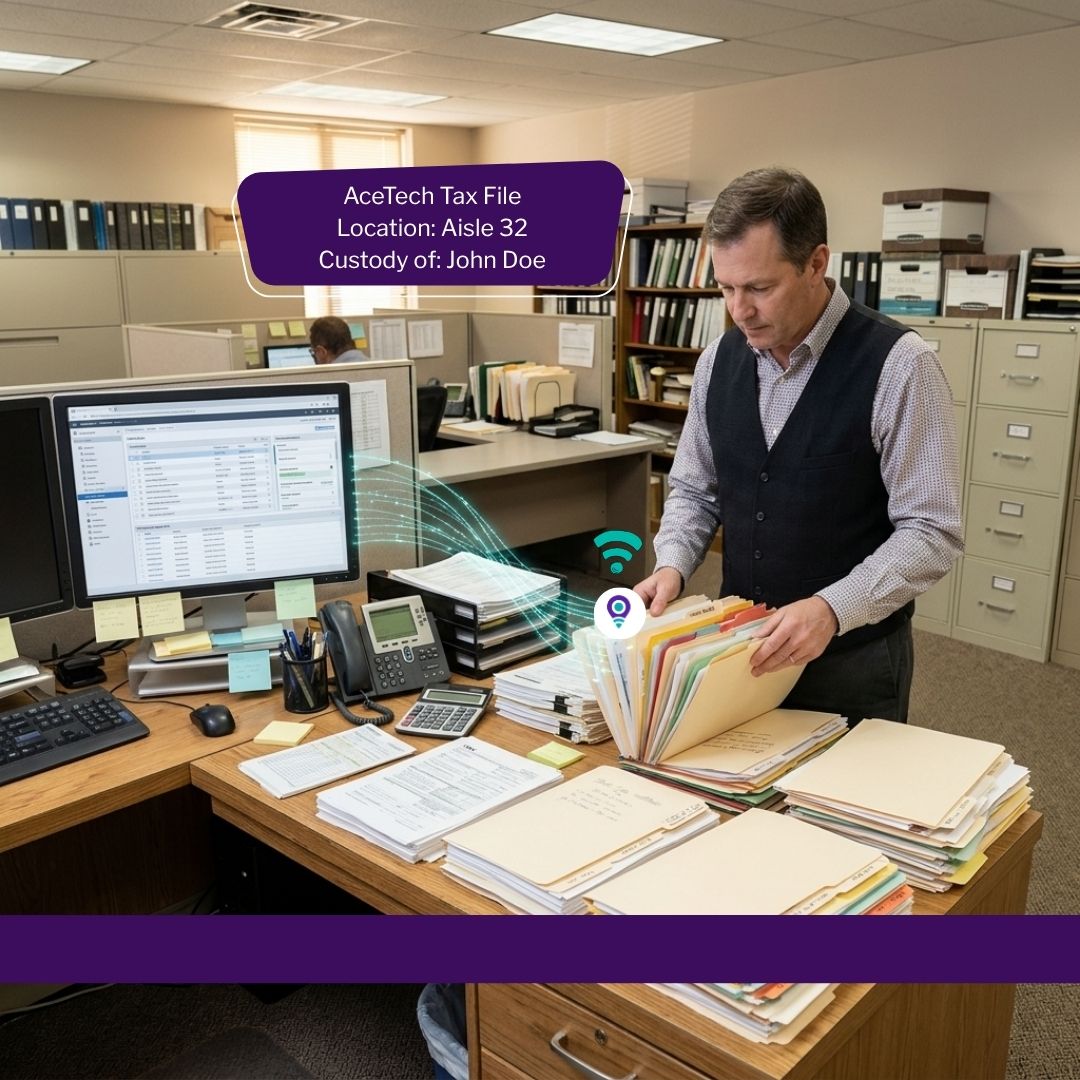
Accounting firms do not simply store documents and Files, they manage evidence, deadlines, confidential client information, and audit-ready records. When files circulate between partners, tax preparers, auditors, administrative staff, branch offices, and offsite storage, it becomes difficult to answer one critical question: Where is this client file right now?
Common file-management challenges
- Client files checked out but not returned on time
- Tax returns, signed originals, or audit documentation misplaced during busy season
- No reliable record of who accessed, moved, or received a confidential file
- Time-consuming manual file inventories and archive audits
- Difficulty applying retention schedules and secure disposal rules
- Limited visibility across departments, partners, branches, and offsite storage
- Risk of unauthorized removal of sensitive client records
IoTFileTracker helps firms replace guesswork with a searchable, accountable, and auditable file-tracking process.
Accountability of Accounting and Tax files using RFID and IoT Technology
What Is an Accounting File Management System?
Unlike a basic document repository, IoTFileTracker is designed for firms that still rely on physical files, signed documents, archive boxes, or a mix of paper and digital records. It tracks each file from creation or receipt through use, transfer, archiving, retention, and final disposition.
What the system tracks
- Client engagement files
- Tax-year folders and supporting documents
- Audit files and working papers
- Payroll and employee records
- Banking, reconciliation, and treasury files
- Accounts payable and receivable records
- General ledger and financial statement files
- Contracts, agreements, licenses, and corporate records
- Archive boxes and long-term storage records
Records Accounting Firms Manage
Accounting companies maintain organized digital and physical folders for clients, typically covering tax, payroll, banking, AP/AR, financial statements, corporate records, and audit documentation. These records are essential for auditing, compliance, and financial analysis.

Tax records
Track federal, state, and local tax returns, supporting documentation, depreciation schedules, prior-year filings, amended returns, and client correspondence. IoTFileTracker helps staff quickly identify the correct client, tax year, engagement type, and file location.

Financial statements
Manage general ledgers, balance sheets, profit-and-loss statements, cash-flow statements, trial balances, adjusting journal entries, and supporting schedules. Barcode or RFID labels make it easy to track folders across preparers, reviewers, partners, and archive locations.
Payroll and employee files
Organize timesheets, pay stubs, employment contracts, W-2s, 1099s, employee information, and payroll supporting documents. Role-based access and audit trails help protect confidential employee and client payroll data.
Accounts payable and receivable
Track vendor invoices, receipts, purchase orders, client bills, payment records, credit notes, and supporting AP/AR documentation. Staff can request, reserve, check out, and return files without losing visibility of their location.


Corporate and client records
Manage contracts, agreements, insurance policies, licenses, permits, engagement letters, and other corporate or client documentation. IoTFileTracker supports configurable file templates so each record type can include the fields your firm needs.

Audit and working papers
Track audit documentation, trial balances, adjusting journal entries, workpapers, review notes, sign-offs, and supporting evidence. A complete chain-of-custody history helps firms demonstrate control over audit files and confidential client records.
Key Features of the system
Real-time file visibility
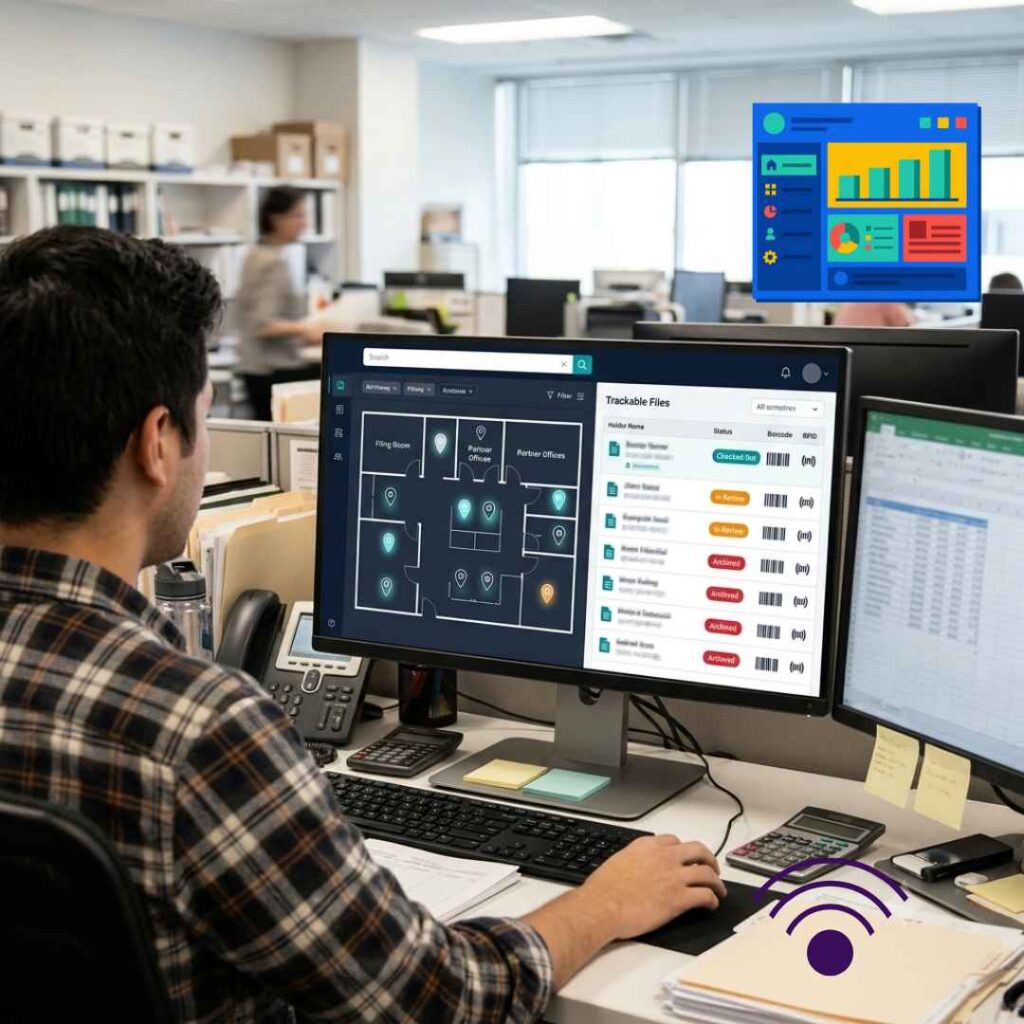
Know the current location, holder, status, and movement history of every tracked file. Staff can search by client name, file number, engagement, tax year, department, partner, barcode, RFID tag, or other configured fields.
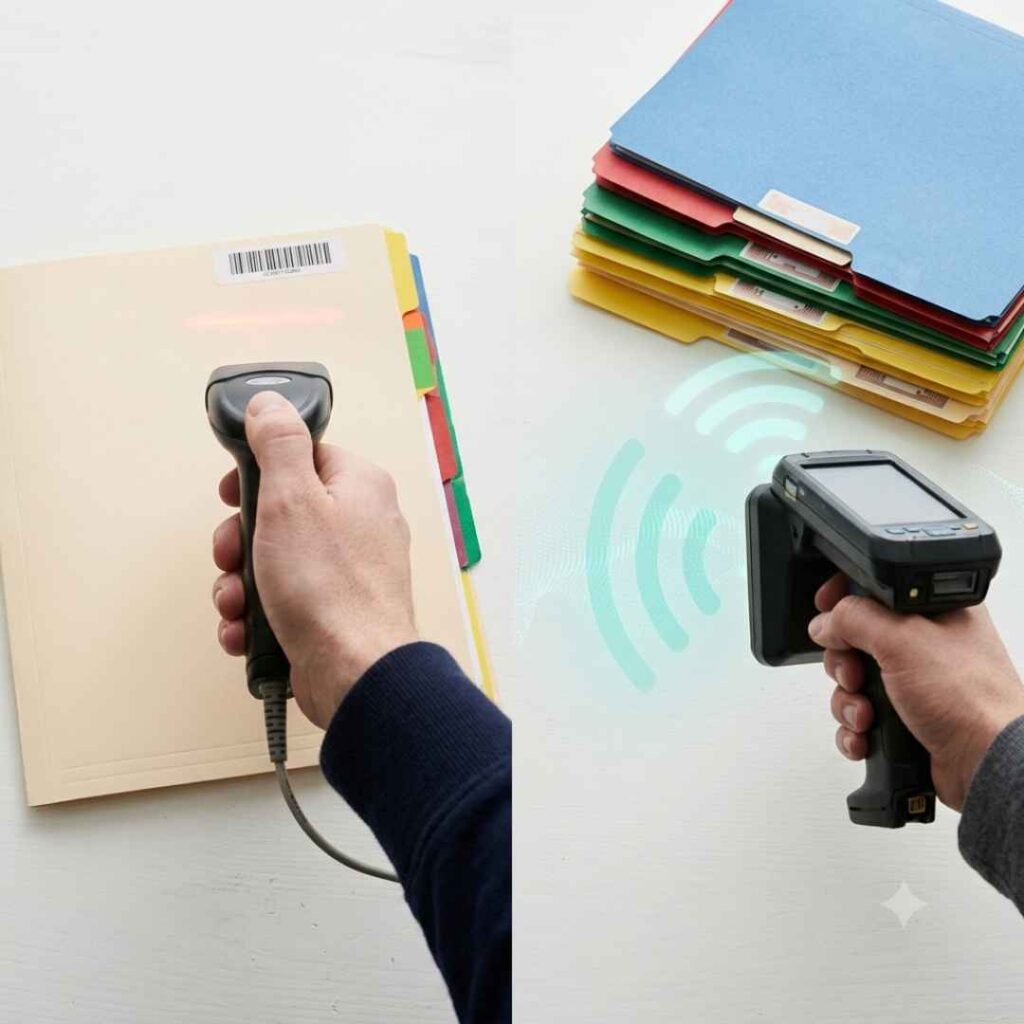
Barcode and RFID tracking
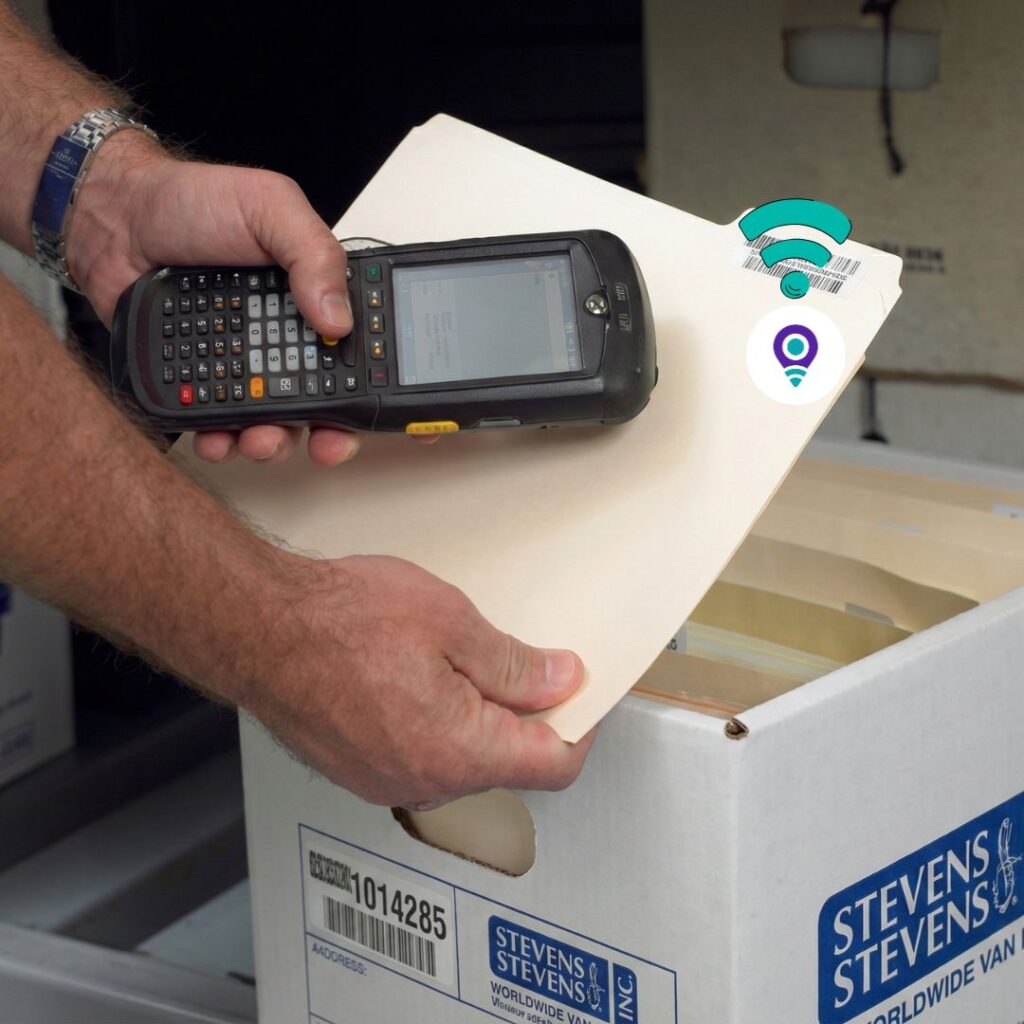
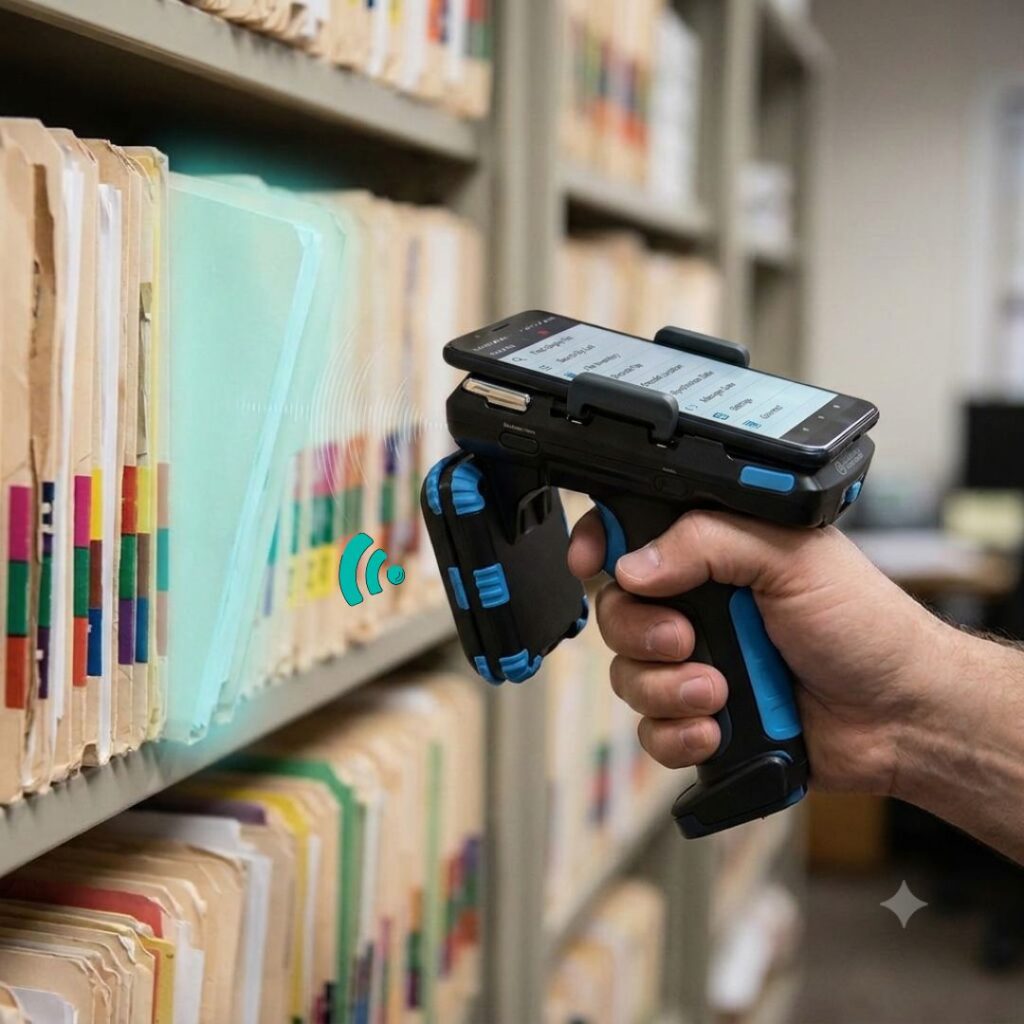
Use barcode labels for cost-effective check-in/check-out and inventory workflows, or RFID for faster multi-file scanning, locating, and automated movement detection. RFID mobile scanners can identify files at a distance and help staff locate misplaced folders using visual and audio cues.
Check-out and check-in
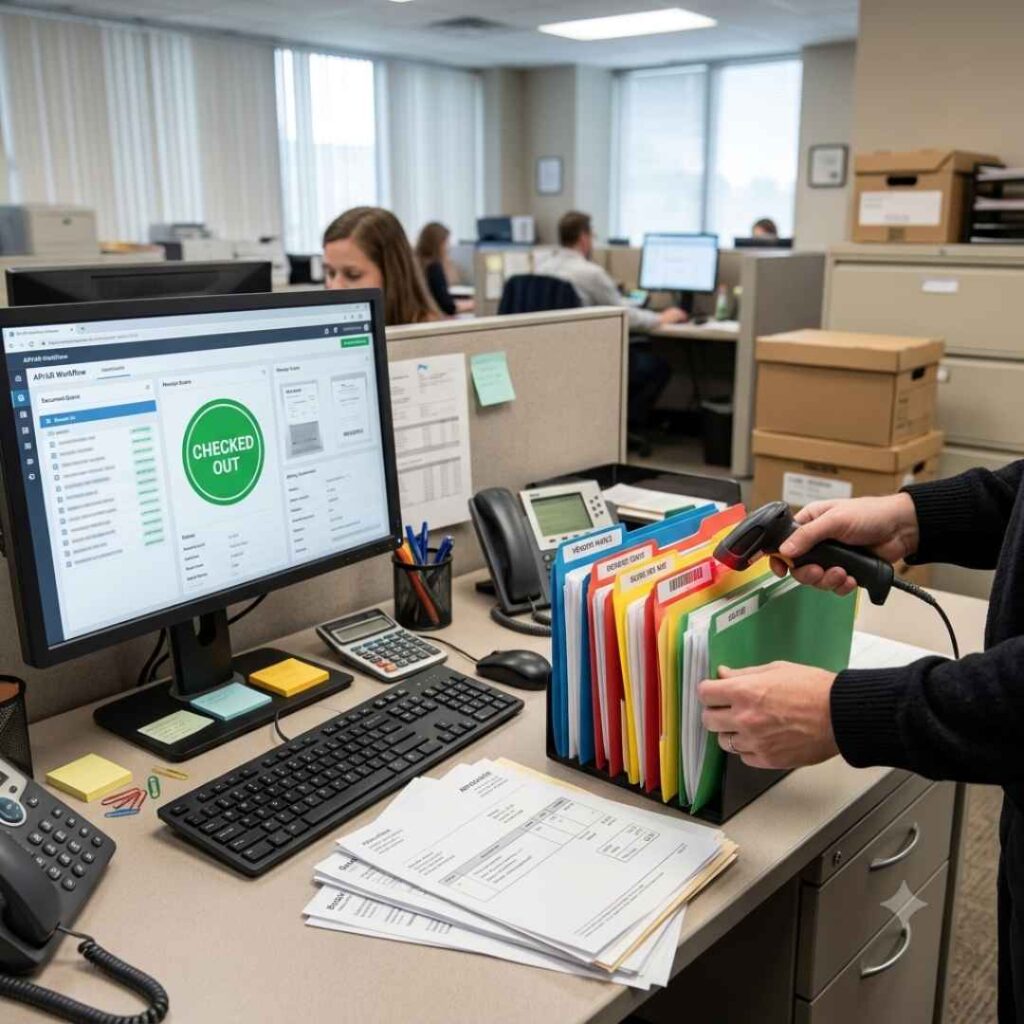
Scan a file at the point of issue and return. The system records who took the file, when it was taken, where it was delivered, when it was returned, and its complete movement history.
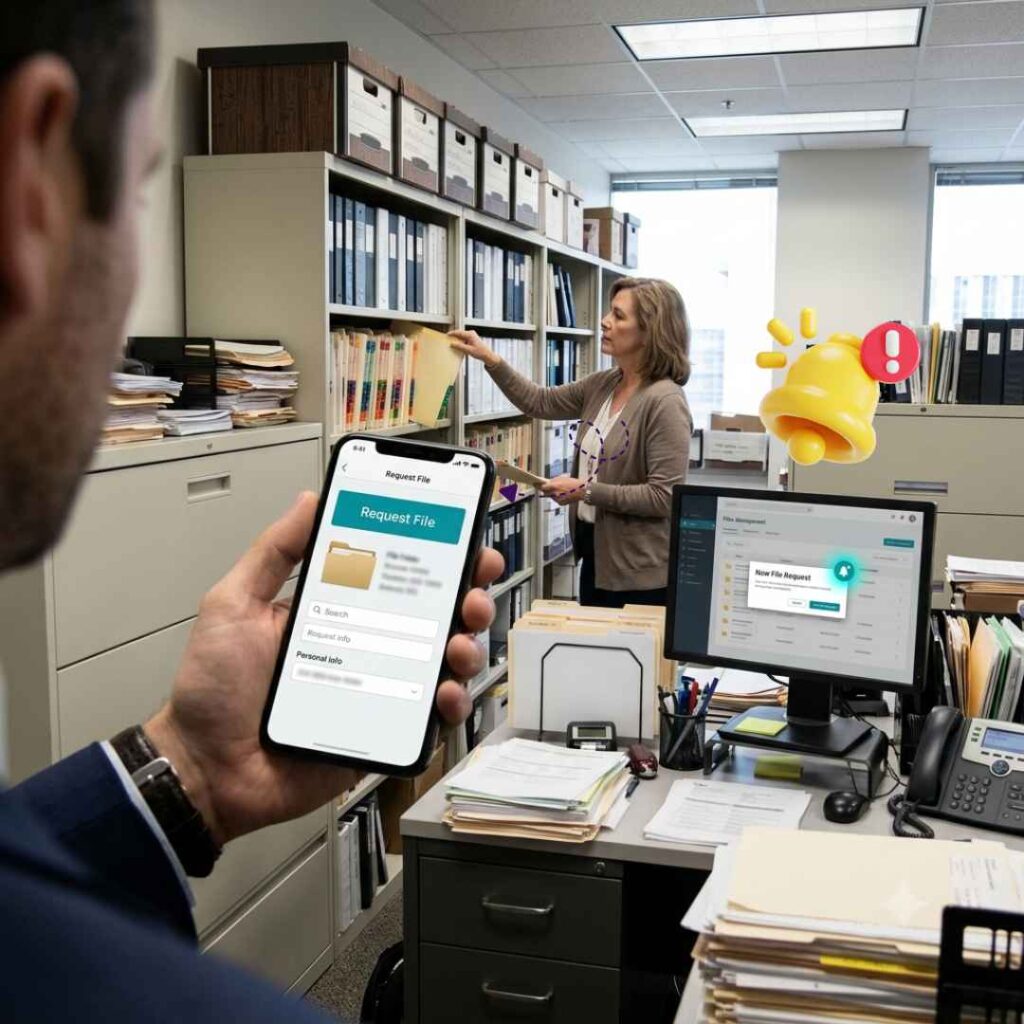
File requests and reservations
Staff can request or reserve a client file electronically. Records teams receive task notifications, prepare the file for pickup, and update its status without phone calls or manual searches.
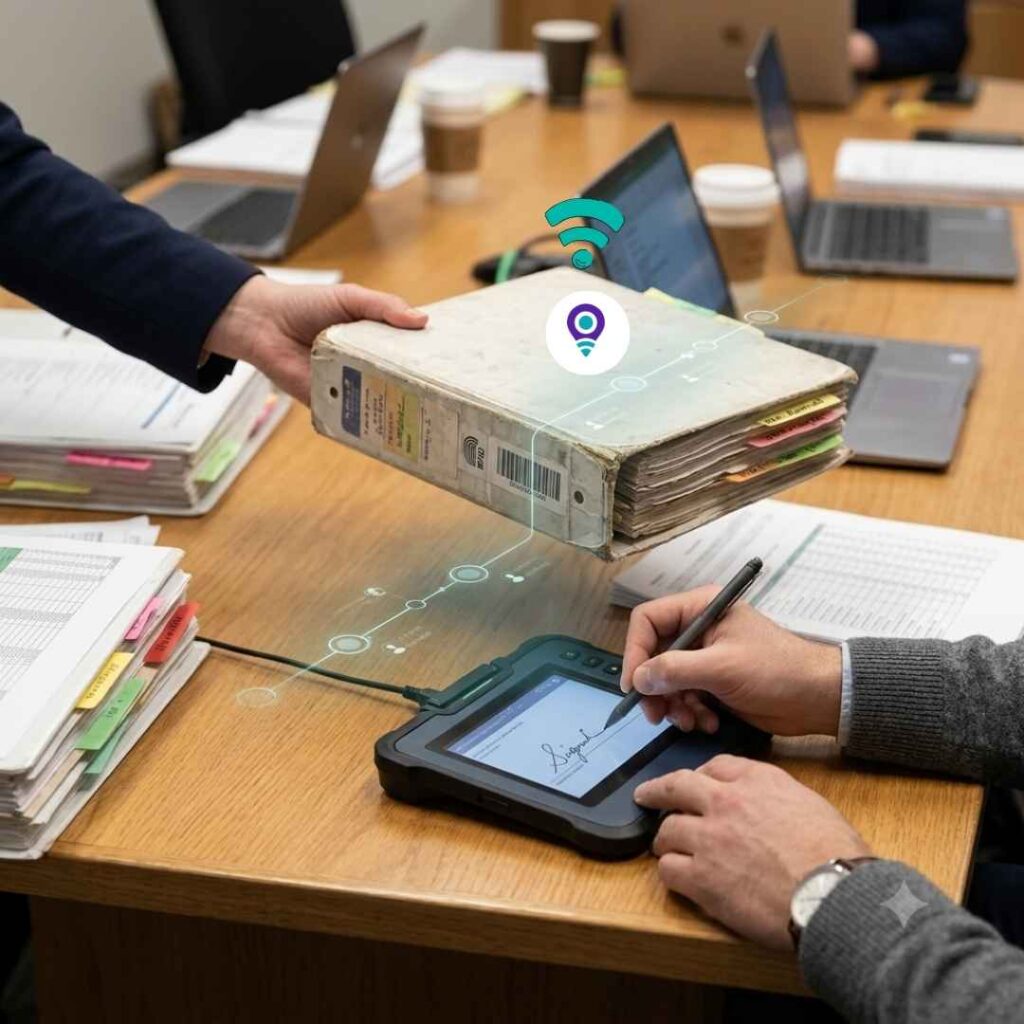
Audit trails and chain of custody
Every transfer, scan, status change, and user action can be recorded in an audit trail. Electronic signature capture can validate chain of custody when files are handed to another person.
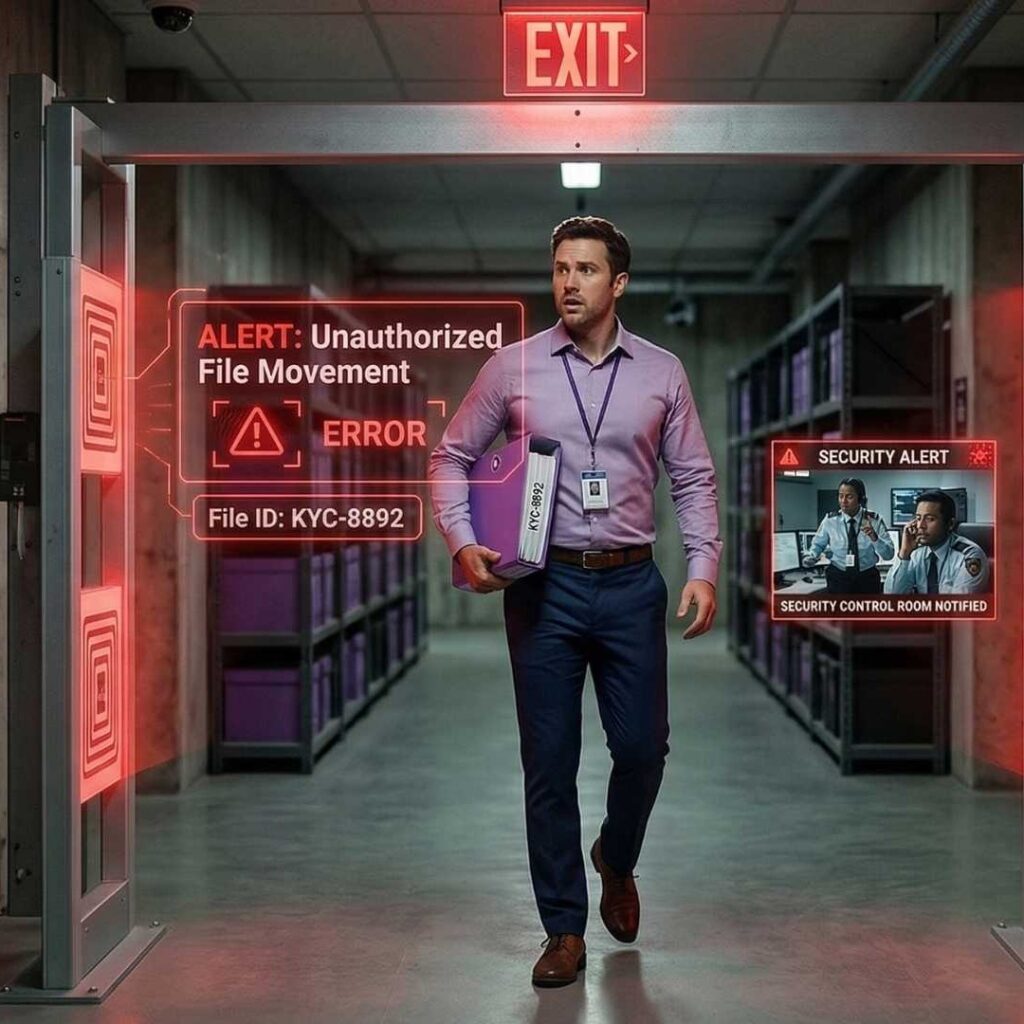
RFID exit security
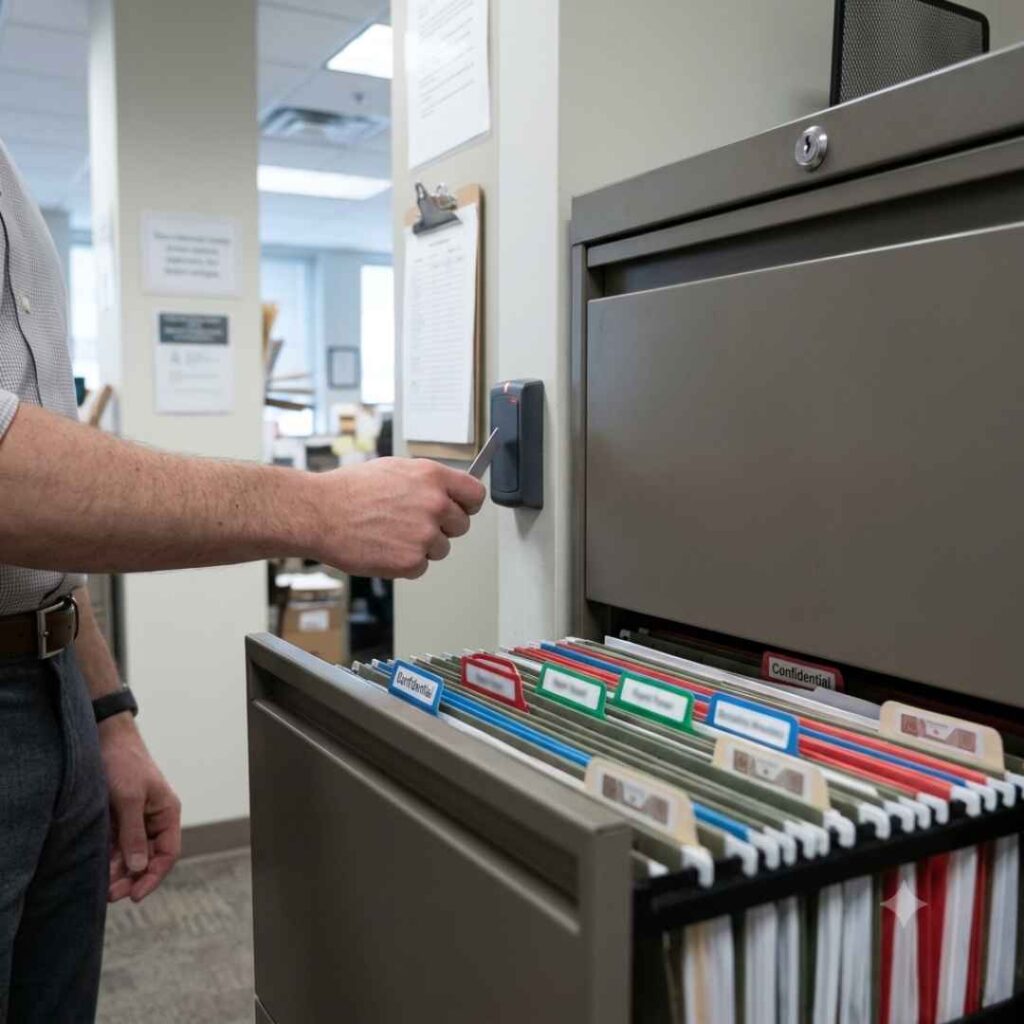
RFID antennas at file-room or building exits can detect files leaving an area. If a file is not authorized for removal, the system can trigger alerts and flashing lights, helping prevent unauthorized removal of confidential records.
Archive and retention management
Track archive boxes, binders, and inactive files by storage location. Configure retention rules, archive requests, destruction workflows, and disposal records to support compliance and information-governance policies.
File-room and facility tracking zones
RFID antennas can be installed at doorways, work areas, hallways, elevators, or other defined zones to automatically detect file movement and record the last known location.
Mobile inventory and file location
Use handheld RFID/barcode scanners to inventory files in circulation, scan storage locations, audit entire file rooms, and locate missing files quickly.
What the system tracks
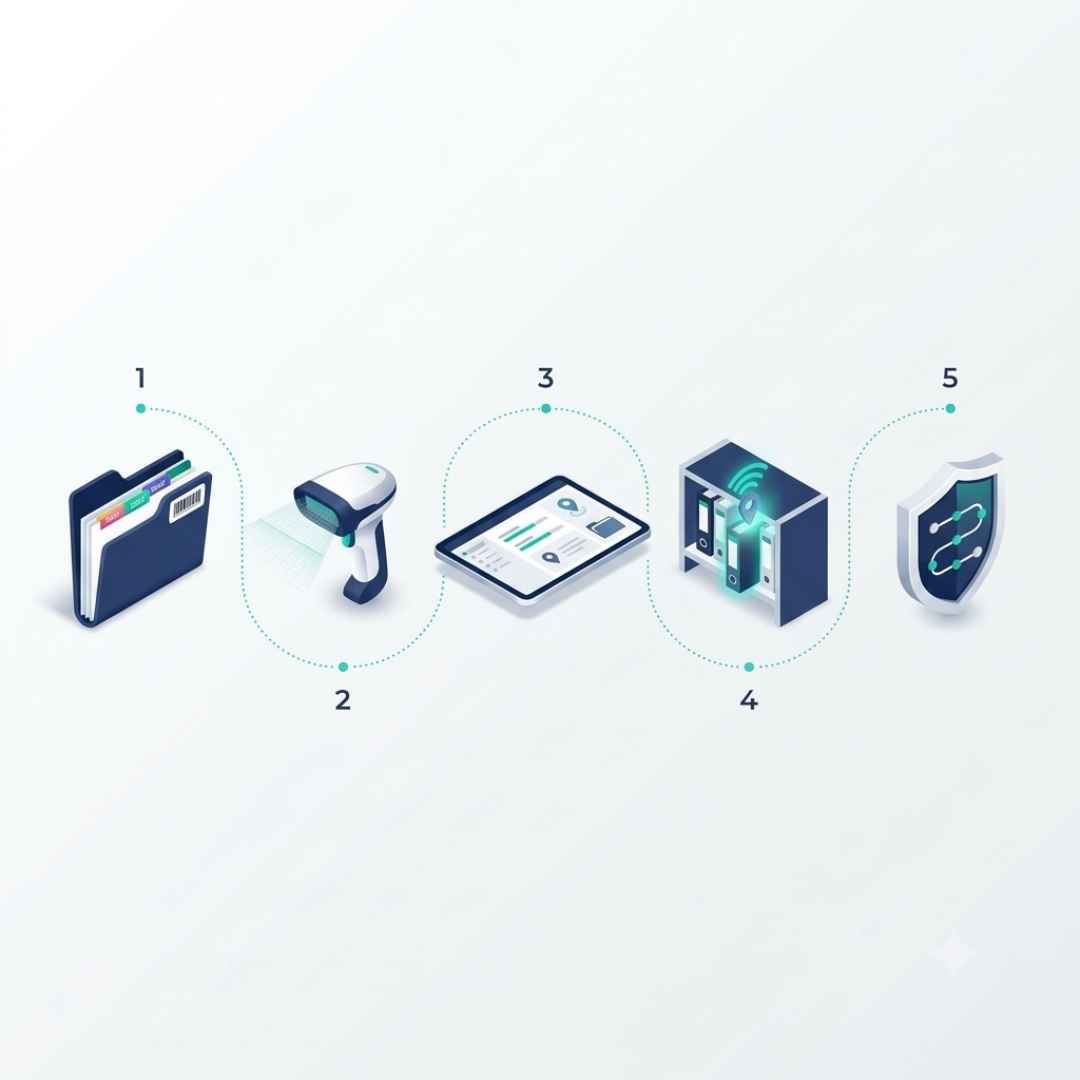
1. Label client files
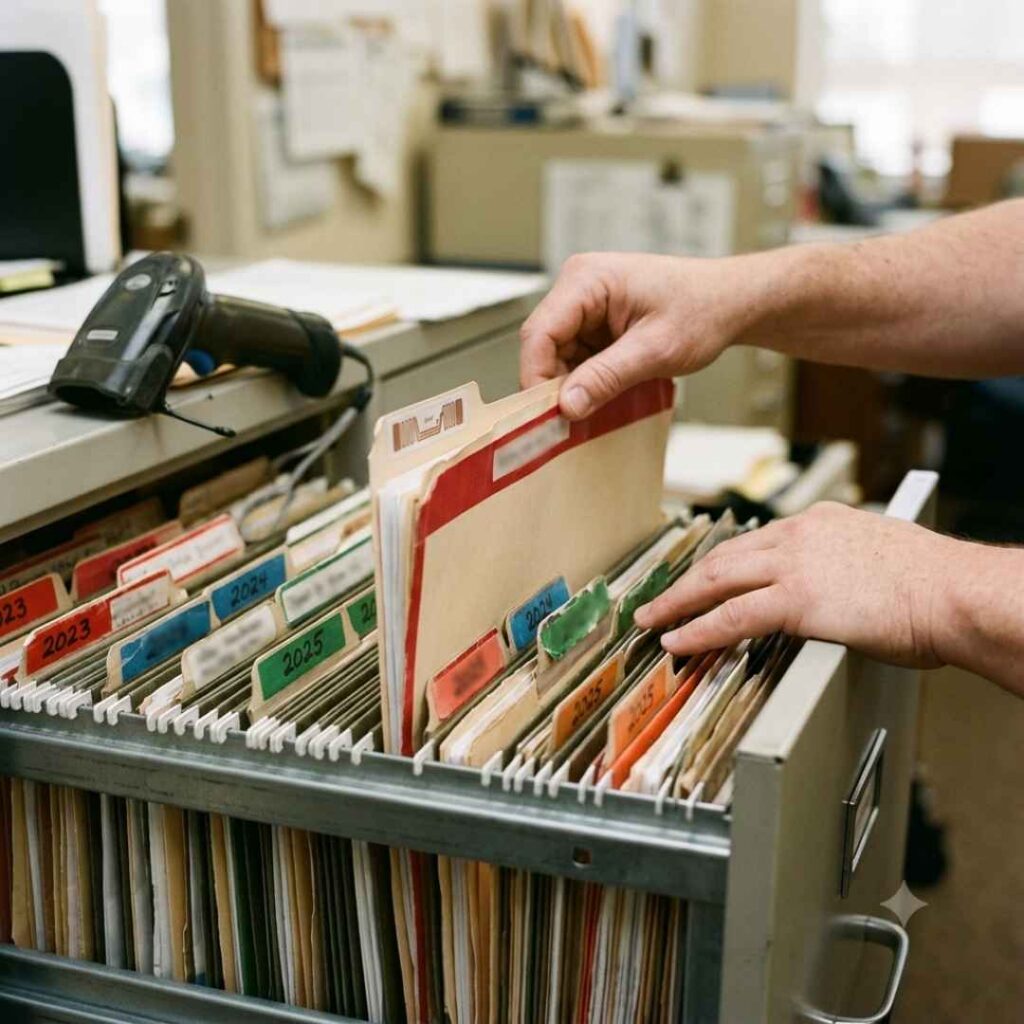
Apply barcode labels, RFID tags, or combined barcode/RFID labels to client folders, archive boxes, and storage locations. Labels can include file numbers, client identifiers, color codes, and other indexing data.
2. Create file records
Import existing file data or create records with configurable fields such as client name, engagement type, tax year, department, partner, file status, retention date, and storage location.
3. Track movement
Staff scan files during check-out, transfer, delivery, return, and archiving. RFID zones can automatically detect movement through defined areas of the office.
4. Locate files instantly
Search the system or use a mobile RFID scanner to identify the current or last known location of a file. RFID scanners help staff find files using a cold-warm-hot indication and audio feedback.
5. Audit and report
Run inventory scans, identify discrepancies, review overdue files, and generate audit-ready reports for management, compliance, or client-service reviews.
Benefits for Accounting and Tax Firms
| Business outcome | How IoTFileTracker helps |
| Faster file retrieval | Search and locate client files instantly using barcode or RFID tracking. |
| Fewer lost files | Track every check-out, return, transfer, and archive movement. |
| Stronger confidentiality | Maintain access controls, audit trails, and RFID exit alerts for sensitive records. |
| Better busy-season efficiency | Reduce time spent searching for tax files, payroll records, and audit working papers. |
| Audit readiness | Produce movement histories, inventory reports, and chain-of-custody records on demand. |
| Improved archive control | Track archive boxes, storage locations, retention dates, and disposition tasks. |
| Multi-office visibility | Standardize file tracking across departments, branches, and offsite storage. |
| Higher staff productivity | Replace manual searches and spreadsheet-based tracking with scan-based workflows. |
Designed for CPA Firms, Tax Practices, and Audit Teams
IoTFileTracker can be configured for the workflows of
Deployment Options
- Cloud deployment
Use a secure cloud environment for faster implementation, remote access, and lower infrastructure overhead. - On-premise deployment
Deploy the system on your own servers where data-residency, internal IT policy, or security requirements require it. - Barcode-first implementation
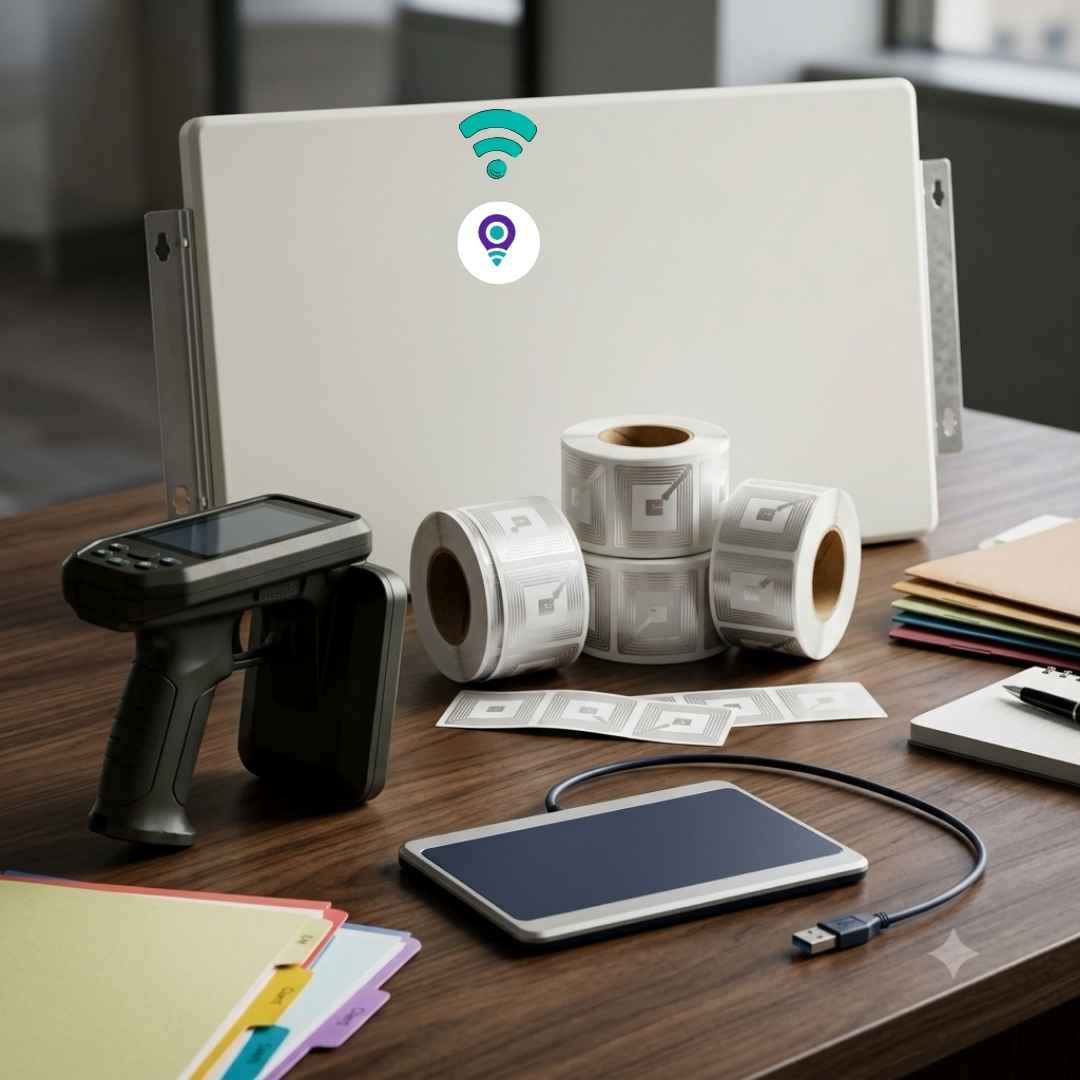
Start with barcode labels, USB or mobile scanners, check-in/check-out, and inventory reports—an affordable option for small and mid-sized firms. - RFID-enabled implementation
Add RFID tags, mobile scanners, desktop detection zones, doorway antennas, and exit security for firms that need faster audits and stronger physical security.
IoTFileTracker team is equipped to handle installations across the Globe through our Technical partners
Implementation and Support
IoTFileTracker provides end-to-end implementation support, including requirements analysis, software configuration, data population, label design, hardware deployment, user training, and ongoing support.
Current-state file-management assessment
File taxonomy and metadata design
Barcode/RFID label design and printing
Data import and file-record setup
Scanner, printer, and RFID hardware deployment
Integration with existing business systems
Staff training and change-management support
Ongoing maintenance, updates, and technical support
Why Choose IoTFileTracker?
IoTFileTracker combines proven file-management software with barcode and RFID tracking technology to help accounting firms gain control over physical and hybrid records. The platform supports configurable templates, task management, dashboards, reporting, electronic documents, security workflows, and integration with existing applications.
What sets it apart
- Built for physical, digital, and hybrid record environments
- Supports barcode and RFID tracking
- Configurable for accounting, tax, payroll, AP/AR, and audit file types
- Complete chain-of-custody and audit-trail capabilities
- Archive, retention, and disposition management
- Scalable from a single office to multi-location firms
- Turnkey implementation, training, and support
Representatives Projects and Customers
Bank United
Department of Homeland Security
John Hopkins Medicine
Douglas County, Nebraska
Arent Fox Law Firm
Supreme Court, Canada
U.S Department of Commerce
Department of State, USA
Department of Labor, USA
The University of California
Shelby County Sheriff
Public Service Pension Fund
Plains All American Pipeline
Zurich Health
Elanco Animal Health
New Jersey Courts
Federal Civil Service Commision
Provident Bank
JRJ Tax
Republic of Botswana
Department of Transportation
Chicago Housing Commission
USDA
NIST
NTC
FAQ's
What is a file management system for accounting firms?
It is a system that helps accounting and tax firms organize, track, secure, and retrieve client files and internal accounting records. It typically includes file-tracking software, barcode or RFID labels, scanners, check-in/check-out workflows, audit trails, and reporting tools.
Can it track both paper and digital accounting records?
Yes. IoTFileTracker supports hybrid records management by linking electronic documents to physical file records, allowing firms to manage paper folders and digital documents in one system.
How does RFID help accounting firms?
RFID enables faster scanning of multiple files, mobile file location, automated movement detection at doorways or work areas, and exit-security alerts for unauthorized file removal.
Can the system track audit working papers?
Yes. Firms can configure templates for audit files, working papers, trial balances, adjusting entries, review notes, and supporting documentation, while maintaining a complete movement history.
Is it suitable for small accounting firms?
Yes. A barcode-based implementation can provide an affordable starting point for smaller firms, while RFID and multi-location capabilities can scale as the firm grows.
Can it help with record retention and secure disposal?
Yes. The system supports archive tracking, retention scheduling, destruction workflows, and disposition reporting to help firms manage records according to internal policy and compliance requirements.
One Tracking Ecosystem. Infinite Possibilities.
Whether you’re tracking weapons in an armory, files in an archive, assets in production, personnel in the field, or inventory in a warehouse, Tracker IoT unifies them all.
By combining precision tracking with real-time analytics, compliance assurance, and seamless integration, Tracker IoT becomes the central nervous system of your operations — helping you achieve greater visibility, efficiency, and control than ever before.