In the architecture of information governance, the physical storage environment is often the most neglected component. While organizations invest heavily in digital security and software, the physical “home” of their records—the shelving—is frequently a patchwork of legacy cabinets and inefficient racks. For government agencies, healthcare systems, and legal firms, this neglect leads to a hidden tax on operations: wasted floor space, high labor costs, and significant delays in information retrieval.
True excellence in records management storage requires a dual-layered approach. It begins with high-performance physical infrastructure designed for density and ergonomics, and it is perfected by a digital file tracking system like IoTFileTracker. By integrating modern shelving solutions with RFID-enabled visibility, organizations can transform their archives from a liability into a streamlined, high-productivity asset.
Limitations of Traditional Drawer-Based Filing
For decades, the four-drawer lateral or vertical filing cabinet was the industry standard. However, in a modern, high-volume file registry design, these units are increasingly obsolete due to several critical failures:
- Space Inefficiency: Drawer cabinets require significant “aisle swing” space. You must have enough floor area to fully extend the drawer, which effectively doubles the footprint of the unit itself.
- Ergonomic Constraints: Staff must constantly pull and push heavy drawers, leading to repetitive strain and physical fatigue. Furthermore, records in the bottom or back of a drawer are difficult to access, leading to “forgotten” inventory.
- Access and Visibility Challenges: When staff close a drawer, they make the records invisible. There is no way to perform a visual audit or a quick “at-a-glance” check for misfiles, which is a core pillar of records management best practices.
What Is Open-Shelf File Storage?
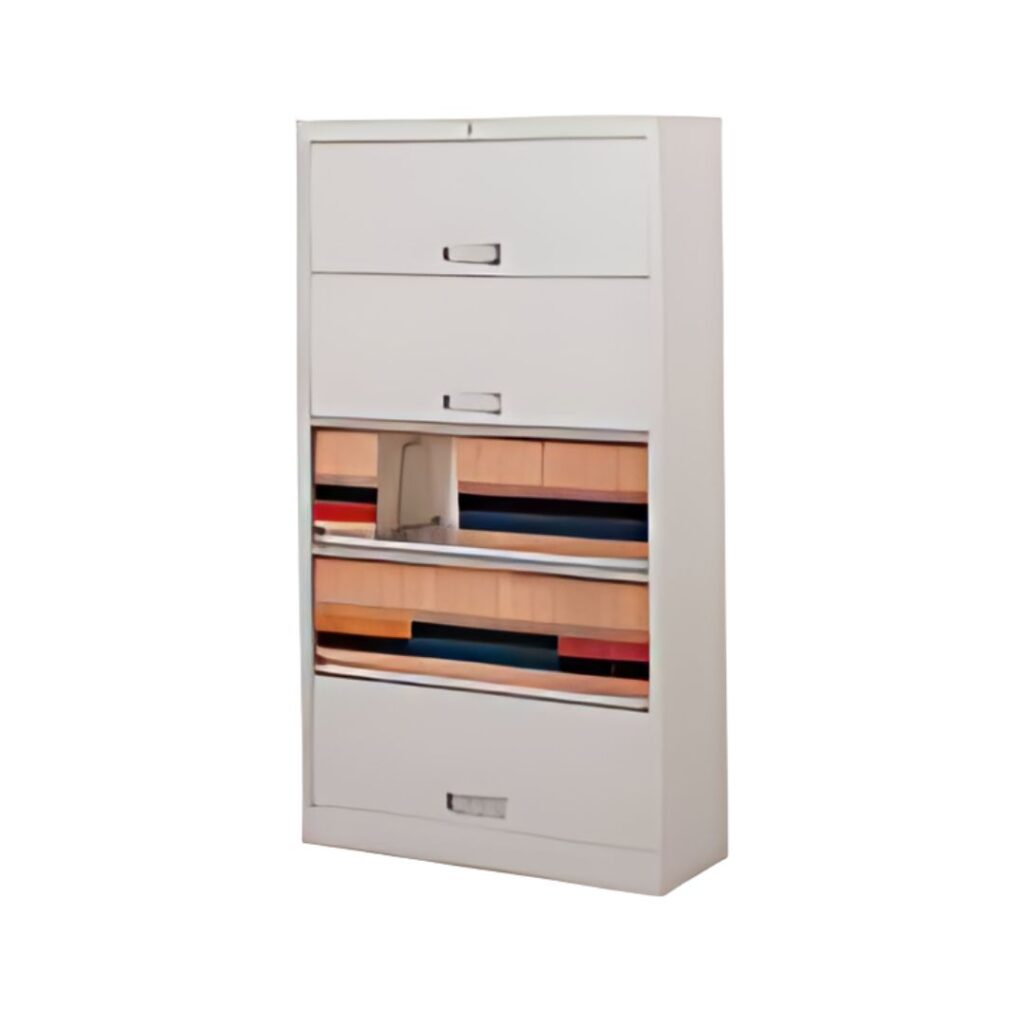
The first step in modernizing a registry is moving from “hidden” drawer storage to open shelving for files. Open-shelf systems utilize vertical space and side-tab (end-tab) folders to keep the record index visible to the aisle at all times.
Visibility and Accessibility Advantages: Open shelving allows multiple staff members to access different sections of the registry simultaneously—something impossible with drawer cabinets where a single open drawer blocks others. When paired with IoTFileTracker, open shelving becomes a “Live Registry.” Because the folders remain exposed, RFID scanners interrogate the shelves without opening a single drawer, delivering instantaneous inventory accuracy.
Space Utilization Benefits of Open Shelving
The primary driver for adopting open shelving is the dramatic reduction in floor-space requirements.
- Vertical Storage: Open shelves can easily extend to seven or eight levels high, whereas drawer cabinets are rarely practical above five.
- Footprint Reduction: Because there are no drawers to pull out, the aisles can be much narrower. Organizations transitioning from drawers to open shelving typically recover 40% to 60% of their floor space, allowing more room for revenue-generating activities or additional storage capacity.
Mobile High-Density Shelving Systems
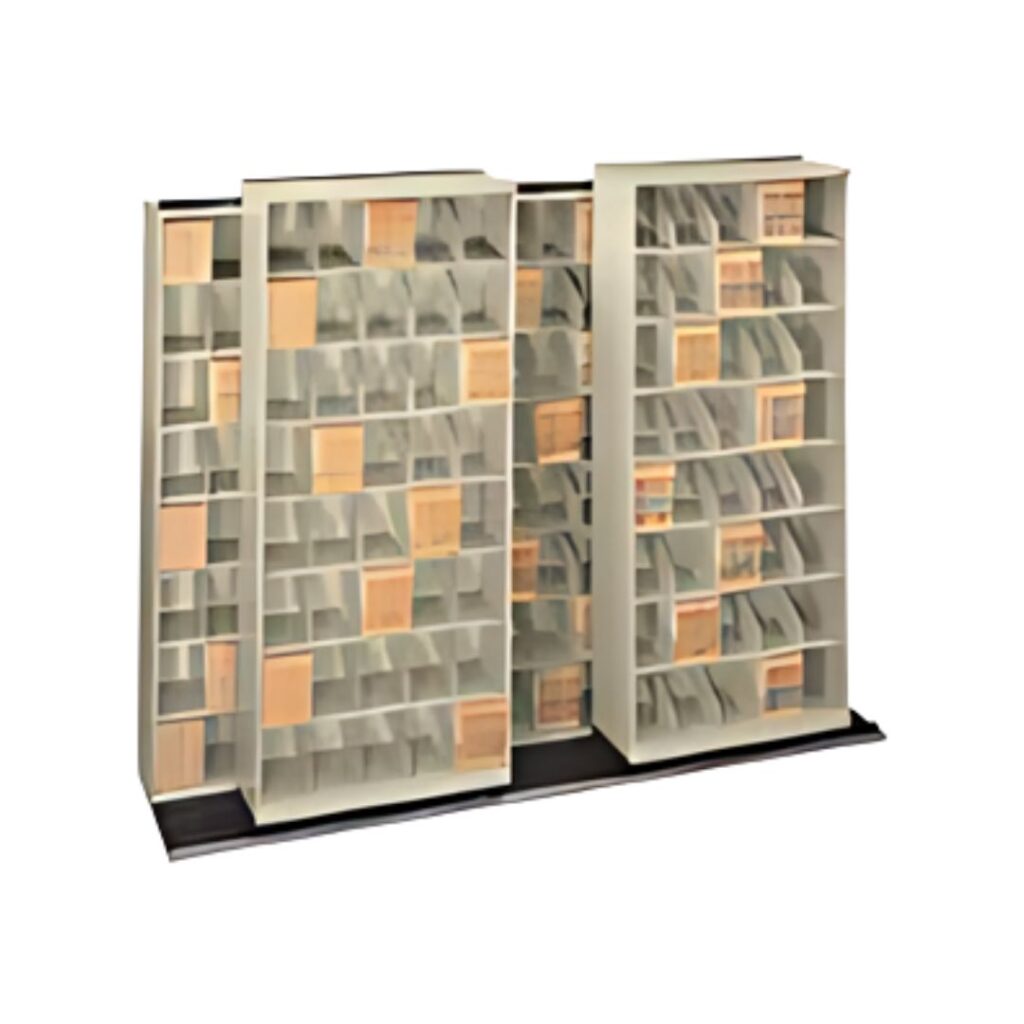
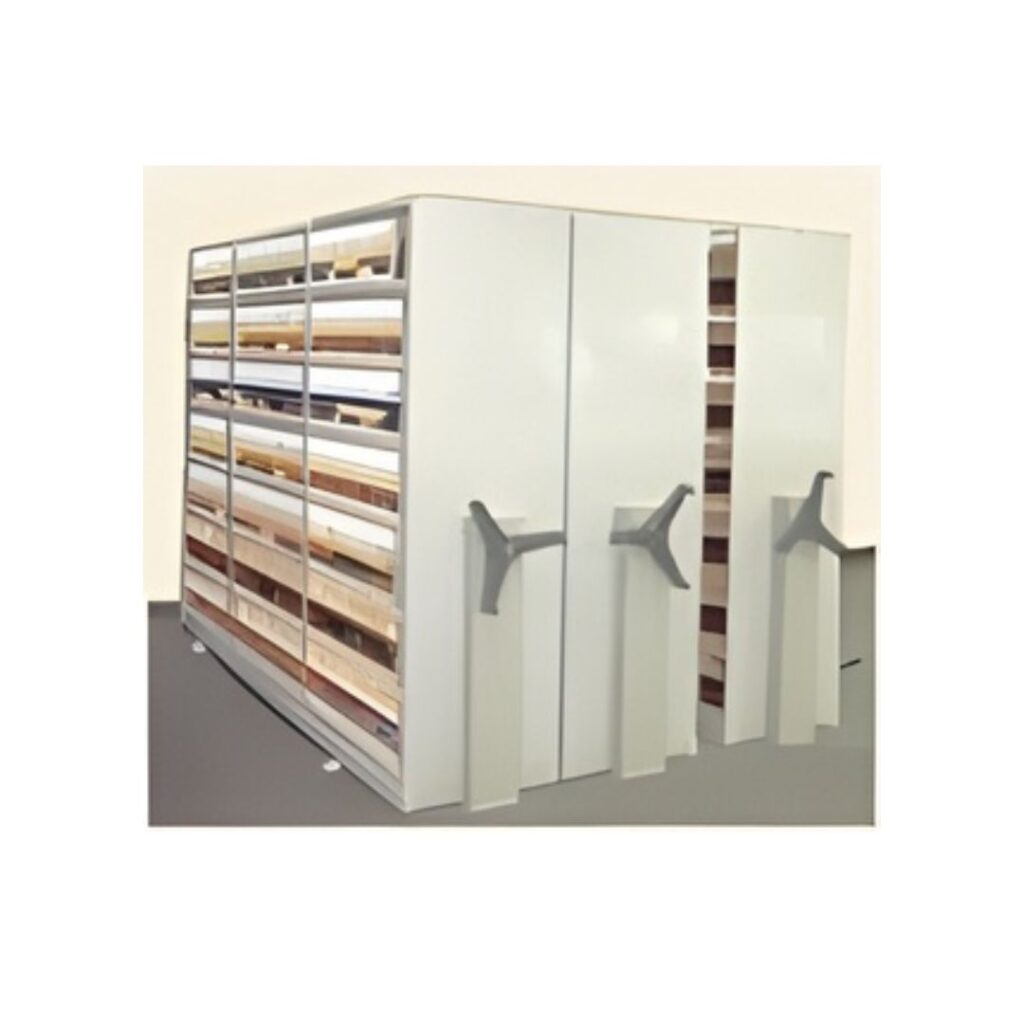
When space is at an absolute premium, high-density shelving systems (also known as mobile shelving) are the premier solution. These systems mount shelving units on wheeled carriages that travel on tracks embedded in the floor.
Sliding Carriage Systems: In a standard fixed-aisle layout, designers dedicate 50% or more of the room to “dead space” for aisles. Mobile shelving systems eliminate this waste by having only one “floating” aisle. When a staff member needs a record, they move the units to open an aisle exactly where it is needed.
Manual vs. Electronically Assisted Movement
- Manual/Mechanical Assist: Operated by a hand-crank.
- Electronic Control: Units move at the touch of a button and include safety sensors to detect objects or people in the aisle.
When these systems integrate with IoTFileTracker, the software signals the shelving to open the specific aisle where users locate the searched file, creating a seamless bridge between digital intent and physical access.
Rotary and Circular File Storage Systems
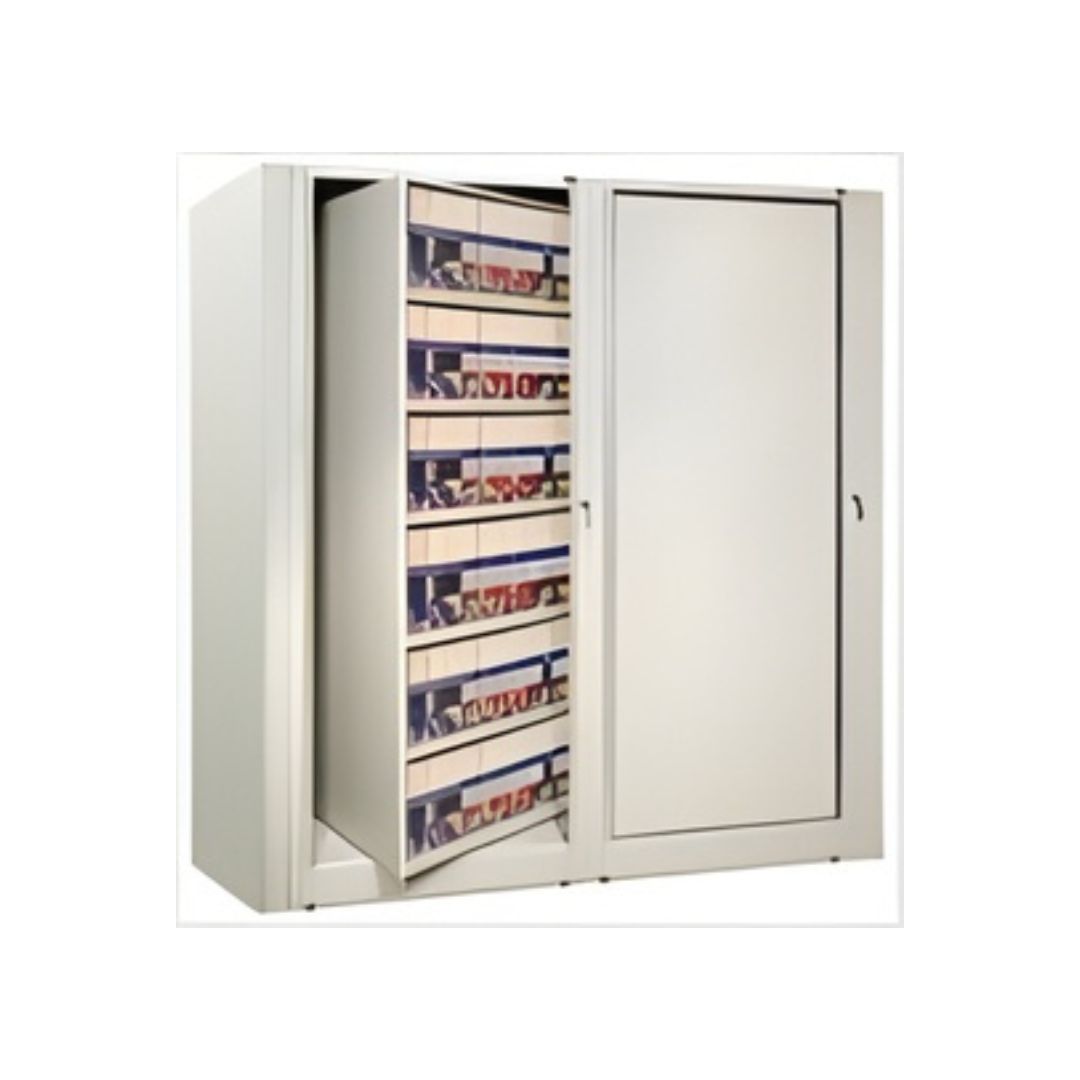
For smaller footprints or departmental use, rotary filing systems provide 360-degree access to records. These are double-sided units that spin within a fixed housing.
- Security: These units can be spun to a closed, locked position, protecting sensitive data from unauthorized view.
- Space Saving: A single rotary unit can hold the equivalent of three to four lateral filing cabinets while occupying a fraction of the space.
Vertical Lift Filing and Archive Systems
The pinnacle of automated storage is the Vertical Lift Module (VLM) or Vertical Carousel. These systems utilize the full height of a facility (often up to 20 or 30 feet) and deliver files directly to a seated operator at an ergonomic “pick station.”
- Push-Button Access: The user enters a file number into a keypad or the IoTFileTracker interface, and the internal carriers rotate to deliver the record.
- Ergonomics and Safety: This “goods-to-person” model eliminates walking, reaching, and bending, drastically reducing the risk of workplace injuries.
Electronic Control and Software Integration
Modern file storage systems are increasingly software-driven. The integration of IoTFileTracker with automated shelving creates a high-performance ecosystem:
- Search: A user searches for a case file in IoTFileTracker.
- Locate: The software identifies the specific carriage and shelf.
- Activate: The software sends a command to the high-density shelving to open the correct aisle or rotate the carousel to the correct level.
- Verify: The user plucks the file, and the RFID tag on the folder confirms the “checkout” via a nearby sensor.
Security Advantages of Enclosed and Controlled Shelving
Storage is not just about density; it is about records management compliance. High-density systems can be equipped with security features that traditional shelves lack.
- Restricted Access: Electronic systems can require a badge scan or PIN to open specific carriages.
- Audit Trails: IoTFileTracker logs not just who took the file, but also when the shelving unit was accessed, creating a redundant layer of security for highly sensitive or classified records.
How IoTFileTracker Enhances High-Density Storage Systems
High-density storage solves the “space” problem, but it can exacerbate the “finding” problem if not managed correctly. IoTFileTracker is the visibility layer that ensures you never lose a file within a compact system.
- Tracking Within Compact Storage: RFID signals can penetrate through many carriage materials, allowing for a “hidden” inventory count.
- Reducing Search Time: By pinpointing the exact shelf and carriage, the software eliminates the need to “hunt” through dense rows of folders.
- Improving Inventory Accuracy: Routine RFID file tracking audits ensure that staff locate misplaced files during the next automated sweep, even if someone places them in the wrong carriage.
Productivity and Cost Benefits
Investing in the synergy of high-density hardware and IoTFileTracker software delivers a clear ROI:
- Faster Retrieval: Reduce the time spent walking and searching by up to 70%.
- Reduced Labor: Fewer staff members can manage a much larger volume of records.
- Better Use of Floor Space: Delay or eliminate the need for costly facility expansions or off-site storage fees.
Best Practices for Designing a Modern File Registry
When designing or modernizing a registry, consider the following:
- Assess Growth: Plan for 5-10 years of record accumulation.
- Prioritize Access: Place high-circulation files in the most accessible “Golden Zone” (waist-to-shoulder height).
- Align Technology: Ensure your shelving is RFID-friendly to support accurate signal transmission. Avoid solid metal enclosures where signal penetration is required, and use open-wire decking to facilitate proper signal flow.
Conclusion
Shelving and high-density storage systems are the physical foundation of any professional records program. However, physical infrastructure is only half of the solution. To achieve total efficiency and compliance, organizations must make that infrastructure “intelligent.” IoTFileTracker by TrackerIoT delivers the visibility and location intelligence required to maximize your storage investment. By combining high physical density with advanced digital tracking, your organization ensures every record remains secure, every aisle operates efficiently, and every file stays just a click away.