
In the traditional landscape of records management, the search for a missing file is almost always reactive. A deadline approaches, a court case begins, or an auditor arrives, and suddenly, a staff member realizes a critical folder is not where it belongs. What follows is an expensive and disruptive “all-hands” search that drains productivity and compromises organizational security.
To move beyond this inefficient cycle, modern enterprises are adopting a proactive posture. The goal is no longer to “find” a lost file, but to ensure that a file is never lost in the first place. This is achieved through the strategic deployment of RFID detection zones managed by the IoTFileTracker platform. By transforming a static facility into an intelligent, sensor-aware environment, organizations can maintain total visibility over their physical records, enforcing security and compliance in real-time.
What Are RFID Facility Detection Zones?
An RFID detection zone is a defined area within a facility—such as a doorway, a hallway, or an entire department—equipped with fixed RFID readers and antennas. Unlike manual barcode systems that require a person to physically scan an item, these zones are “always on.”
As an RFID-tagged folder passes through or resides within these zones, the hardware “interrogates” the tag and sends the data back to IoTFileTracker. The system then automatically updates the file’s location, status, and chain of custody. Essentially, detection zones act as a digital net that catches every movement of a record, reducing the uncertainty of file location to nearly zero.
Why Fewer Possible Locations Matter
The fundamental philosophy of a high-performance file tracking system is the reduction of variables. In a facility without facility RFID tracking, a file could be anywhere: on a desk, in a breakroom, in a car, or misfiled in a different department.
By installing RFID detection zones at key transition points (like the entrance to the Legal Department or the elevator lobby), IoTFileTracker limits the “possible locations” of a file. If the system knows a file entered the 3rd-floor North Wing and never left, the search area is instantly narrowed from 50,000 square feet to 2,000 square feet.
- Faster Retrieval: Staff go directly to the correct zone rather than hunting through the entire building.
- Reduced Disruption: You no longer need to interrupt dozens of employees to ask if they have seen a specific folder.
- Improved Productivity: Records managers spend their time on governance and high-value tasks rather than “detective work.”
Where RFID Detection Zones Can Be Installed
The flexibility of records management technology allows for a customized “density of detection” based on the facility’s layout and the sensitivity of the records.
Offices and Work Areas: Placing detectors in active work zones ensures that when a file is “in use,” it is still visible. This is critical for high-traffic environments where files move rapidly between team members.
Hallways and Corridors: By monitoring the “arteries” of the building, IoTFileTracker can track the direction of travel. This allows the system to log a file as it moves from the central registry toward a specific administrative wing.
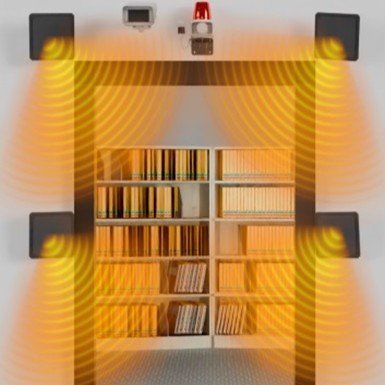
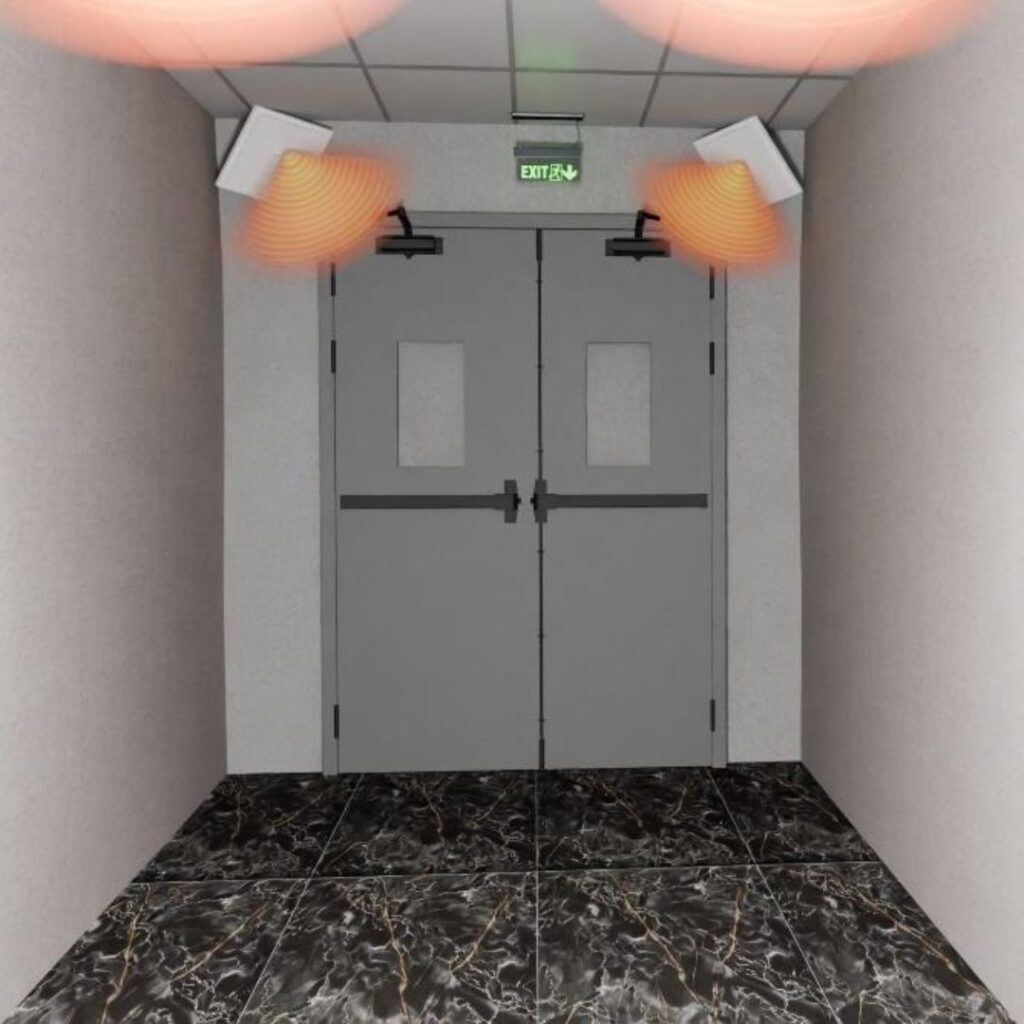
Elevators, Stairwells, and Exits: These are the most critical RFID security zones. Monitoring these transition points ensures that files do not move between floors or leave the secure perimeter of the building without an authorized checkout.
High-Security or Restricted Areas: For classified or sensitive records, specific rooms can be “geofenced.” If a file with a high-security classification enters a low-security zone, the system can trigger an immediate alert.
Designing Detection Zones for Granularity
When designing an enterprise file tracking deployment, organizations must balance granularity with cost.
- High Granularity: A reader at every desk provides “desk-level” accuracy but requires more hardware.
- Zonal Granularity: A reader at the entrance of a 10-person department provides “department-level” accuracy.
IoTFileTracker is designed to scale with your needs. Many organizations start by securing the “perimeter” (exits and file room doors) and then add internal zones to increase precision in high-traffic areas over time.
RFID Readers and Antenna Architecture
The “eyes” of the RFID file tracking system are the readers and antennas. In a facility-wide architecture, these are typically network-connected devices.
Ethernet and Power-over-Ethernet (PoE)
Modern RFID readers utilize PoE, meaning a single network cable provides both the data connection and the electrical power. This significantly simplifies installation, as it eliminates the need for dedicated electrical outlets at every antenna location.
Reader-to-Antenna Relationships
A single RFID reader can often support up to four or eight separate antennas. This allows a single reader to monitor a complex intersection of hallways or several adjacent office doorways, maximizing the ROI of the hardware.
Antenna Placement Strategies
Placement is as much an art as it is a science. Antennas must be positioned to maximize the “read field” while remaining unobtrusive.
- Ceiling and Above-Ceiling Placement: Antennas can be hidden above drop-ceiling tiles for a clean, professional aesthetic while still maintaining a 10–20 foot detection radius.
- Wall and Corner Mounting: Swivel-mounted antennas allow for directional tuning, ensuring that the system only “sees” files in the intended zone and doesn’t pick up a tag sitting on a desk on the other side of a thin wall.
Naming Zones as Logical Locations
In the IoTFileTracker platform, every antenna or group of antennas is assigned a logical name (e.g., “Main Registry Exit,” “3rd Floor HR Intake,” or “Sarah’s Office”).
This naming convention turns raw radio data into actionable information. When a user queries a file, the system doesn’t return an antenna ID; it says, “Location: HR Intake.” This clarity is essential for accountability and makes reporting intuitive for non-technical staff.
Tracking File Movement Across Zones
One of the most powerful features of IoTFileTracker is the ability to view both the current and historical movement of a record.
- Current Location: Where is the file right now?
- Historical Audit: What path did this file take over the last 48 hours?
If a file is found in an unauthorized area, the historical query can show exactly who carried it there and through which doors it passed, providing a robust file tracking for compliance record.
Security Zones and Alerting
RFID detection zones serve as a proactive security force. Within IoTFileTracker, administrators can define “Security Rules” for different zones.
- Unauthorized Access: If a “Restricted” file enters a “Public” zone, an alert is triggered.
- Prohibited Exit: If any file approaches a facility exit without a “Cleared” status, the system can trigger:
- Visual/Audible Alarms: Flashing lights or sirens at the door.
- Digital Notifications: Instant Email, SMS, or desktop alerts to security personnel.
Integration with Records Management Processes
Facility-wide detection is the ultimate complement to the physical file room. When a file is checked out via IoTFileTracker, the doorway antennas confirm the exit. When the file is returned, the antennas confirm the check-in. This “closed-loop” workflow ensures that the chain-of-custody is never based on guesswork—it is based on verified physical events.
Operational and Compliance Benefits
Implementing RFID detection zones delivers a measurable ROI:
- Reduced Loss: Proactive alerts stop files from leaving the building accidentally.
- Improved Audit Readiness: You can provide a 100% accurate, time-stamped history of every record.
- Enhanced Productivity: Staff spend zero time searching for files that are “somewhere in the building.”
Industries That Benefit from Facility Detection Zones
Government and Public Records: Agencies managing sensitive citizen data or investigative files use these zones to prevent unauthorized disclosure and ensure FOIA readiness.
Healthcare and Patient Files: Hospitals use detection zones to track the movement of physical patient charts between floors and departments, maintaining strict HIPAA compliance.
Legal and Judicial Organizations: Courts and law firms protect the integrity of evidence and case files by ensuring they never leave secure “legal-only” zones without a record.
Conclusion
Facility-wide RFID detection is the most effective strategy for managing physical records in a complex enterprise. By shifting from a reactive “search” model to a proactive “visibility” model, organizations eliminate the risk of the “lost file” and the high costs associated with it.
IoTFileTracker by TrackerIoT provides the centralized intelligence needed to manage these zones, turning your entire facility into a secure, accountable, and highly efficient records ecosystem.