In the high-stakes world of information governance, many organizations mistake technology for a strategy. They assume that purchasing a piece of software will automatically resolve decades of fragmented indexing, inefficient workflows, and compliance gaps. However, true operational excellence in physical records management is not a product of software alone; it is the result of a disciplined, consulting-led approach that aligns physical architecture with digital intelligence.
At TrackerIoT, we view records management as a vital organizational discipline. Effective governance requires a deep understanding of records management best practices, from the physical design of the file registry to the automated enforcement of retention schedules. This is where records management consulting becomes indispensable. By combining expert-led system design with the foundational power of the IoTFileTracker platform, organizations can build records programs that are not only efficient but also resilient against the evolving landscape of regulatory risk.
What Is Records Management Consulting?
Records management consulting is the professional practice of auditing, designing, and modernizing the lifecycle of an organization’s information assets. It goes beyond simple “organization” to encompass the creation of a “defensible” records environment. This means every file is indexed according to a standard, every movement is tracked via a verified chain of custody, and every record is disposed of according to a legally sound retention schedule.
Consulting-led implementations ensure that the technology—specifically an RFID file tracking system like IoTFileTracker—is mapped to the specific operational realities of the organization. Whether you are managing millions of public records or sensitive patient documentation, professional guidance ensures that your records management solutions are scalable and compliant from day one.
The Challenges Organizations Face Without Proper Guidance
Without a consulting-led strategy, even the most expensive file tracking system will eventually fail. Common operational pitfalls include:
- Inconsistent Indexing: When different departments use different naming conventions, “Smith, John” becomes impossible to find among “J. Smith” or “Account #12345.”
- Inefficient File Registries: Poorly designed file rooms lead to “lost file” syndrome, where employees spend more time searching for data than analyzing it.
- Compliance and Retention Risks: Failing to destroy records at the appropriate time is just as dangerous as losing them. Over-retention creates a massive liability during legal discovery.
Consultants identify these bottlenecks during the initial audit phase, ensuring that the IoTFileTracker implementation addresses the root cause of the inefficiency rather than just masking it.
Defining File Indexing and Labeling Standards
The foundation of any registry is its index. A consultant’s role is to standardize the metadata—the DNA of the record.
Visual vs. Cognitive Filing
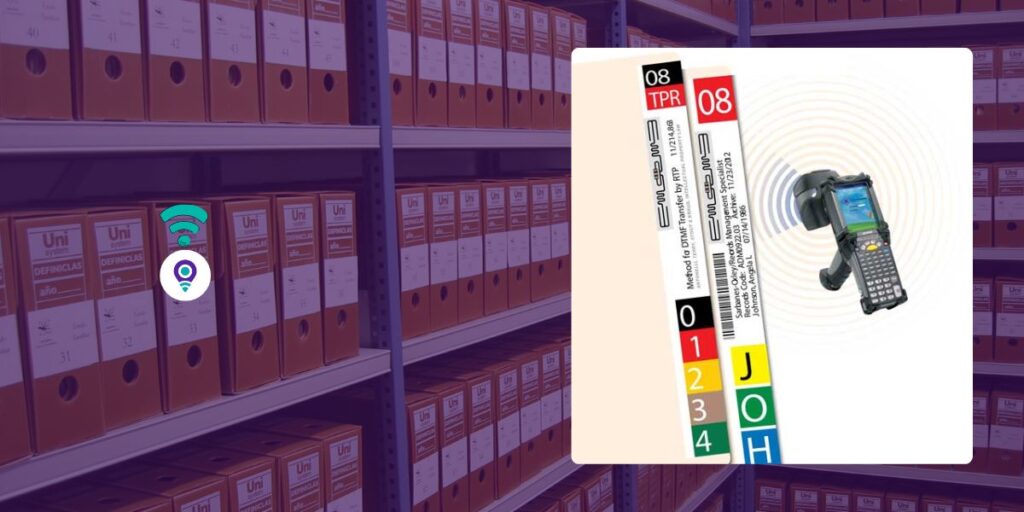
Professional consultants advocate for color-coded filing systems. This moves the organization from “cognitive filing” (reading every individual tab) to “visual filing” (recognizing color patterns). By utilizing IoTFileTracker to generate standardized, color-coded labels, organizations can eliminate misfiles. A misfiled folder creates a visual “break” in the color sequence on the shelf, allowing for instant error correction.
Designing Filing Systems and File Registries
The physical layout of the file room dictates the productivity of the staff. Consultants evaluate the pros and cons of various storage architectures:
- Open Shelving vs. Drawer Systems: Consultants typically recommend open-shelf filing for high-volume environments. It provides 50% more storage density than traditional drawer cabinets and allows for much faster RFID file tracking sweeps.
- High-Density Storage: For organizations with space constraints, rolling or rotating high-density shelving systems can double storage capacity without expanding the facility’s footprint.
By aligning the physical shelving with the IoTFileTracker digital map, consultants create a “Smart Registry” where every shelf location is a data point in the system.
Selecting and Implementing Best Practice File Folders
Not all folders are built for the rigors of an enterprise lifecycle. Consultants help organizations select materials based on handling frequency and retention length.
- Folder Types: From 14pt Manila for standard files to heavy-duty Pressboard for high-circulation records.
- Internal Organization: Implementing fasteners and partitions within the folder to secure documents. This prevents “folio loss” and ensures that the internal sequence of the file is maintained—a critical component of records management compliance.
Computerized File Registry Design
A manual file registry (paper out-cards) is a recipe for disaster at scale. A computerized registry is the only way to maintain total visibility. IoTFileTracker serves as the central “Source of Truth,” providing a real-time dashboard for:
- Current file location.
- Custody history (who has the file).
- Circulation status (is it overdue?).
Consultants design the workflows that feed this registry, ensuring that every “checkout” and “check-in” is a frictionless part of the employee’s day.
Integrating Retention Scheduling
One of the most valuable aspects of records management consulting is the development of a Global Retention Schedule.
Managing Lifecycle and Defensible Disposition
IoTFileTracker automates the enforcement of these schedules. When a record is created, the system assigns a destruction date based on its classification. The platform then generates “Destruction Eligibility Reports,” allowing managers to purge records systematically. This proactive approach significantly reduces legal exposure and lowers the physical cost of long-term records storage.
Barcode and RFID File Tracking and Security
While barcodes are a standard starting point, RFID file tracking is the pinnacle of modern records governance.
- Manual vs. Automated: Barcodes require line-of-sight scanning for every transaction. RFID allows for “bulk” scanning.
- Preventing Loss: IoTFileTracker utilizes RFID antennas at exit doorways. If an unauthorized record approaches an exit, the system triggers an alarm and sends an immediate SMS/Email notification.
Consultants determine the “Density of Detection” needed—identifying exactly where antennas should be placed to ensure no record leaves the secure perimeter without a digital record.
Electronic and Physical Records Coexistence
The modern office is a hybrid environment. Consultants provide the framework for when to digitize and when to maintain physical records.
- Digitization: Makes sense for high-access, low-security documents.
- Physical Records: Remain essential for original contracts, evidentiary materials, and records where the cost of 100% accurate digitization outweighs the cost of secure physical records management.
IoTFileTracker bridges this gap, allowing organizations to manage the metadata of both digital and physical files in a single, unified interface.
File System Conversions and Modernization
Transitioning from a legacy system (e.g., from top-tab drawers to side-tab open shelving) is a massive undertaking. Records management consulting provides the project management expertise to minimize operational disruption. Consultants oversee the “backfile conversion”—the process of re-labeling, re-indexing, and tagging existing folders with RFID inlays to bring the entire archive into the IoTFileTracker ecosystem.
How IoTFileTracker Supports Consulting led Implementations
IoTFileTracker is designed to translate high-level consulting best practices into daily operational reality. It is the platform that:
- Enforces Standards: Prevents the creation of a file without a proper index.
- Drives Accountability: Captures electronic signatures for every transfer of custody.
- Ensures Accuracy: Supports “Folio Validation,” ensuring that all documents are present within a folder before it is issued.
Industries That Benefit from Records Management Consulting
- Government & Public Records: Managing vast archives with absolute transparency and FOIA readiness.
- Healthcare: Protecting patient privacy while ensuring clinical charts are available for life-saving care.
- Legal & Compliance: Protecting the attorney-client privilege and the chain of custody for discovery materials.
- Enterprise HR: Managing employee files across global campuses with consistent privacy standards.
Conclusion
Records management is not an IT project; it is an organizational discipline. While IoTFileTracker provides the most advanced tools for visibility and security, it is the consulting-led design of the system that ensures long-term success.
By prioritizing records management best practices and professional system design, your organization can move from a state of “finding files” to a state of “governing information.” TrackerIoT and IoTFileTracker stand as the trusted foundation for this transformation, ensuring that your physical records are as secure, searchable, and compliant as your digital ones.