In the complex environment of enterprise records management, “knowing” where a file is located is vastly different from being able to “prove” where that file is. For government agencies, healthcare providers, and legal institutions, the ability to generate a precise, time-stamped inventory is the dividing line between operational excellence and significant compliance risk.
Traditional records management often relies on “tribal knowledge” or static spreadsheets that are outdated the moment they are saved. To achieve true governance, organizations require a dynamic inventory reporting framework. Through the IoTFileTracker platform, TrackerIoT provides a comprehensive ecosystem where physical data capture meets advanced analytics, transforming the way organizations view, manage, and report on their most critical information assets.
Why Inventory Reporting is Essential for Records and Asset Control
Inventory reporting is the pulse of any file tracking system. Without it, a records manager is essentially flying blind, operating on the assumption that the physical reality of the shelves matches the digital records in the database.
Risks of Incomplete or Manual Inventory Processes
Manual inventory processes are not only labor-intensive; they are fundamentally prone to human error. When staff must manually check barcodes or read labels on thousands of folders, fatigue sets in, leading to missed items and “ghost” inventory. These inaccuracies create several high-level risks:
- Compliance Exposure: Regulatory bodies often require proof of a physical audit. Failure to provide an accurate inventory can lead to failed audits and legal sanctions.
- Operational Paralysis: Searching for “missing” files that are simply misfiled or improperly logged consumes hundreds of labor hours annually.
- Lack of Accountability: If the system cannot generate a reliable chain-of-custody reporting summary, the organization cannot enforce responsibility for sensitive assets.
What Is Inventory Reporting in Records Management?
While file inventory tracking is the act of monitoring movement, inventory reporting is the synthesis of that data into actionable insights. It is the formal documentation of what exists, where it is located, and who has accessed it over a specific period.
In the IoTFileTracker ecosystem, reporting is the output of the “Source of Truth.” It moves beyond a simple list of files to provide deep inventory visibility, highlighting discrepancies, identifying bottlenecks in circulation, and providing the documented evidence required for rigorous records management compliance.
Capturing Inventory Data with IoTFileTracker
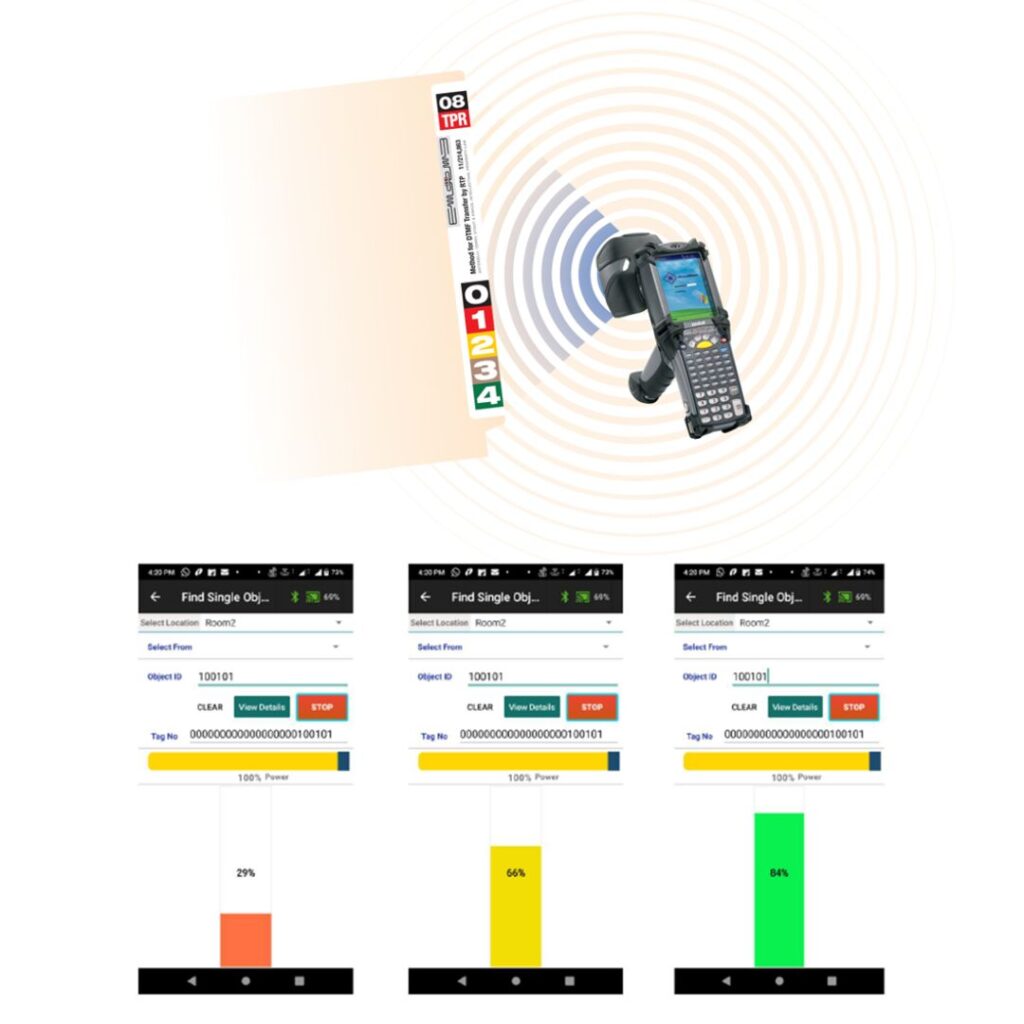
The strength of a report is entirely dependent on the quality of the data captured. IoTFileTracker utilizes a sophisticated hardware-software integration to ensure that data capture is both effortless and accurate.
Portable Scanners and Mobile Workflows
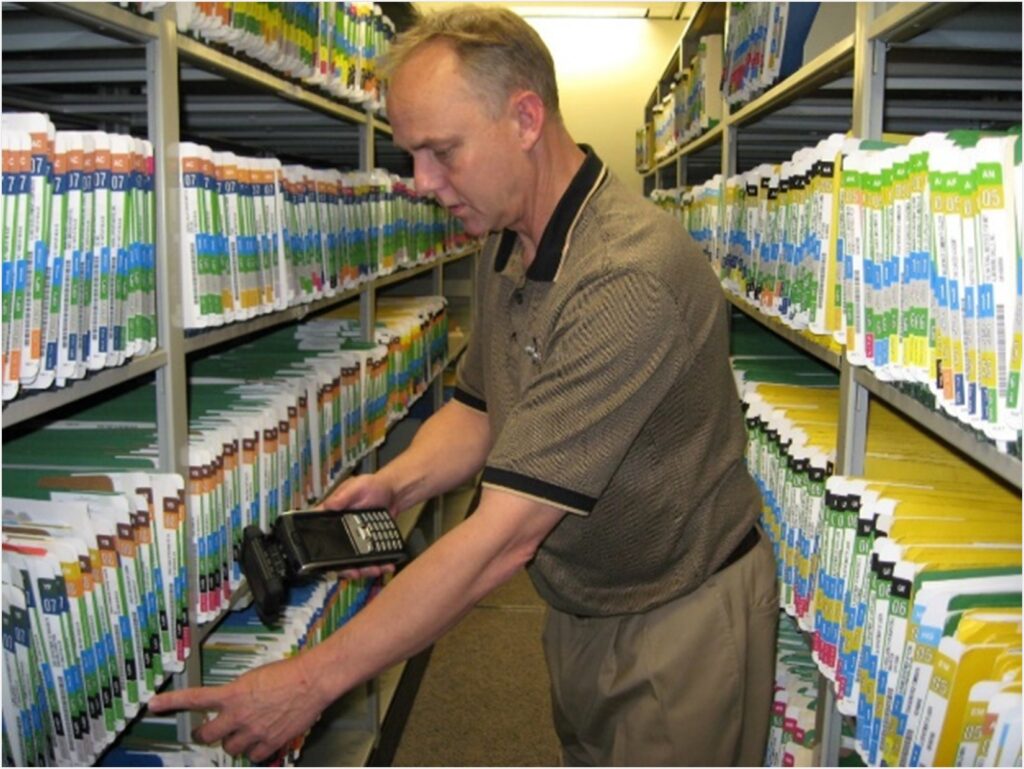
Using handheld RFID scanners or tablets, staff can perform “shelf sweeps” in a fraction of the time required by traditional barcode systems. Because RFID does not require line-of-sight, a clerk can wave a scanner across a row of files, and IoTFileTracker will instantaneously identify every folder present.
Centralized Data Upload
As the scan is performed, the mobile device communicates with the central IoTFileTracker database. This synchronization ensures that the “current” inventory is updated in real-time. If a file is detected on Shelf B when it should be on Shelf A, the system flags the exception immediately, allowing for on-the-spot correction.
Built-In Reporting Capabilities
One of the primary advantages of IoTFileTracker is its self-contained reporting engine. Many organizations struggle with “data silos,” where they must export data to third-party tools or complex spreadsheets just to understand their inventory status.
IoTFileTracker eliminates this dependence. By providing built-in, audit-ready reports, the platform ensures that decision-makers have immediate access to operational insights. Whether you need to see the inventory for a single room or an entire multi-campus enterprise, the reporting is just a few clicks away.
Types of Inventory Reports Organizations Need
To manage records effectively, managers require a diverse set of views into their data. IoTFileTracker offers several preconfigured report types:
1. Current Inventory Status: A “snapshot” report that shows exactly what is currently accounted for within the system. This is the foundational report for daily operations.
2. Missing or Exception Reports: Perhaps the most critical tool for a records manager, this report highlights the “gaps”—files that are supposed to be in a specific location but were not detected during the most recent scan. This allows for targeted searches rather than aimless hunting.
3. Location-Based Inventory Views: Ideal for facility managers, this report breaks down inventory by room, shelf, or cabinet. It is essential for optimizing space and managing high-density shelving systems.
4. Chain-of-Custody Summaries: A chronological history of every person who has possessed a specific file. This report is the gold standard for records management reporting in legal and investigative environments.
Advanced Reporting and Multi-Dataset Analysis
True file tracking analytics come from the ability to correlate different types of data. IoTFileTracker allows administrators to run multi-dataset analyses. For example, a manager can cross-reference “Missing Files” with “Last Known Custodian” and “Access Logs” to identify patterns of loss or mismanagement. This level of insight enables proactive governance rather than reactive troubleshooting.
Exporting and Sharing Inventory Reports
Data is only useful if it can be shared with the stakeholders who need it. IoTFileTracker supports flexible output formats:
- HTML: For quick viewing and internal dashboarding.
- CSV/Excel: For deep-dive analysis and compatibility with broader corporate finance or analytics tools.
This ensures that the records management reporting generated by TrackerIoT can be seamlessly integrated into the organization’s wider reporting ecosystem.
Automated Distribution of Reports
To maintain a high level of inventory visibility, information must flow consistently. IoTFileTracker supports scheduled report delivery.
Administrators can configure the system to automatically email a “Weekly Exception Report” to department heads or a “Daily Inventory Snapshot” to the security team. This automation ensures that stakeholders are kept informed without requiring manual intervention from the records staff.
Standard vs. Custom Inventory Reports
Every organization has unique requirements based on their specific industry and internal policies.
- Standard Reports: Cover the 90% of use cases common to all records environments, such as “Checkout History” and “Inventory by Location.”
- Custom Reports: IoTFileTracker provides the flexibility to build bespoke reports. Whether you need to track files by a specific project code, a unique retention date, or a custom metadata field, the platform allows you to tailor the data output to your exact needs.
Inventory Reporting for Compliance and Audits
In regulated sectors, the “Audit Trail” is a non-negotiable requirement. IoTFileTracker is designed to make the audit process frictionless. When an auditor asks for proof of physical control over sensitive records, the platform provides time-stamped, verifiable reports that demonstrate total accountability.
By providing RFID inventory reporting that is clear and comprehensive, organizations can significantly reduce the time and stress associated with regulatory reviews.
Operational Benefits of Accurate Inventory Reporting
Investing in a data-driven file tracking system delivers a measurable ROI:
- Reduced Search Time: Knowing exactly what is missing and where it was last seen slashes retrieval times.
- Improved Decision-Making: Use inventory trends to decide when to move records to long-term records archives or when to expand shelving capacity.
- Lower Risk: Early detection of misfiled or missing items prevents minor errors from becoming major compliance breaches.
Industries That Rely on Inventory Reporting
- Government: Ensuring public records are accessible and accounted for in accordance with FOIA and state laws.
- Healthcare: Maintaining 100% accuracy for patient charts to ensure clinical safety and HIPAA compliance.
- Legal: Protecting the chain of custody for discovery materials and original evidence.
- Enterprise: Managing intellectual property, HR files, and financial records across global campuses.
How IoTFileTracker Strengthens Inventory Governance
The ultimate goal of IoTFileTracker is to provide a “Single Source of Truth.” By combining real-time data capture via RFID inventory reporting with a powerful analytics engine, we empower organizations to move beyond simple tracking and into the realm of data-driven records governance.
The platform ensures that your inventory is not just a list of names, but a dynamic, auditable, and secure asset.
Conclusion
Inventory reporting is the bedrock of control and compliance in the modern enterprise. Without the visibility provided by accurate, automated reporting, a records management program is fundamentally incomplete.
IoTFileTracker by TrackerIoT provides the technology, the analytics, and the audit-ready insights required to manage your files and assets with total confidence. We don’t just help you find your records; we help you govern them.