
Law firms and prosecutor’s offices manage vast volumes of highly sensitive physical documents every day. These include client case files, legal briefs, evidence records, contracts, and confidential prosecution materials. Efficient legal document management is critical not only for smooth daily operations but also for maintaining regulatory compliance, safeguarding confidentiality, and delivering timely legal outcomes.
Despite increasing digital adoption, physical files remain indispensable in many legal environments. However, traditional filing systems and manual tracking methods often result in misplaced documents, delayed case preparation, and security vulnerabilities. These challenges can directly impact court deadlines, investigations, and client trust.
RFID (Radio Frequency Identification) technology offers a proven, scalable solution for modern legal document management. By enabling real-time file tracking, automated inventory control, and enhanced security, RFID transforms how law firms and prosecutor’s offices manage physical records.
Why RFID Is a Game-Changer for Legal Document Management
RFID technology works by attaching a unique RFID tag to each physical file. These tags communicate with fixed antennas and mobile scanners connected to centralized tracking software. The system automatically records file movements and locations without requiring manual input.
This creates a real-time, continuously updated view of where every document is located—whether in active circulation, a records room, an attorney’s office, or long-term archives. The result is faster access, stronger accountability, and improved operational control.
Here are the key benefits and applications of RFID technology tailored for the legal sector:
Faster Document Retrieval
RFID-enabled file tracking allows staff to locate documents instantly through a software search rather than manual inspection of shelves and cabinets. By eliminating time-consuming searches, firms reduce delays in case preparation and improve responsiveness to clients, courts, and investigators.
Real-Time File Tracking
RFID antennas placed at file rooms, hallways, and office entry points provide continuous visibility into file movement. Staff can instantly determine whether a file is checked out, in transit, or stored in a specific location. Mobile RFID scanners can inventory files-in-circulation within seconds, ensuring that workflows remain uninterrupted.
Rapid Location of Missing Files
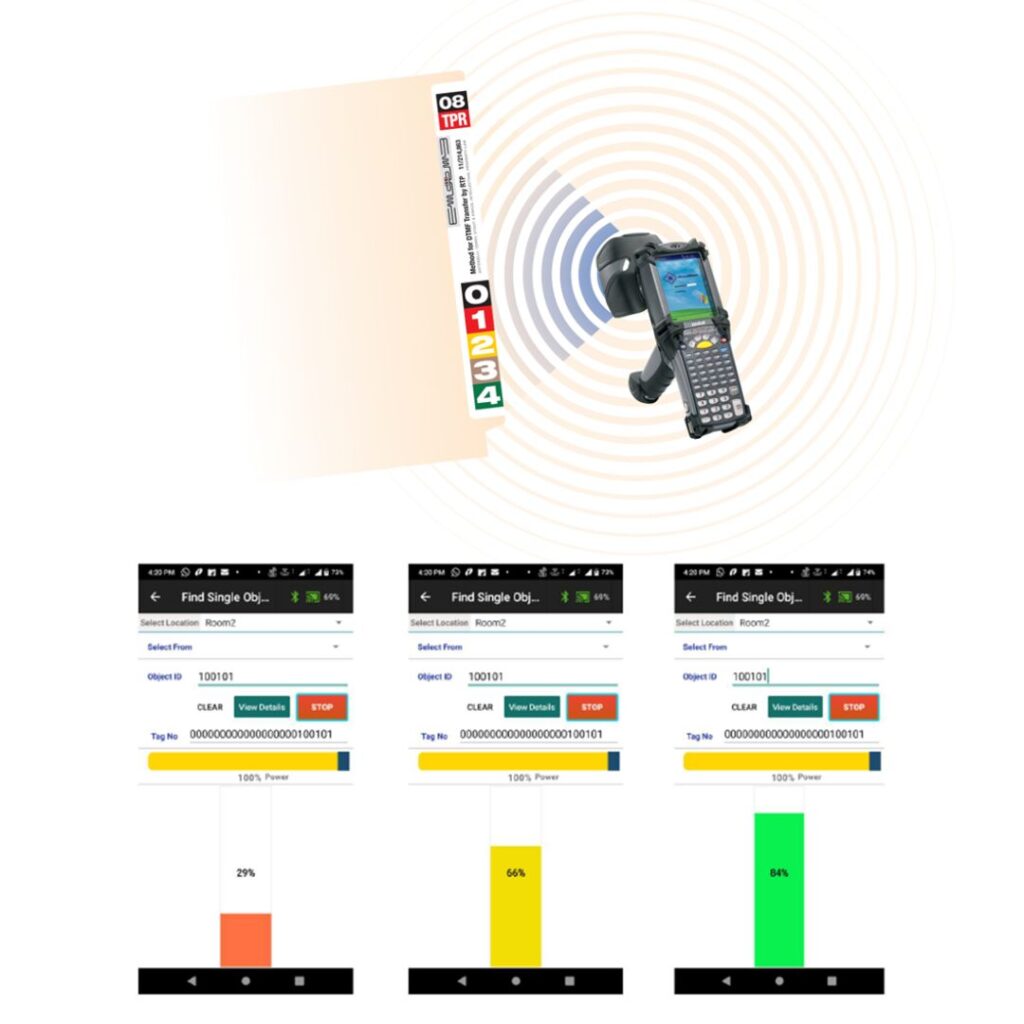
When a document cannot be immediately located, mobile RFID scanners guide users directly to the file. Audible beeps increase in frequency as the user approaches the document, supported by visual cold-to-warm-to-hot proximity indicators and a numeric scale ranging from 0 to 100. This dramatically reduces time spent searching for critical legal files.
Efficient Archive Management
RFID simplifies records archiving by tracking files scheduled for transfer, monitoring archive box contents, and recording off-site storage locations. The system can also support retention and destruction schedules, helping legal organizations reduce risk associated with retaining files beyond mandated periods.
Core RFID File Management Functions

Automated file check-in and check-out
RFID-enabled check-in and check-out automates the process of issuing and returning physical files. Each transaction is recorded automatically when a file moves past RFID readers, capturing the user identity, date, time, and location. This eliminates manual logging, reduces human error, and creates a reliable chain of custody for every document. Automated check-in and check-out ensures complete accountability while accelerating daily file handling operations.
Real-time tracking of files in circulation
RFID technology provides continuous, real-time visibility into files that are actively moving within the organization. As files pass through monitored areas such as file rooms, offices, or corridors, their location is updated instantly in the system. This allows staff and administrators to know exactly where a file is at any moment, reducing search time, preventing misplacement, and ensuring uninterrupted workflows.

Instant inventory of active and archived records
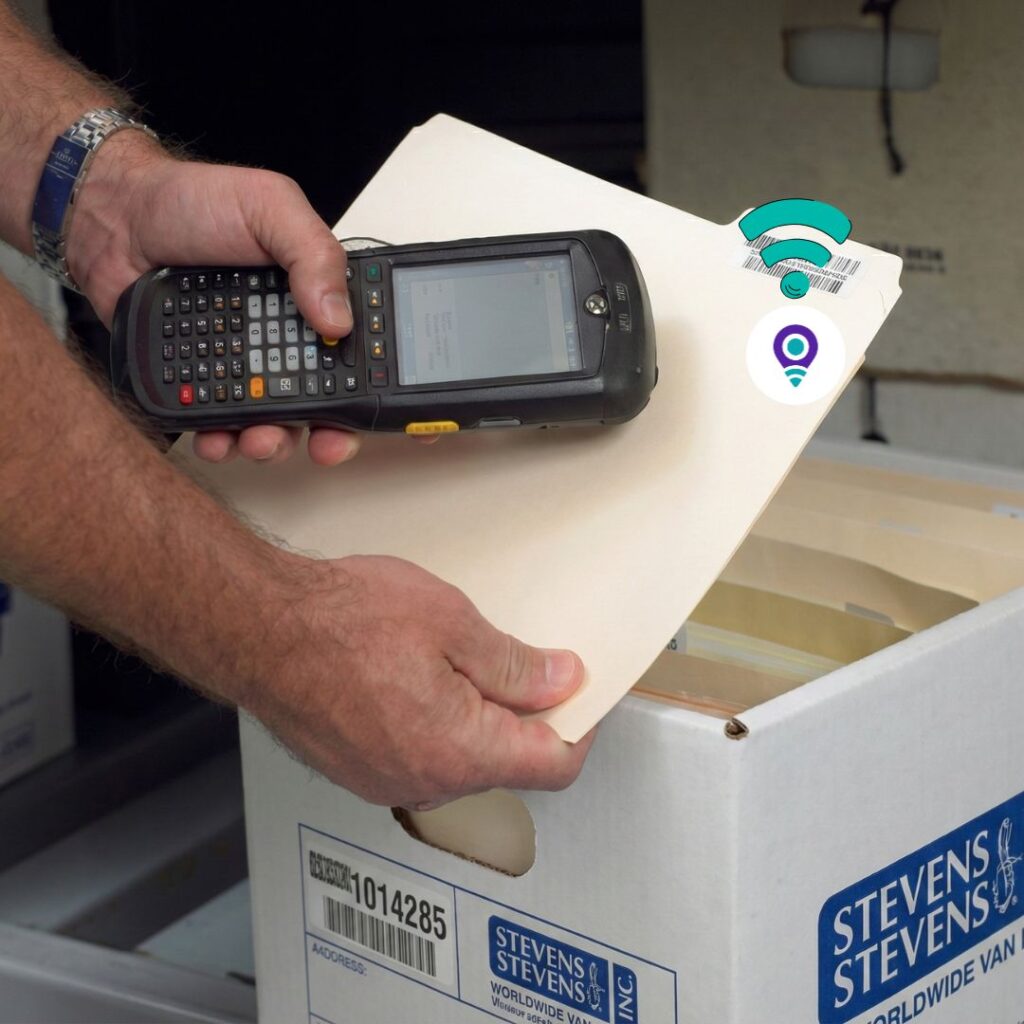
RFID-based inventory allows organizations to scan hundreds or thousands of files simultaneously without opening cabinets or boxes. Mobile RFID scanners and fixed readers instantly confirm the presence and location of both active and archived records. This capability supports rapid audits, improves record accuracy, and enables inventory checks to be completed in minutes rather than hours or days.
Accurate monitoring of off-site storage
RFID systems streamline the transfer of files from active use to archive storage by automatically recording each movement. When files are moved to archives, the system updates their status, storage location, and retention schedule. This ensures archived records are accurately tracked, easily retrievable, and protected against unauthorized access, supporting long-term compliance and efficient records management.
How Real-Time File Tracking Improves Legal Operations
Precise File Location in Real Time
RFID-enabled mobile scanners can locate files from distances exceeding 20 feet. Audible alerts and color-based proximity indicators guide staff directly to the correct file, even in dense storage areas.
Rapid Inventory Management
Legal teams can perform instant inventories by selecting locations in software or scanning barcode labels. The system detects all RFID-tagged files in proximity and updates the database automatically, eliminating manual reconciliation.
Advanced Find-a-File Software
Staff can search for multiple files simultaneously using mobile scanners. On-screen proximity indicators help retrieve multiple documents efficiently, which is especially valuable during case preparation or audits.
Enterprise Scalability
RFID systems scale seamlessly to support small legal offices, large law firms, or prosecutor’s offices handling thousands of active cases. As document volumes grow, performance and accuracy remain consistent.
Enhanced Accuracy and Document Security
Reduced Human Error
Manual file handling introduces misfiling, data entry errors, and lost documents. RFID automation minimizes these risks by capturing file movements automatically—an essential advantage in legal environments where accuracy is non-negotiable.
Strengthened Confidentiality and Access Control
RFID systems log every access event, recording who handled a file, when, and where. This creates a clear chain of custody that discourages unauthorized access and strengthens confidentiality controls for sensitive legal records.
Streamlined Legal Operations Through Automation

Automated Inventory and Reporting
RFID enables scheduled or on-demand inventories without disrupting daily operations. This simplifies record management and allows legal staff to focus on higher-value legal work rather than administrative tasks.
Integration with Legal Case Management Systems
RFID file tracking integrates with existing case management or legal information systems. New case records can be imported automatically, and real-time file location data can be exported, ensuring legal software always reflects the current status of physical documents.
Cost Reduction and Operational Savings
Lower Labor Costs
By significantly reducing the time spent searching for documents, RFID tracking lowers labor costs while increasing staff productivity. Faster access to files translates directly into operational savings and improved service delivery.
Extended Use Beyond File Tracking
The same RFID software used for legal file tracking can also support asset tracking. Legal organizations can track equipment, evidence containers, or physical assets by recording serial numbers, descriptions, and status. Mobile scanners enable rapid audits to identify expected items, missing assets, or items stored incorrectly.
Future-Proofing Legal Practices
As legal technology continues to evolve, RFID adoption positions law firms and prosecutor’s offices for future innovation in records and information management. Early adoption supports long-term efficiency, strengthens compliance frameworks, and provides a competitive advantage in an increasingly data-driven legal environment.
Conclusion
RFID technology delivers a transformative approach to legal document management by improving efficiency, accuracy, security, and accountability. For law firms and prosecutor’s offices that rely on fast, secure access to physical records, RFID-based file tracking systems are no longer optional—they are essential.
By enabling real-time visibility, automated audit trails, and seamless integration with existing legal systems, RFID helps legal organizations maintain compliance, improve operational excellence, and protect client trust in an increasingly demanding legal landscape.