In today’s fast-paced business environment, efficient record management is essential for productivity, compliance, and operational control. Traditional manual filing systems often result in misplaced documents, slow searches, and administrative delays. To overcome these challenges, organizations are adopting advanced technologies such as Radio Frequency Identification (RFID) combined with intelligent file tracking software. Solutions like Tracker Iot transform how physical records are tracked, managed, and retrieved.
How TrackerIoT and RFID Technology Transform Physical Record Management
TrackerIoT is a comprehensive RFID-based record management system designed to simplify tracking and retrieval of physical files. RFID technology uses electromagnetic signals to automatically identify tagged items, enabling fast check-ins, real-time tracking, and automated inventories without manual intervention.
Digitizing Legacy Records Using RFID File Tracking Software
Migrating from manual record management to a digital system involves several essential steps:
Assigning RFID Tags to Physical Files for Unique Identification
Each physical file is assigned a durable RFID tag with a unique identifier. These tags are designed to withstand everyday office handling and long-term storage conditions.
Linking RFID Tags to Centralized File Metadata Databases
Each RFID tag is linked to file metadata stored in the Tracker Iot database. Metadata may include file name, department, creation date, retention period, and other key attributes, enabling fast search and retrieval.
Configuring the IoTFileTracker System to Match Organizational Workflows
Tracker Iot processes RFID data and can be customized to align with organizational workflows, ensuring seamless integration into existing record management processes.
How RFID Technology Enables Automated File Tracking and Visibility
Files, archives, and documents are labeled with barcodes and/or RFID tags. While barcode systems require close-range manual scanning of one item at a time, RFID technology allows passive scanning of multiple files simultaneously from a distance. RFID-barcode systems support all barcode capabilities while adding significant efficiency and automation benefits.
USB RFID-Barcode Scanners for File Check-In,
Check-Out, and Archive Transfers
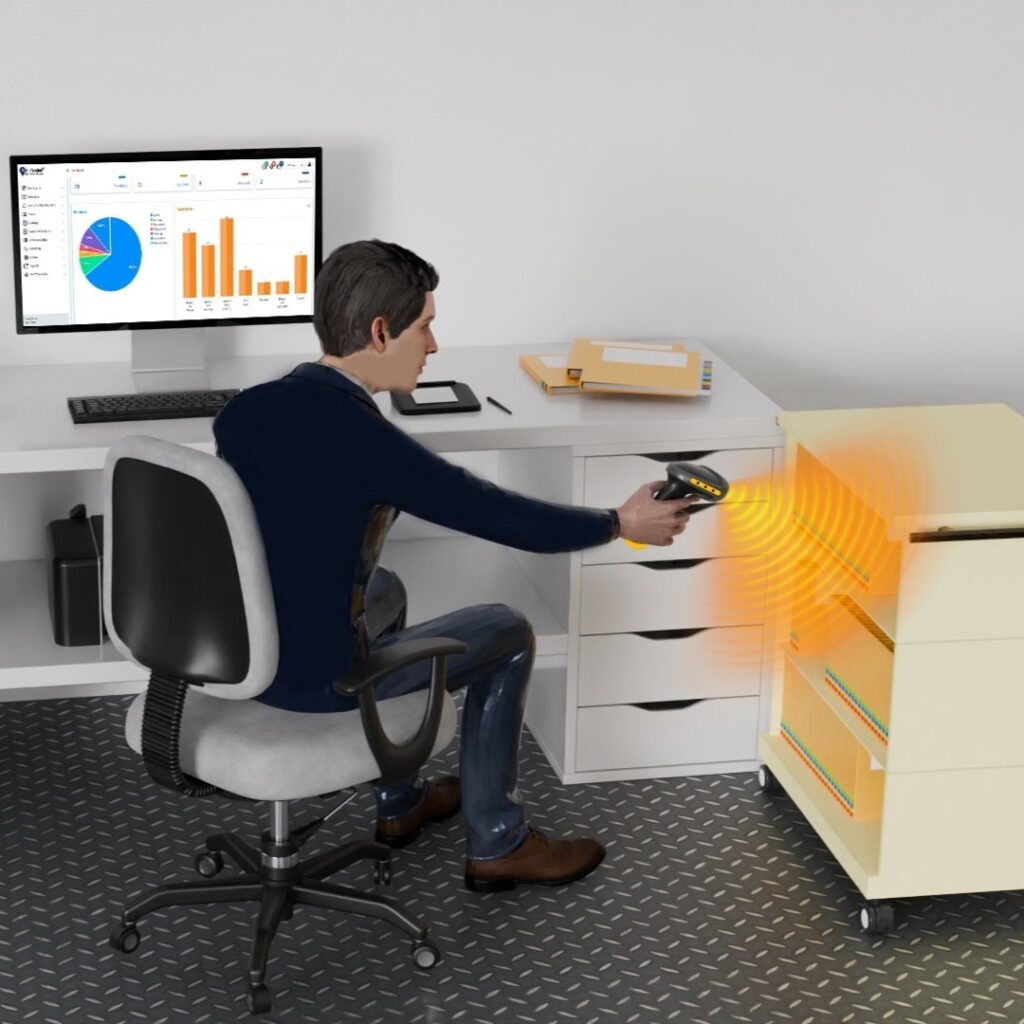
USB RFID-barcode scanners support complete check-in and check-out of files and transfer of folders to archive storage. Users can scan individual files or entire stacks, bins, or boxes at once. USB RFID-barcode scanners are ideal for desktop use, allowing staff to scan archive box labels and file tags when transferring records to long-term storage.
Passive File Tracking Using RFID Doorway Detection Zones
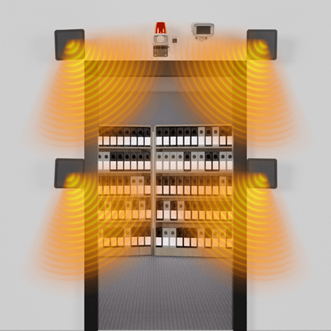
RFID antennas installed at file room and archive entrances enable passive check-in and check-out of documents. This setup tracks file movement even outside normal working hours, such as nights or weekends, ensuring complete visibility of document flow.

Facility-Wide Real-Time File Tracking with RFID Zones
RFID antennas placed throughout facilities provide real-time document tracking with detection ranges up to approximately 40 feet. Each tracking zone is labeled in the software, allowing staff to identify the last detected location of any file as it moves through offices, hallways, elevators, or stairwells.
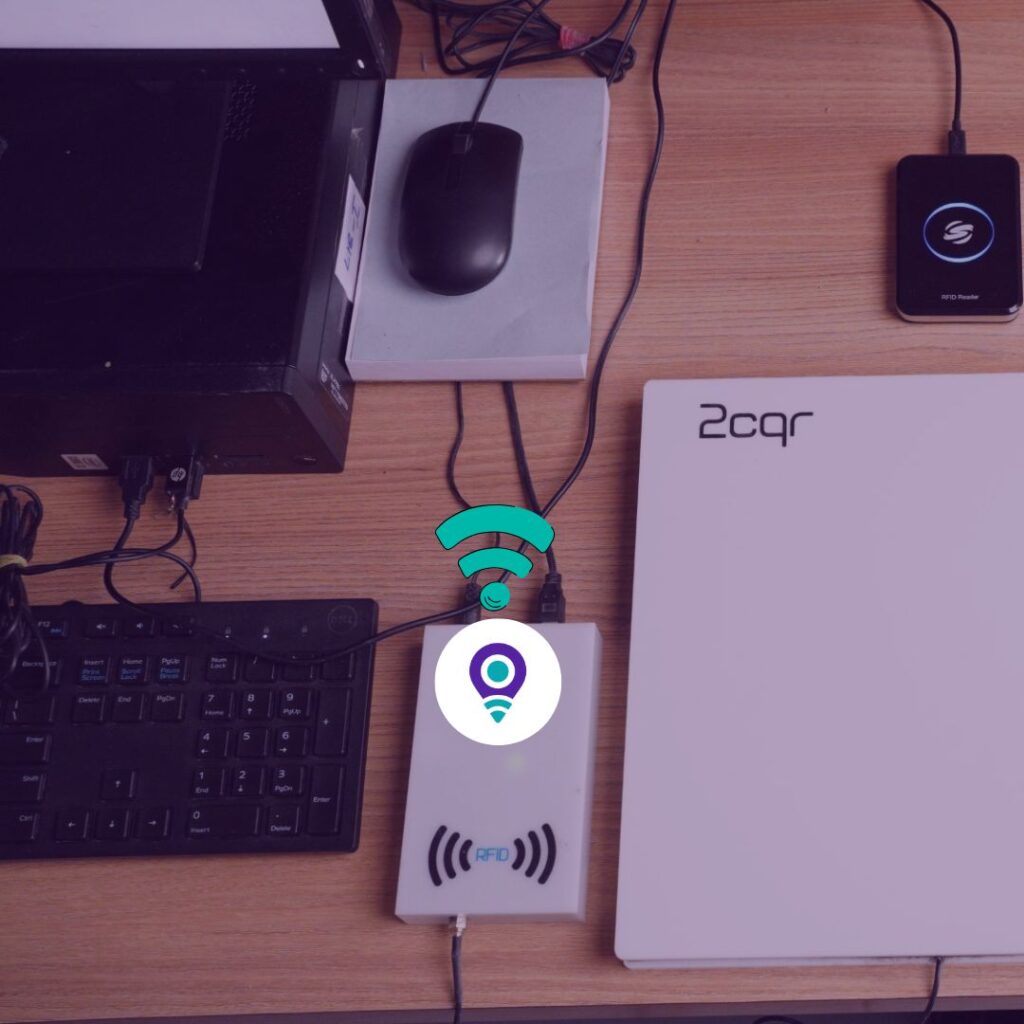
Desktop RFID Detectors for Precise Workstation-Level File Tracking
Desktop RFID detectors automatically identify files arriving at workstations. With detection ranges up to 10 feet, each detector is mapped to a specific desk or user, providing precise visibility into file usage and movement.
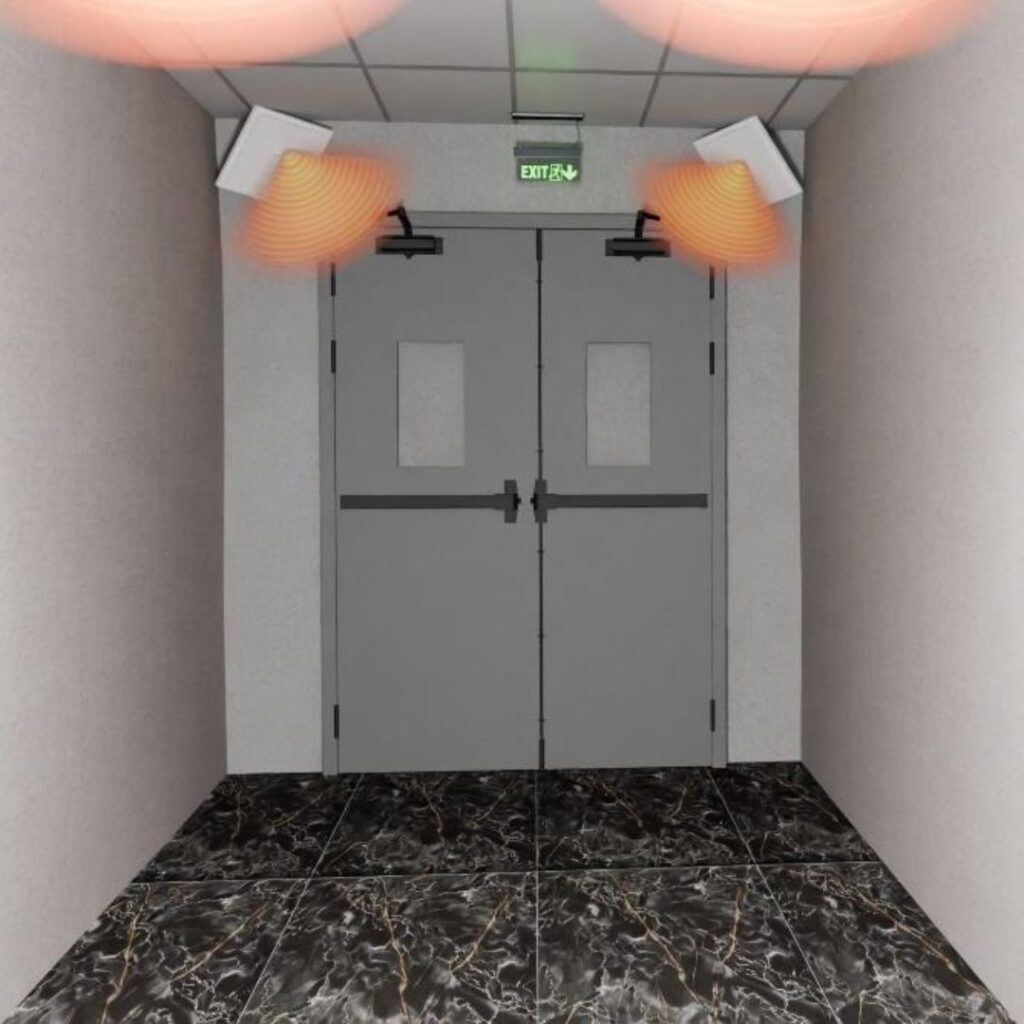
Building Exit RFID Security Zones to Prevent Unauthorized File Removal
RFID antennas positioned at building exits detect files approaching the premises boundary. If removal is unauthorized, the system triggers alarms, flashing lights, and voice alerts. Exit points can also be integrated with video cameras for added security.
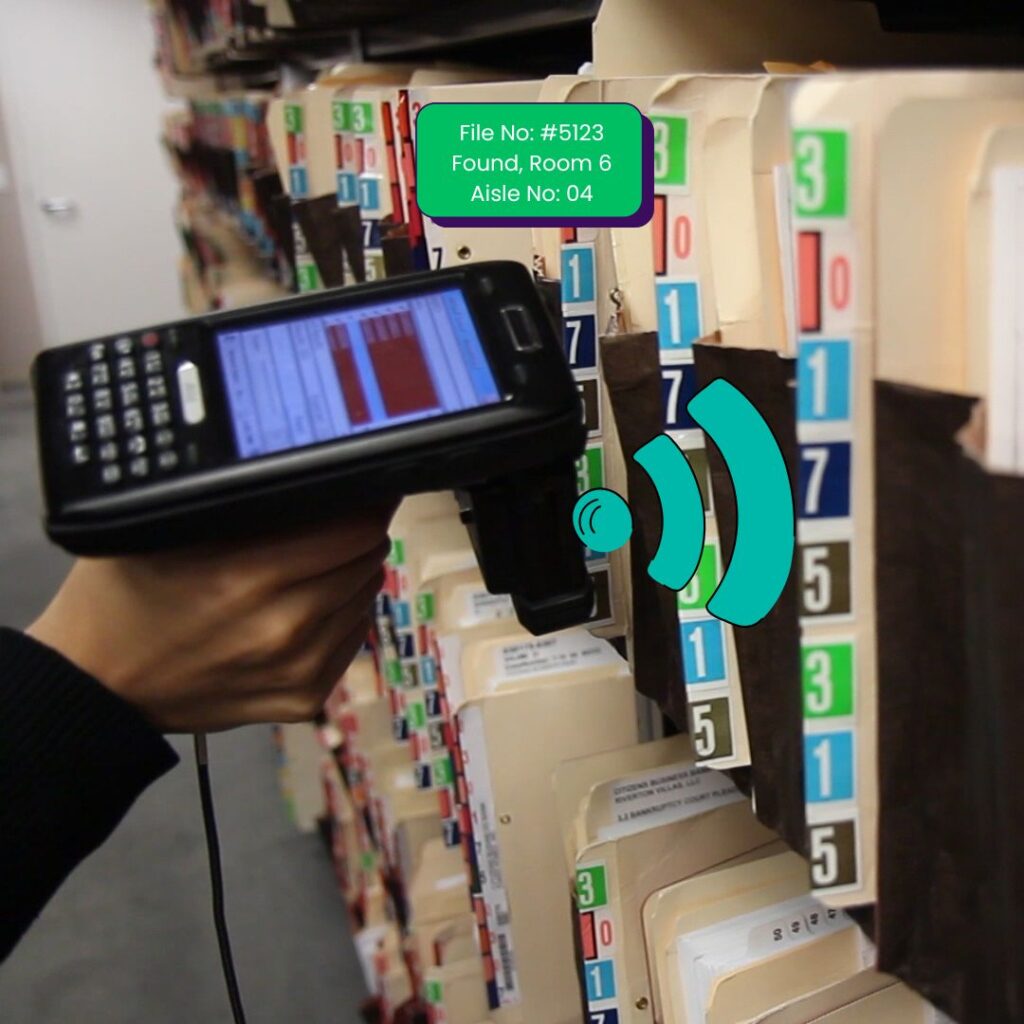
Mobile RFID Scanners for Rapid Inventory and File Location
RFID antennas positioned at building exits detect files approaching the premises boundary. If removal is unauthorized, the system triggers alarms, flashing lights, and voice alerts. Exit points can also be integrated with video cameras for added security.
Locating Existing Records Quickly Using RFID Mobile Scanning
Once tagging and configuration are complete, record retrieval becomes fast and intuitive.
- Real-Time Tracking: RFID antennas update file locations automatically as documents move throughout the facility.
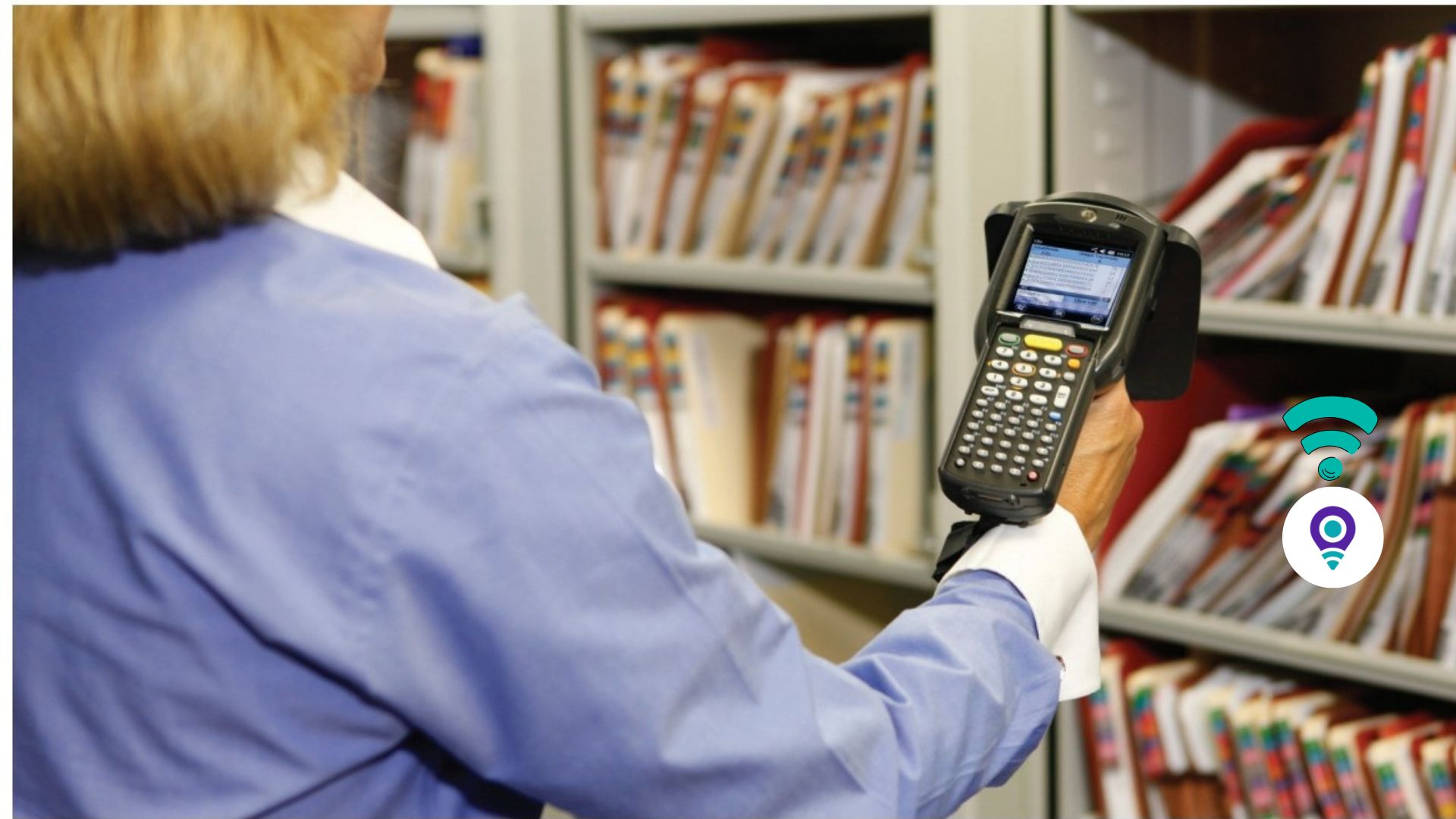
- Mobile RFID Scanners: Handheld scanners enable fast room-level scans and inventory verification, significantly reducing search time.
- Efficient File Retrieval: The Find-a-File feature uses audible beeps, color indicators, and numeric proximity scales to guide users directly to the file’s location.
- Regular Inventories: Routine inventories ensure database accuracy by scanning storage locations and updating real-time file positions.
Key Benefits of Integrating TrackerIoT with RFID File Tracking
- Rapid File Retrieval: Locate files within seconds, significantly reducing time spent searching for documents.
- Enhanced Accuracy: Automated tracking minimizes human errors associated with manual record-keeping.
- Improved Security: Monitor file movements and access logs to prevent unauthorized usage or removal.
- Scalability: Easily manage a growing number of records without a corresponding increase in administrative effort.
- Comprehensive Audit Trails: Maintain detailed histories of all file activities, supporting compliance and accountability.
Conclusion
Modern organizations can no longer rely on manual or partially digitized systems to manage growing volumes of physical records. As operational demands, compliance requirements, and security risks continue to increase, visibility and control over existing files become essential. RFID-enabled file tracking bridges the gap between physical records and digital intelligence, transforming how documents are managed, monitored, and retrieved.