In the current era of digital transformation, the corporate narrative is dominated by cybersecurity. Boards of directors and IT departments invest millions in firewalls, encryption, and multi-factor authentication to protect their digital assets. This focus is understandable; a single data breach can compromise millions of records in a matter of seconds. However, this hyper-fixation on electronic records security has inadvertently created a massive blind spot: the physical record.
At TrackerIoT, we often see organizations prioritize the security of their servers while leaving their physical archives—often containing the most sensitive original contracts, patient charts, and classified folios—vulnerable to theft, tampering, or loss. The reality is that while digital records offer convenience, physical records can actually offer a higher degree of security when managed through a sophisticated file tracking system like IoTFileTracker.
Understanding the unique security profile of physical media is not about rejecting the digital world; it is about recognizing that secure records management requires a hybrid approach where physical and digital security protocols complement one another.
The Reality of Electronic Records Security
Digital storage is inherently centralized. To make data useful, it must be accessible over a network. This connectivity is the primary vulnerability of electronic records security.
Hacking, Data Breaches, and Insider Threats
An attacker in a different hemisphere can exploit a software vulnerability to gain access to a database. Furthermore, the “insider threat” is amplified in the digital realm. A disgruntled employee or a compromised contractor can copy an entire database onto a thumb drive or upload it to a cloud service in minutes. The threat scales non-linearly because stealing one digital record requires nearly the same effort as stealing one million.
Why Electronic Records Are Attractive Targets
Cybercriminals and corporate spies target digital data because it allows “efficient extraction”.
- Mass Data Extraction: Digital records allow for automated sorting and filtering. An attacker can specifically target “Social Security Numbers” or “Bank Account Details” across an entire enterprise.
- Speed and Scale: Digital theft happens at the speed of light. By the time an organization detects a digital intrusion, attackers often replicate and distribute the data across multiple jurisdictions.
- Remote Access: The ability to attack from a distance provides a layer of anonymity and safety for the attacker that physical theft does not.
Understanding the Data Density of Physical Records
There is a common misconception that digitizing a record makes it “safer.” In reality, full digitization often concentrates risk. A physical case file may contain hundreds of pages of handwritten notes, original wet-ink signatures, and historical evidence that are difficult and time-consuming to digitize perfectly.
When you digitize these records, you shift them from a medium that requires physical presence to one that attackers can compromise remotely. For many high-stakes documents, the “data density” and “originality” of the physical format are exactly what make it valuable—and exactly what make it worth protecting with physical records security.
Security Advantages of Physical Records
When managed via RFID file tracking, physical records possess several inherent security advantages that digital records can never match.
1. Difficulty of Remote Access
A hacker in another country cannot “hack” a physical file folder sitting on a shelf in a secure registry. To compromise a physical record, an individual must have physical proximity. This immediately narrows the threat landscape from “the entire internet” to “the people inside this building.”
2. Physical Presence and Intent
Physical theft is loud and visible. To steal a thousand physical files, an attacker needs a truck, a crew, and a significant amount of time. This physical requirement creates friction, making mass data exfiltration significantly harder than in the digital world.
Physical Breach vs. Digital Breach
The complexity of a breach differs fundamentally between the two formats. A digital breach is often a failure of code or credentials. A physical breach is a failure of records management security and facility access control.
In a physical environment protected by IoTFileTracker, every movement of a file is a logged event. If a folder moves from a shelf toward an exit door, the system detects it. If a file is checked out to a person who isn’t authorized, the system prevents it. To “hack” a physical file room, an intruder must bypass physical locks, avoid security cameras, and somehow evade the RFID document tracking sensors—all while physically present on-site.
Why “Digitize Everything” Is Not Always the Safest Strategy
The rush to digitize everything is often driven by a desire for efficiency, but it ignores “risk concentration.” By putting all your most sensitive data in a single cloud or server environment, you create a single point of failure.
For certain industries, organizations make a strategic security choice by keeping high-value records in physical form governed by IoTFileTracker. It ensures that even if the network is compromised, the most vital “source-of-truth” documents remain safe and air-gapped from the digital threat.
The Role of IoTFileTracker in Securing Physical Records
IoTFileTracker is the platform that brings digital-level visibility to the physical world. It ensures that secure physical records are no longer a “black hole” in the organization’s security posture.
- Visibility into File Location: Real-time tracking ensures you always know the exact location of every folder.
- Controlled Access and Custody: The platform enforces who is allowed to touch a file, requiring digital authorization and chain of custody tracking at every hand-off.
- Audit Trails and Accountability: The system records every movement and creates a permanent, time-stamped history essential for file tracking for compliance.
Combination of Physical records and IoT
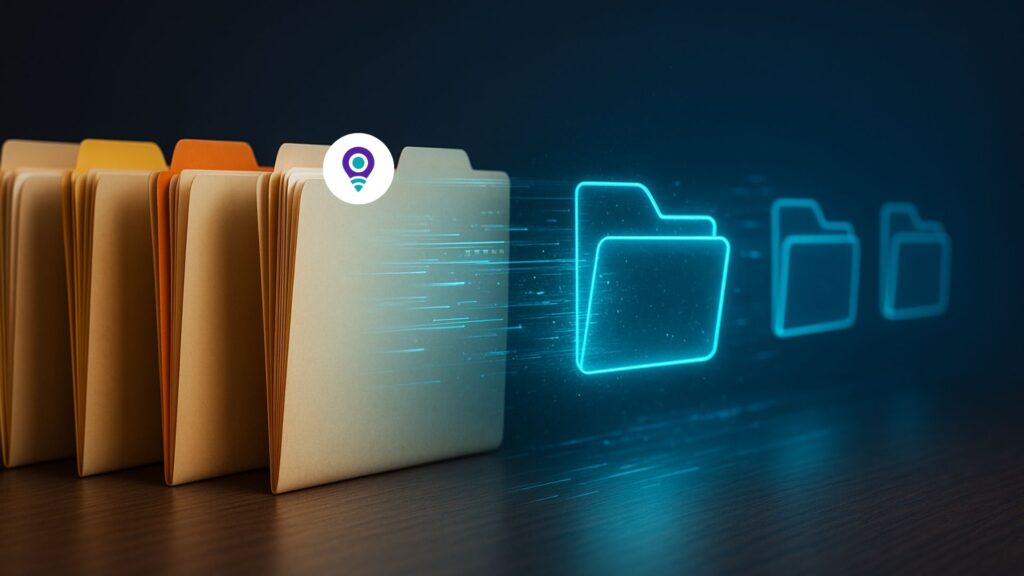
The most secure organizations today are not “paperless”; they are “paper-smart.” They use IoTFileTracker to combine the inherent security of physical media with the automated oversight of digital technology.
By using RFID tags, doorway sensors, and electronic signature pads, IoTFileTracker reduces both insider and external risk. It ensures that if a file is handled improperly, an alert is triggered immediately, not weeks later during a manual inventory.
Industries Where Physical Records Remain Critical
Government and Classified Records: National security often relies on physical “Eyes Only” documents. IoTFileTracker ensures these documents stay within authorized zones.
Healthcare and Patient Documentation: Physical charts and original consent forms are vital for HIPAA compliance and clinical accuracy. Records management security ensures these are available only to the assigned medical team.
Legal and Regulatory Environments: Original contracts and evidence binders are the lifeblood of the legal system. The chain of custody provided by IoTFileTracker is essential for maintaining the integrity of legal proceedings.
Balancing Electronic and Physical Records Security
The goal of information governance is to choose the right format for the right data.
- High-Churn, Low-Sensitivity Data: Ideal for electronic records.
- High-Sensitivity, High-Value, or Original Data: Often safer in a physical format governed by IoTFileTracker.
A risk-based approach to records management recognizes that the physical file is a vital component of a resilient security architecture.
Future of Secure Records Management
The future of security is a hybrid model. As cyberattacks become more sophisticated and AI-driven, the “un-hackable” nature of a physical record becomes more attractive. We anticipate a future where IoTFileTracker integrates even more deeply with facility security, creating an environment where physical and digital data are governed by a single, unified security policy.
Conclusion
Organizations can make physical records more secure than electronic ones when they manage them with the same level of technological rigor. Without visibility, a physical file room is a liability. With IoTFileTracker, it becomes a secure, accountable, and highly resilient component of your organization’s information governance strategy.
By choosing TrackerIoT, you are not just tracking folders; you are enforcing a modern security model that protects your most valuable assets in an increasingly volatile digital world.