In the complex environment of enterprise records management, organizations measure success by their ability to locate a specific record precisely when needed. At IoTFileTracker, we provide Total File Management Visibility, ensuring staff never lose or misplace a document. While our platform supports the most advanced RFID and IoT integrations, the strategic use of Barcode File Tracking remains a fundamental tool for maintaining a reliable and auditable chain-of-custody.
A critical component of this strategy is the performance of periodic inventories. The frequency and necessity of these inventories are directly tied to the “dependability” of your organization’s check-in and check-out processes. Understanding this relationship is key to optimizing your workflow, reducing operational costs, and enhancing overall customer service.
The Pulse of the Enterprise: Files-in-Circulation
The most active assets in any organization are the files-in-circulation. These are the folders currently being utilized by staff for legal proceedings, government processing, or corporate decision-making. Because these files are “live,” they are the most prone to movement and, consequently, the most likely to become “unaccounted-for.”
The primary objective of IoTFileTracker is to enable staff to rapidly access these files to prevent lost productivity. To achieve this, the IoTFileTracker database must be a mirror image of the physical reality within your facility. When that mirror becomes clouded due to missed scans or frequent hand-offs, periodic inventories are the only way to restore clarity.
Determining Your Inventory Frequency
Every organization has a unique workflow. IoTFileTracker, a COTS (commercial-off-the-shelf-software) solution, allows you to configure it to your exacting requirements. The frequency of your barcode inventories should be determined by two main factors:
1. The Dependability of Check-Out Processes
If your staff follows disciplined procedures and scans every file movement reliably during check-out and check-in, the digital database stays accurate. In environments where files remain largely stationary once in circulation, you may not need to perform inventories frequently. The software maintains a “single source of truth” through standard point-and-scan actions using USB scanners at desks or service counters.
2. The Velocity of File Movement
In many high-profile government or legal sectors, files are in constant motion. Even when staff follow check-out procedures, they might transfer a file rapidly from person to person or place to place. If staff do not capture these internal movements, the database quickly becomes outdated. In these high-velocity environments, organizations must perform inventories—weekly or twice-monthly—to ensure staff can rapidly access needed files.
If your organization frequently finds files “not where they should be,” this clearly indicates the need to perform periodic inventories of files-in-circulation to bridge the gap between human workflow and digital records.
The Inventory Process: Fast, Accurate, and Auditable
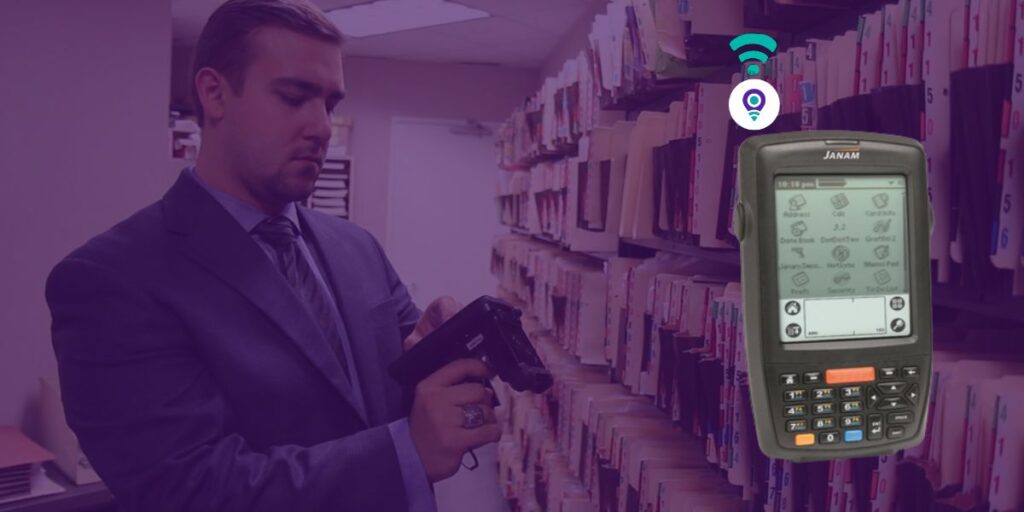
Performing an inventory with IoTFileTracker does not require a massive disruption of daily operations. Our platform utilizes portable barcode scanners designed for speed and data precision.
Staff members simply walk through work areas, filing cabinets, or desks, scanning the barcode labels on the files present in those locations. This “point-and-scan” action is significantly faster than any manual logging method. After completing the scan, the system synchronizes the data with the central IoTFileTracker hub.
The software then performs an automated reconciliation, identifying:
- Correct Locations: Confirming that the file is exactly where the database said it was.
- Misplaced Files: Updating the database to reflect that a file has moved to a new office or user.
- Missing Files: Highlighting records that are checked out to a location but were not found during the scan.
This level of Audit Readiness keeps your organization always prepared for internal or external reviews, providing complete audit trail histories at the click of a button.
Scaling for the Future: From Barcode to RFID
One of the greatest strengths of the IoTFileTracker platform is its scalability. We recognize that as an organization grows, the manual effort required for barcode inventories may become a bottleneck.
Because IoTFileTracker is a mature, robust platform developed utilizing the J2EE framework, our barcode solutions can be easily and affordably upgraded to RFID. This transition offers a transcendent leap in file management automation:
- Effortless Inventories: Instead of scanning files one by one, an RFID portable scanner can detect dozens of folders all-at-once from a distance of up to 25 feet.
- Radio Wave Location: If a file is missing or needed urgently, the “Find a File” feature uses radio waves to guide the user directly to the folder with a “Geiger Counter” sound and visual color scale.
- Passive Detection: The same software platform can integrate with fixed RFID antennas to track files automatically as they pass through detection zones.
By starting with a solid barcode foundation, you establish the “data silos” and hierarchical relationships (such as documents within a folder or records in a box) necessary for a successful long-term records management strategy.
Conclusion: Data Integrity is Operational Integrity
At IoTFileTracker, we provide more than just software; we provide the digital intelligence of records management. Whether through barcode inventories or RFID zone tracking, our goal is to eliminate “Where is it?” from your vocabulary.
By performing periodic inventories of files-in-circulation, you ensure that your staff never faces a service lapse due to a missing record. You protect the legal integrity of your documents and ensure that your physical infrastructure is maximized for capacity and speed.
With over 40 years of proven experience, IoTFileTracker is the only solution that seamlessly manages the Hybrid Records Environment, combining physical asset tracking with a robust Electronic Document Management System (EDMS).