In the lifecycle of a record, the transition from an “active” state to an “archived” state is often where visibility goes to die. Many organizations view archives as a passive storage problem—a matter of putting boxes in a warehouse and forgetting about them until a subpoena or an audit arrives. This “out of sight, out of mind” mentality is one of the most significant risks in modern information governance.
Unmanaged archives lead to “black hole” storage, where finding a specific document becomes a multi-day scavenger hunt. More critically, poorly tracked archives lead to the indefinite retention of records that should have been destroyed, creating unnecessary legal discovery risks and high storage costs. At TrackerIoT, we believe that archives management requires the same rigor as active file management. Through the IoTFileTracker platform, we bring the power of RFID and automated retention logic to long-term storage, ensuring that your records are always visible, compliant, and under control.
What Is Archives Management?
Archives management is the systematic control of records that are no longer frequently accessed but must be preserved for legal, fiscal, or historical reasons. Unlike active files—which may move daily—archived records move infrequently, but when they are needed, the stakes are usually high.
The goal of a modern archive is not just storage; it is “retrievability.” A high-performance archive must provide a clear bridge between the physical box and its digital index. By using IoTFileTracker, organizations can maintain a persistent “Source of Truth” for every container, binder, and file, ensuring that the transition to long-term storage does not mean a loss of control.
Challenges in Traditional Archives Management
Most traditional archives suffer from systemic failures that become exacerbated over decades.
Lost Archive Boxes and Poor Indexing
Without a computerized file tracking system, organizations often rely on handwritten labels or spreadsheets to manage their boxes. Over time, these manual logs become inaccurate. Boxes are moved, mislabeled, or stacked in the wrong aisles, leading to “ghost inventory” that cannot be recovered when needed.
Manual Retention Tracking and Compliance Exposure
Keeping records too long is just as dangerous as destroying them too soon. If an organization is hit with a legal discovery request, they are legally obligated to produce any relevant records they still possess—even if those records were eligible for destruction years ago. Without automated records retention management, identifies which boxes are “past their prime” is an impossible manual task, leading to massive liability.
Tracking Archive Boxes and Binders with IoTFileTracker
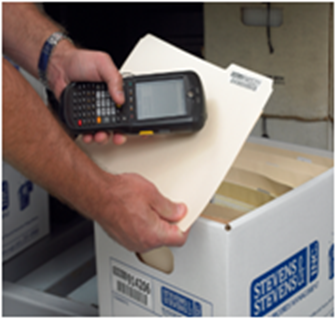
IoTFileTracker modernizes records archives by treating every container as an intelligent asset. Whether you are managing standard corrugated archive boxes or specialized binders, the system assigns a unique digital identity to each unit.
Knowing Exactly Where Records are Stored
By utilizing fixed RFID gateways or handheld scanners, archives management becomes a matter of digital precision. You no longer need to “guess” which shelf a box is on. IoTFileTracker maps the physical layout of your warehouse or file room, providing a 3D-like view of your inventory. If a box is moved to a different facility or a new shelf, the system updates its location automatically, maintaining a perfect chain of custody.
Tracking Files Inside Archive Containers
One of the biggest frustrations in archival work is knowing that a file is “somewhere” in Box #502, but not being able to verify it without physically opening the container. IoTFileTracker solves this by maintaining a “Parent-Child” relationship in the database.
Avoiding “Black Hole” Storage
The system allows you to associate specific files (the children) with a specific box (the parent). If you need a specific case file from ten years ago, you don’t just search for a box; you search for the file, and IoTFileTracker tells you exactly which box it resides in and where that box is located. This prevents the “black hole” effect and slashes search times from hours to seconds.
RFID Labeling for Archive Boxes and Binders
To achieve this level of visibility, durable RFID archives management labels are essential. IoTFileTracker supports both pre-printed vendor labels and system-generated labels printed on-site.
Best Practices for Durable Labeling
Archive labels must withstand long-term storage. Because boxes may sit for 20 years or more, the adhesive must be high-tack and the RFID inlay must be robust. IoTFileTracker ensures that the label contains both the RFID chip for automated scanning and human-readable text/barcodes for manual redundancy. Consistent placement of these labels on the short end of the box ensures that handheld scanners can read entire rows of boxes without staff having to move them.
Retention Schedules and Compliance Management
The core of records management for compliance is the retention schedule. Every record type (HR, Financial, Legal) has a specific “expiration date” dictated by law.
Reducing Legal and Regulatory Risk
IoTFileTracker automates the tracking of these dates. When a file or box is created, the system assigns a retention code. As time passes, the software continuously monitors these dates. Instead of manually checking dates on box flaps, records managers receive automated notifications when records have reached the end of their legal lifecycle.
On-Demand Destruction Eligibility Reporting
The most satisfying part of an efficient archive is the “Destruction Day.” However, organizations must ensure that destruction is defensible, with documented proof that the records were legally eligible for disposal.
IoTFileTracker provides on-demand destruction eligibility reporting. With one click, you can generate a list of every box and file that has met its retention requirement. This report acts as a checklist for the destruction process. Once the records are certified as destroyed, IoTFileTracker updates the record status, providing a final, permanent audit trail of the record’s entire lifecycle.
Archive Storage Systems and Shelving
Efficient archives management is also a physical engineering challenge. Long-term records storage often utilizes high-density shelving to maximize space.
- High-Density Shelving: Mobile carriages that eliminate unnecessary aisles.
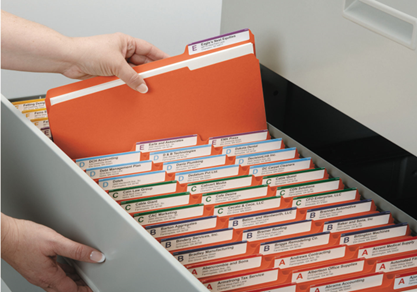
- Specialty Archive Boxes: For organizations using color-coded, side-tab folders, specialized boxes are available that allow the folders to stand upright with the tabs visible. This allows staff to pluck a file from an archive box as easily as they would from an open shelf, without unpacking the entire container.
Industries That Depend on Strong Archives Management
- Government: State and local agencies must manage decades of public records and land titles with absolute transparency.
- Healthcare: Healthcare organizations must retain patient files for many years after the last date of service, often across multiple storage facilities.
- Legal: Law firms manage vast discovery archives and original contracts that must be instantly accessible for future litigation.
- Corporate: Finance and HR departments manage tax and employee records that require strict compliance-driven destruction workflows.
Operational and Cost Benefits of Modern Archives Management
Transitioning to IoTFileTracker for your archives yields immediate ROI:
- Reduced Search Time: No more “fishing” for boxes; digital precision leads you directly to the record.
- Improved Compliance: Automated retention prevents the risk of over-retention or premature destruction.
- Better Space Utilization: By identifying destruction-eligible records, you can free up valuable shelf space for new files. This can delay or even eliminate the need for warehouse expansion.
Future of Archives Management with IoTFileTracker
The future of the archive is a “Smart Archive,” where sensors continuously monitor environmental conditions and inventory health. As we move toward lifecycle-based records governance, IoTFileTracker remains the central hub that connects the creation of a file to its eventual, compliant destruction.
Conclusion
Archives should not be the place where visibility goes to die. They are a critical component of your organization’s memory and legal protection. By applying the same archive tracking rigor to long-term storage as active files, organizations maintain full visibility. This approach keeps operations lean, compliant, and audit-ready.
IoTFileTracker provides the visibility, compliance, and control needed to turn a dusty warehouse into a high-performance information asset.