
In the modern enterprise, the “missing file” is more than a minor inconvenience—it is a significant operational risk. Whether it is a sensitive legal case file, a patient’s medical history, or a classified government document, the loss of physical records can lead to compliance violations, legal liabilities, and compromised security.
Traditional file management relies heavily on manual logs or passive barcode scanning. Both methods share a fatal flaw: they require human intervention. If an employee forgets to scan a folder or signs out a file incorrectly, the chain of custody is broken. This is where Facility RFID Detection Zones transform the landscape. By leveraging Radio Frequency Identification (RFID) technology, organizations can create “intelligent environments” that monitor file movement automatically and in real time.
What Are Facility RFID Detection Zones?
A Facility RFID Detection Zone is a digitally defined area within a building where RFID hardware is strategically positioned to identify and track tagged assets. Unlike a general “room,” a detection zone is a precise point of visibility that represents people, specific locations, or transitional areas.
In an IoTFileTracker ecosystem, these zones act as the eyes of the system. When a file folder equipped with a passive RFID tag passes through or resides within one of these zones, the system captures its unique ID and updates its location in the central database without anyone ever having to pull a trigger or press a button.
These zones are typically classified into three categories:
- Static Zones: Specific storage locations like file rooms, shelving units, or individual offices.
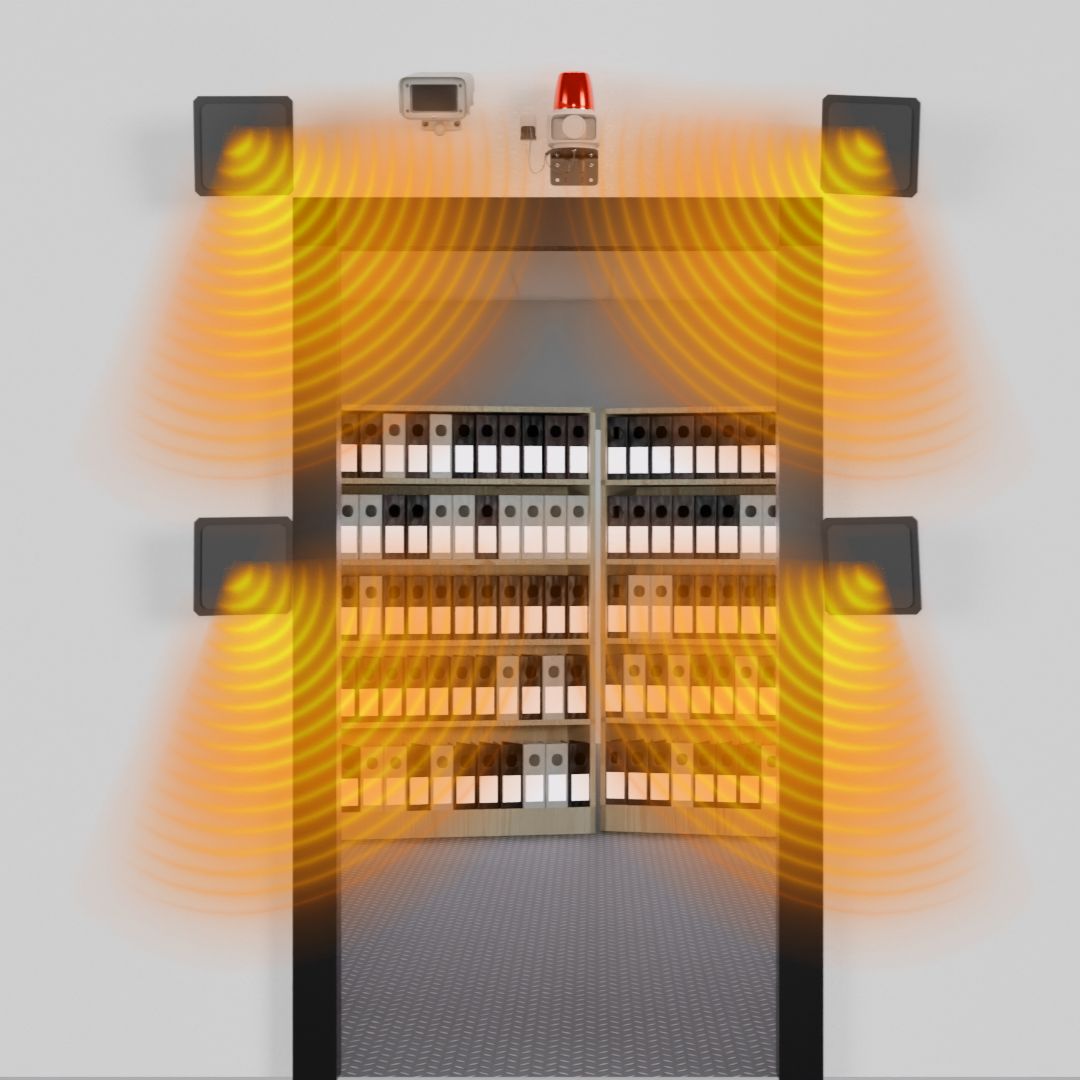
- Transitional Zones: Chokepoints such as doorways, elevators, and corridors where movement is captured.
- Security Zones: Restricted areas where the presence of a file might trigger an alert or an unauthorized movement notification.
How RFID Detection Zones Work in IoTFileTracker
Implementing a robust RFID file tracking system requires a seamless marriage of hardware and software. IoTFileTracker utilizes high-performance components to ensure that every zone provides 100% data integrity.
Antenna Configurations and Placement
The system utilizes two primary types of antennas depending on the architectural needs of the facility:
- Wall-Mount Antennas: Ideal for monitoring doorways and narrow corridors. These are often positioned to create a “curtain” of RF energy that files must pass through.
- Ceiling-Mount Antennas: These offer a more discreet profile, perfect for reception areas, open-plan offices, or conference rooms where aesthetic integration is important.

The Role of RFID Readers and Connectivity
The backbone of the detection zone is the RFID reader. These devices are connected via Ethernet (often utilizing Power over Ethernet, or PoE) to the organization’s network. A single high-performance reader can support up to four antennas. This configuration allows a single reader to manage multiple detection zones—for example, one reader could monitor four adjacent office doorways or two separate double-door entrances.
When an antenna detects a tag, it sends the signal to the reader, which filters the data and transmits it to the IoTFileTracker software. The software then translates that raw data into a logical location, such as “File Cabinet A” or “Fourth Floor Exit.”
Configuring RFID Zones for Real-World Facilities
Mapping a facility for RFID file management is both a technical and a logical exercise. To achieve true enterprise-level visibility, antennas must be mapped to logical locations that reflect how the organization actually operates.
Common Zone Placements
- Offices and Conference Rooms: Tracks which staff member currently possesses a file.
- Elevators and Stairwells: Monitors movement between floors, providing a “last seen” location if a file moves to a different department.
- Restricted Zones: Provides an immediate audit trail if a highly sensitive file enters an unauthorized area.
- Reception and Loading Docks: Captures files as they enter or leave the building, ensuring the chain of custody extends to the facility perimeter.
By mapping these antennas to logical names within the IoTFileTracker interface, administrators can see a real-time “map” of document flow, rather than just a list of hexadecimal tag numbers.
Understanding Detection Range and Zone Accuracy
One of the most critical aspects of file tracking using RFID is managing the “read range.” While it might seem beneficial to have the longest range possible, precision is actually the goal in a professional facility.
Power Tuning for Precision
Typical RFID antennas have a read range that can be tuned based on the environment. In a standard office setting, a 10-foot detection zone is often the “sweet spot.” If the signal is too strong, a reader on the third floor might accidentally pick up a tag on the second floor (cross-floor reads) or detect a file sitting on a desk in an adjacent room (cross-zone reads).
IoTFileTracker allows for fine-tuned power management. By calibrating the RF output, technicians ensure that a file is only “checked into” a zone when it is actually within the intended boundaries. This eliminates “ghost” movements and ensures the audit trail remains accurate.
Real-Time File Location Updates & Chain of Custody
The primary driver for implementing detection zones is the maintenance of a rigorous chain of custody. In legal, healthcare, and government sectors, knowing who had a file and where it went is a regulatory requirement.
Eliminating Human Error
When a file moves from a central records room to a lawyer’s office, the IoTFileTracker system detects the transition as the file passes through the doorway. The system automatically:
- Logs the time of departure from the records room.
- Logs the time of arrival in the new zone.
- Updates the status of the file in the database.
This automation removes the “human element” from record-keeping. There are no manual logs to fill out and no barcodes to scan. The system provides a passive, objective record of movement that is invaluable during internal audits or legal discovery.
Benefits of Facility RFID Detection Zones
Integrating detection zones into your enterprise RFID tracking solutions provides several transformative benefits:
- Improved Accountability: When every movement is recorded, staff members are more diligent about file handling.
- Rapid File Retrieval: Instead of searching through stacks of paper, users can see exactly which office or zone a file was last detected in, reducing “search time” from hours to seconds.
- Reduced Loss: Real-time alerts can notify managers if a file is moved into a high-risk area (like near a trash chute or an exit), preventing accidental loss.
- Enhanced Compliance: Automated logs satisfy HIPAA, GDPR, and other regulatory requirements for document security and privacy.
Use Cases Across Industries
Government Records Offices: Managing vast archives of citizen records or sensitive departmental data requires absolute precision. RFID zones allow government agencies to track the flow of documents through various stages of approval and archiving.
Healthcare and Medical Records: While many records are digital, physical charts and diagnostic films still circulate in many hospitals. Secure file movement monitoring ensures these records are available at the point of care, improving patient outcomes and maintaining HIPAA compliance.
Legal Firms and Courts: In the legal world, a misplaced file can cause a mistrial or a missed filing deadline. RFID detection zones at the entrances of partner offices and courtrooms ensure that critical case files are always accounted for.
Why Facility RFID Detection Zones Are Foundational
Facility RFID Detection Zones are not just an “add-on” feature; they are the foundation of a modern, secure file tracking strategy. As organizations scale, the number of files and the complexity of their movement grow exponentially. A system that relies on manual checkpoints will eventually fail under the weight of human error.
By designing a facility with intelligent detection zones, an organization creates a scalable infrastructure. This infrastructure supports not just current tracking needs, but provides the data necessary for process optimization, helping leadership understand bottlenecks in document workflows and improve overall operational efficiency.
Conclusion
The transition from passive filing to active, real-time visibility is a hallmark of a digitally mature organization. Facility RFID Detection Zones provide the technical framework necessary to ensure that physical documents are treated with the same level of security and traceability as digital assets. Through the strategic placement of antennas, precise power tuning, and the robust backend of IoTFileTracker, enterprises can achieve a level of chain-of-custody control that was previously impossible.