In the pursuit of Total File Management Visibility, technology is only as effective as the physical foundation upon which it is built. While IoTFileTracker provides the digital intelligence to track assets via radio waves, the labeling process is the critical bridge that connects your physical records to our mature, COTS software platform. At IoTFileTracker, we advocate for a holistic approach to labeling—one that combines the “transcendent automation” of RFID with the proven efficiency of color-coding and human-readable indexing.
For each new record added to the IoTFileTracker database, our system enables the printing of one or more specialized labels. Whether you are originating a new file folder, tagging an incoming document, or preparing an archive box for long-term storage, the labeling strategy you choose will define your operational speed and accuracy.
The Three Pillars of Effective File Indexing
Before implementing RFID, it is essential to evaluate whether your current files are indexed adequately. We encourage organizations to consider three primary factors to ensure their records management meets “best practices”:
- Consistency of Text Fields: Are the necessary text fields—such as file descriptions, dates, and case numbers—printed or written onto folders consistently? It is vital that a person can view the indexing information and immediately conclude whether they have the correct folder without opening it.
- Accessibility of Information: Based on where labels are currently placed, do staff have to pull folders off shelves or from within drawers just to read the indexing fields? A properly designed label should allow for rapid identification while the record is still in its storage location.
- Visual Optimization (Color-Coding): Do your existing folders utilize side-tab or top-tab color-coding of the primary index (such as file name or number)?
At IoTFileTracker, we maintain that RFID alone cannot deliver best-practices records management. While RFID allows you to find a file from 25 feet away, color-coding is fundamentally required to prevent misfiles at a glance and optimize the human element of your workflow.
Versatile Labeling Options for Every Asset
IoTFileTracker offers a wide variety of industry-standard options for labeling. Our software platform is developed utilizing the J2EE framework, making it capable of managing complex printing tasks for sheeted or roll labels, with or without integrated color-coding.
- Side-Tab Labels: Ideal for high-density shelf filing systems, allowing for visibility without removing the folder.
- Top-Tab Labels: Designed for drawer-based filing environments.
- Front-of-Folder Labels: Useful for detailed metadata and secondary identification.
- Integrated RFID Labels: These “smart labels” contain a high-performance antenna and a computer chip that holds the unique ID of the document or folder, enabling Total Visibility through radio wave technology.
Strategies for Tagging Active Records
For an RFID system to be successful, the active file folders rotating in and out of circulation must be tagged. We understand that “tagging the backfile” or converting existing folders can seem daunting. To address this, IoTFileTracker provides two primary paths for folder conversion:
1. On-Demand Tagging
Folders can be tagged “on the fly” as they go into circulation or when they return from circulation. As a record is accessed, a label is printed and applied, ensuring that the most active—and therefore the most mission-critical—files are the first to gain RFID intelligence.
2. Sequenced Match-and-Attach
For larger conversions, we can print RFID labels corresponding to each active file in your database. These labels are sequenced in the exact same order as your existing filing system and shipped directly to your facility. This “match-and-attach” process is so simple that customers can utilize existing or temporary labor to complete the project, as no specialized technical knowledge is required to pair the new label with the existing folder.
The Synergy of RFID and Human-Readable Design
The primary objective of IoTFileTracker is to enable staff to access files “right when needed.” By combining RFID with advanced label design, we eliminate the risks of “lost productivity” and “customer service lapses.”
When an RFID label is printed from our software, it serves multiple functions:
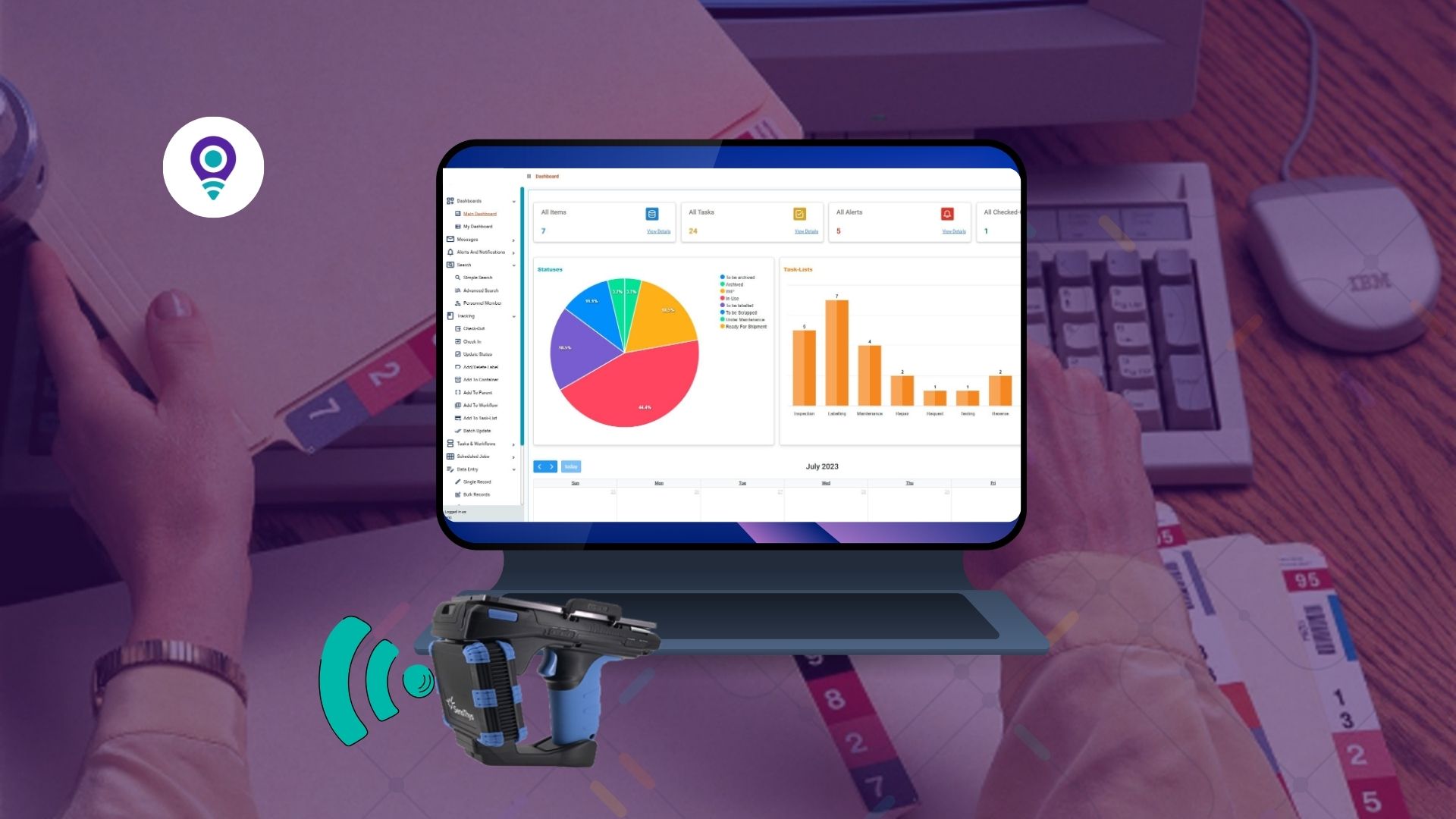
- Electronic Tracking: The internal chip allows for Zone Tracking via fixed antennas and Inventory in Seconds via portable scanners.
- Visual Guidance: Color-coding acts as a visual “Geiger Counter” for the human eye, identifying where a file belongs in a sequence and highlighting misfiles instantly.
- Data Precision: Text fields printed directly from the IoTFileTracker database ensure that the physical file always reflects the most current digital data.
This Hybrid Records Environment ensures that whether you are using a high-tech mobile scanner or simply walking down an aisle, your records are always identifiable and accessible.
Security and Audit Readiness
Labeling is also a cornerstone of facility security. RFID-labeled folders and archives can be tracked as they pass through “choke-points” or exit-points. If a file is moved in an unauthorized manner, the IoTFileTracker software can trigger alerts or alarms, protecting sensitive information and maintaining a complete auditable chain-of-custody.
Furthermore, because our labels are durable and high-quality, they withstand the rigors of frequent use and long-term archival storage. This ensures that even years later, an archive box can be scanned on a shelf to provide instant confirmation of its contents, ensuring your organization remains “audit-ready” at all times.
Conclusion: A Solution Optimized for Your Needs
With over 40 years of proven experience, the team at IoTFileTracker has worked intimately with high-profile government, legal, and commercial organizations worldwide to perfect the art of labeling. Our solution is a mature, robust platform that avoids the risks of custom development by providing a COTS system that is ready to configure to your exact needs today.
By adopting a comprehensive RFID and color-coded labeling strategy, you are not just tagging folders—you are building a smarter, more secure, and more efficient enterprise.