In the high-stakes world of records management, knowing the location of a file folder is often considered the “gold standard” of oversight. Organizations invest in RFID file tracking to ensure they know exactly which shelf a case file sits on or whose desk a patient record is currently occupying. However, a critical question often remains unanswered: Is the content of that folder actually complete?
Tracking the movement of a physical folder is a logistical victory, but ensuring the integrity of the documents inside that folder is a compliance necessity. A file folder that arrives at its destination on time but is missing a signed contract, a medical consent form, or a sensitive evidentiary document is, for all intents and purposes, a failed record. At TrackerIoT, we address this gap through document-to-folder validation, a sophisticated control layer within the IoTFileTracker platform that moves beyond simple location tracking to enforce absolute records integrity.
Why Tracking File Location Alone Is Not Enough
Traditional file tracking systems are designed to monitor the “container”—the folder itself. While this reduces the time spent searching for misplaced files, it does not mitigate the risk of internal document loss or tampering.
The Risk of Missing or Misfiled Documents
In busy government offices, legal firms, or healthcare facilities, documents are frequently removed from folders for photocopying, review, or signature. Without a formal mechanism to ensure those documents are returned to the correct “parent” folder, the record becomes fragmented.
- Missing Documents: A critical page is left on a copier or tucked into a different file.
- Misfiled Documents: A document belonging to “Client A” is accidentally placed into the folder for “Client B.”
- Incomplete Records: A file is checked out to a user who assumes it is complete, only to discover a missing folio in the middle of a court proceeding or a patient consultation.
What Is Document-to-Folder Validation?
Document-to-folder validation is the process of using RFID technology to cross-reference the contents of a physical folder against its digital manifest in real-time.
While standard tracking tells you where the folder is, document validation tells you what is inside it. By using IoTFileTracker, records managers can perform a “digital inventory” of a folder’s contents in seconds. The system identifies which documents are present, which are missing, and—crucially—which documents are “unexpected” (belonging to a different folder entirely).
Why Document Integrity Matters
The consequences of an incomplete record extend far beyond administrative inconvenience. In regulated environments, physical records integrity is a legal and operational requirement.
- Legal and Regulatory Risks: In litigation, a missing original document can lead to the dismissal of a case. In healthcare, a missing consent form is a direct HIPAA and patient safety violation.
- Operational Friction: When a staff member receives an incomplete file, their workflow stops. They must spend valuable time hunting for the missing pages, leading to rework and delayed decision-making.
- Audit Failures: During a regulatory audit, the inability to produce a complete, validated record suggests a lack of institutional control, potentially leading to fines or loss of accreditation.
Parent-Child Relationships in Records Management
To manage this complexity, IoTFileTracker utilizes a “Parent-Child” data architecture.
- The Parent Record: The file folder or expandable jacket.
- The Child Records: The individual documents, folios, or binders contained within the parent.
This hierarchical structure allows the file tracking system to treat the folder as a single unit for broad movement tracking, while maintaining granular visibility into the individual documents that constitute the whole.
RFID Tagging at the Folder and Document Level
The transition to a validated records environment begins with a strategic tagging approach.
Tagging Strategy
- Folder Level: Every folder receives a primary RFID tag at origination, serving as the master ID.
- Document Level: Critical documents (e.g., original deeds, birth certificates, signed affidavits) receive a discreet, specialized RFID tag.
- Selective vs. Universal Tagging: While some organizations tag every page in a high-security folio, most find the highest ROI by tagging “milestone” documents—those that are essential for the file to be considered “complete.”
Validating Documents Before File Transfer
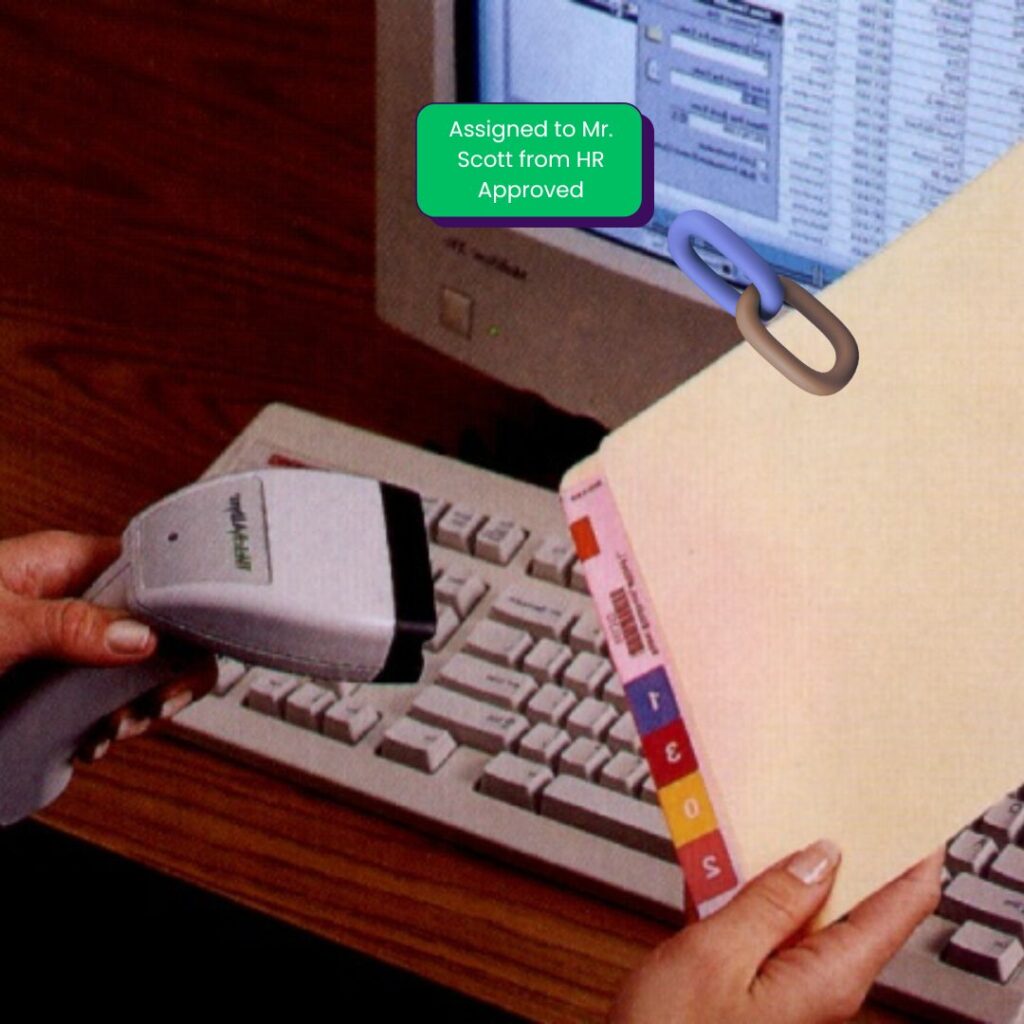
One of the most powerful features of IoTFileTracker is the “Pre-Issue Validation.” Before a folder is checked out to a new custodian, the records manager scans the folder using an RFID pad or handheld reader.
The IoTFileTracker interface immediately displays:
- Expected Documents: A list of all tagged child records that should be in the folder.
- Missing Documents: Any tagged item that is not detected by the scan.
- Unexpected Documents: Any tag detected that is not associated with this parent folder (identifying misfiles).
This ensures that no file leaves the registry in an incomplete state, enforcing records management compliance at the point of action.
Detecting Misfiled Documents
Misfiling is the “silent killer” of records integrity. A document placed in the wrong folder is often “lost” until a manual page-by-page audit is conducted. RFID document tracking eliminates this risk. Because the IoTFileTracker platform knows exactly which child tags belong to which parent ID, it will instantly alert a clerk if they accidentally place “Document X” into “Folder Y.” This proactive detection prevents long-term data integrity issues before they can escalate.
Document Validation During File Return
The validation process is equally critical when a file is returned to the secure registry. By scanning the folder upon return, IoTFileTracker confirms that the custodian has returned the file in the same state it was issued.
If a document is missing, the system prevents the “Check-In” from being completed until the discrepancy is addressed. This creates a high-integrity chain-of-custody tracking record, where the custodian is held accountable not just for the folder, but for the specific documents within it.
Chain-of-Custody and Accountability
By assigning responsibility for the completeness of a folder, organizations foster a culture of accountability. When staff know that IoTFileTracker will perform a digital inventory of the folder upon return, they are significantly more likely to handle documents with care. This reduces internal disputes, minimizes the need for investigations into “missing pages,” and ensures a high-trust environment.
How IoTFileTracker Automates Document Validation
Manual document checks are time-consuming and prone to human error. IoTFileTracker automates this process through:
- RFID Scanning: Rapid detection of multiple tags without line-of-sight.
- Real-Time Feedback: Visual cues (Green for Complete, Red for Exception) that allow staff to act immediately.
- Automated Manifests: The system automatically generates a “Table of Contents” for the physical folder, which can be updated as new documents are added and tagged.
Operational Benefits
The ROI of document-to-folder validation is found in both time saved and risks avoided:
- Faster File Issuance: No more manual page-counting at the checkout desk.
- Reduced Rework: Documents are never “lost” in the wrong folder, eliminating the need for exhaustive searches.
- Improved Staff Confidence: Users can trust that when they pull a file, it contains everything they need to perform their job.
Compliance and Audit Readiness
For organizations facing frequent audits, IoTFileTracker provides an audit-ready records management posture. When an auditor asks for proof of record integrity, you can produce a report showing the exact date, time, and result of every validation event. This proves that the organization has implemented rigorous controls to protect the accuracy and completeness of its physical records.
Industries That Benefit Most
- Government: Ensuring that sensitive case files for social services or law enforcement contain all required affidavits and evidence.
- Healthcare: Validating that patient charts contain all original signed consents and specialist reports before surgery.
- Legal and Judicial: Protecting the integrity of evidence binders where the order and presence of documents are a matter of law.
- Financial Services: Ensuring loan files contain all original signed disclosures and property deeds before closing.
Best Practices for Implementing Validation
- Define “Critical” Documents: Don’t tag every post-it note. Focus on the documents that carry legal or operational weight.
- Align with Workflow: Integrate the validation scan into the existing checkout/check-in process so it doesn’t add a “new” step.
- Train for Exceptions: Ensure staff know exactly what to do when the system flags a “Missing” or “Unexpected” document.
Conclusion
A file tracking system that only monitors folders is only doing half the job. To achieve true governance and records management compliance, organizations must have visibility into the contents of those folders.
IoTFileTracker by TrackerIoT provides the most advanced RFID-enabled document validation solution on the market. By establishing a clear parent-child relationship between folders and documents, we ensure that your records are not just “found,” but are complete, accurate, and trusted.