
In an increasingly digital world, the physical file folder remains the tangible cornerstone of high-stakes information governance. Whether it is a sensitive government contract, a critical patient chart, or a foundational legal brief, the folder is more than just a container; it is the primary interface between a physical document and its lifecycle management.
However, not all folders are created equal. Choosing the wrong materials or design can lead to sagging records, lost data, and a breakdown in organizational efficiency. At TrackerIoT, we recognize that a high-performance file tracking system is only as good as the physical assets it monitors. By pairing the right folder types with IoTFileTracker, organizations can ensure their records management strategy is built on a foundation of durability, visibility, and total accountability.
The Role of File Folders in Physical Records Management
At its core, physical file management serves three primary functions: protection, organization, and identification. A folder protects the edges of documents from fraying, organizes complex folios into logical segments, and provides the surface area necessary for indexing and RFID tagging.
When an organization implements RFID file tracking via IoTFileTracker, the folder becomes a “smart asset.” The folder’s material and tab style directly determine how well it sits on a shelf and how easily human eyes and RFID scanners identify it. A folder that collapses under its own weight or fails to protect its contents eventually leads to “untrackable” records—the ultimate failure in any file registry system.
Manila File Folders: The Industry Standard
Manila file folders remain the most common choice for general office use due to their cost-effectiveness and versatility. However, the quality of Manila stock varies significantly.
Side Tab vs. Top Tab
In modern records management best practices, the choice of tab is dictated by the storage hardware.
- Top Tab: Best suited for traditional drawer-based filing.
- Side Tab (End Tab): The gold standard for open-shelf filing systems. Side tabs allow for high-visibility color-coding and provide the ideal flat surface for RFID labels, enabling IoTFileTracker to scan files without removing them from the shelf.
Thickness and Weight Options
Manila folders are typically measured in “points” (pt), representing the thickness of the paper stock:
- 11pt: Lightweight, best for thin files with low circulation.
- 14pt: The professional standard for most corporate and legal environments. It offers enough rigidity to stand upright on open shelves.
- 18pt: Extra-heavy duty, used for files that will be handled frequently over many years.
Pressboard File Folders: For High-Volume Durability
When files grow thick or enter a high-volume registry, Manila stock often reaches its limit. This is where Pressboard file folders become essential.
Pressboard is a dense, highly compressed paperboard that is significantly more rigid and durable than Manila. These folders often feature “Tyvek” or cloth expansion gussets that allow the folder to grow as documents are added without tearing the spine.
Best Use Cases: Pressboard is the preferred choice for healthcare patient charts or permanent government case files where the record must remain intact for decades. Their rigidity ensures that even when heavy, the folder remains upright, maintaining the alignment necessary for fixed RFID readers to function correctly within the IoTFileTracker ecosystem.
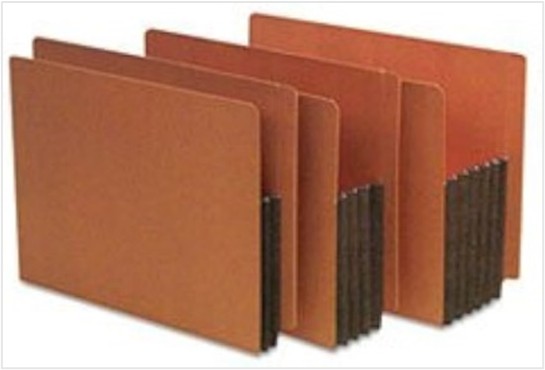
Redrope Expandable File Folders
For archives or projects that exceed the capacity of a standard folder (often several hundred pages), Redrope expandable file folders (or wallets) are the primary solution.
Expansion Capacities and Security
These folders feature accordion-style sides that can expand from 1 inch to over 5 inches. Many models include elastic cord closures or protective flaps to ensure that no documents fall out during transit.
Operational Insight: While Redrope is excellent for storage, its thickness can occasionally dampen RFID signals if the tag is placed deep inside. IoTFileTracker best practices suggest applying RFID tags to the exterior tab or the most visible surface of the Redrope wallet to ensure 100% read accuracy during transit or doorway monitoring.
Folder Expandability and Capacity Planning
A common pitfall in physical file management is “overstuffing.” When a folder exceeds its design capacity, the “V” shape of the spine causes the folder to ride up, obscuring the index tab and putting pressure on the RFID label.
Proper capacity planning involves matching the folder type to the document volume:
- Score Lines: Standard folders have pre-scored lines to allow for 1/2″ or 3/4″ expansion.
- W-Fold Gussets: Specialized spines that allow the folder to sit flat even when full.
- Box Bottoms: For large volumes, a flat, reinforced bottom prevents the folder from sagging.
Partitions, Fasteners, and Internal Organization
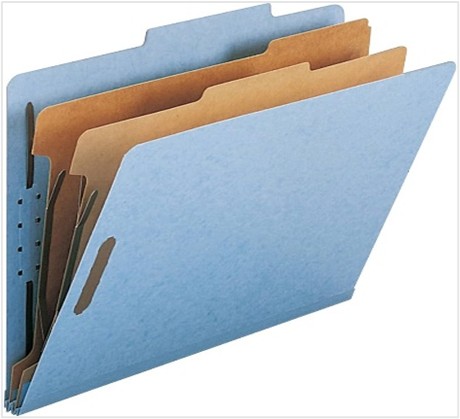
Effective records management often requires internal categorization. Folders with built-in partitions (also known as classification folders) divide a single file into sub-sections such as “Correspondence,” “Invoices,” and “Contracts.”
Fasteners and Security
Fastener clips (Prong or Permclip) lock documents into the folder in chronological order. This critical security feature prevents accidental document removal and misfiling. When combined with IoTFileTracker, the software can track the folder as a “Parent” and the internal partitioned sections as “Children,” ensuring a complete audit trail of the entire folio.
Plastic (Polyethylene) File Folders for Harsh Environments
In certain industries—such as industrial manufacturing, outdoor archives, or warehouse storage—paper-based folders are insufficient. Plastic (Polyethylene) file folders offer total resistance to moisture, chemicals, and pests.
While more expensive, these folders are virtually indestructible. They are particularly useful in long-term archive environments where paper degradation is a concern. Because plastic does not interfere with radio waves, they are highly compatible with RFID file tracking, allowing IoTFileTracker to maintain visibility in environments where paper would fail.
Choosing Side-Tab vs. Top-Tab Folders
The shift toward open-shelf filing has made side-tab folders the industry favorite for efficiency.
- Productivity: Side-tab folders allow for “at-a-glance” auditing.
- Tracking: They provide a consistent location for RFID tags, making handheld “sweeps” faster and more accurate.
- Space: Open shelving combined with side-tab folders can save up to 40% of the floor space required for traditional drawer cabinets.
How IoTFileTracker Enhances Physical File Folder Systems
IoTFileTracker is the digital layer that turns static folders into intelligent assets. By applying an RFID label to a high-quality folder, organizations gain:
- Real-Time Visibility: Know exactly who checked out a Pressboard folder or when a Manila file left the registry.
- Automated Audits: Instead of manual “shelf reading,” a handheld sweep confirms the presence of all folders in seconds.
- Loss Prevention: IoTFileTracker monitors doorways; if a restricted folder approaches an exit, an alarm triggers instantly.
- Search Optimization: Find a “lost” folder even if it is buried under other files or sitting on the wrong shelf.
Industries That Depend on High-Quality File Folders
Government and Public Records: Managing vital records requires 18pt Manila or Pressboard folders to ensure that historical documents remain protected through centuries of potential handling.
Healthcare: Patient charts require classification folders with multiple fasteners to maintain HIPAA compliance and clinical accuracy across different hospital departments.
Legal and Compliance: Law firms use Redrope expandable folders for discovery materials and Pressboard folders for active litigation files to ensure they never lose or damage evidence.
Best Practices for Selecting File Folders
When designing your file tracking system, consider these three pillars:
- Durability vs. Cost: Use Manila for high-volume, low-access files; invest in Pressboard for high-circulation “working” files.
- Standardization: Ensure every department uses the same tab style and weight to maintain shelving uniformity.
- RFID Readiness: Choose folders with a dedicated flat surface (the “tab”) for label application to ensure long-term tag adhesion.
Conclusion
The folder is the foundational unit of any records archive. By selecting the appropriate material—whether it is an 11pt Manila for a quick project or a heavy-duty Pressboard for a lifelong record—you are protecting your organization’s most valuable information.