High-density storage solutions customized for your workflow.
Our system combines space-saving hardware like rotary files and sliding mobile shelving with smart organization protocols. Whether you need sturdy, side-tab folders for rapid visual scanning or a complete RFID audit trail, our configure-to-order systems provide the efficiency your organization demands.
The Foundation of Efficient Records Management
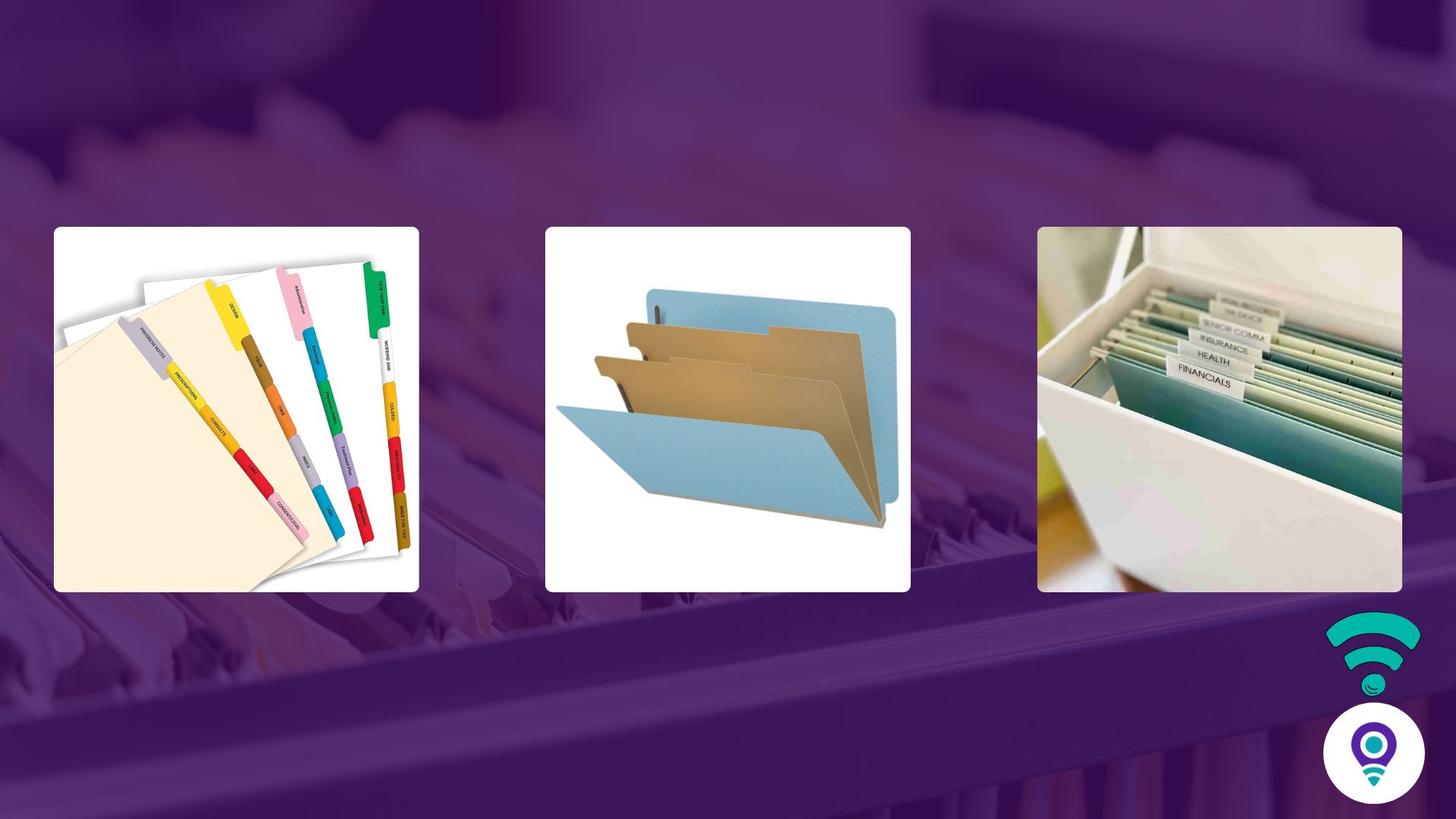
A filing system is only as strong as the media it holds. Generic office supply folders often sag, tear, and hide critical information, leading to lost time and damaged records. At TrackerIoT, we provide engineered filing supplies—folders manufactured with precise specifications to withstand the rigors of active daily use while maximizing visibility and retrieval speed.
Heavy-Duty Construction: Built to Last
Enhanced Visibility Tabs (Top & Side)
Custom Index Dividers
From Cognitive Filing to Visual Command.
The Power of Color-Coded Filing
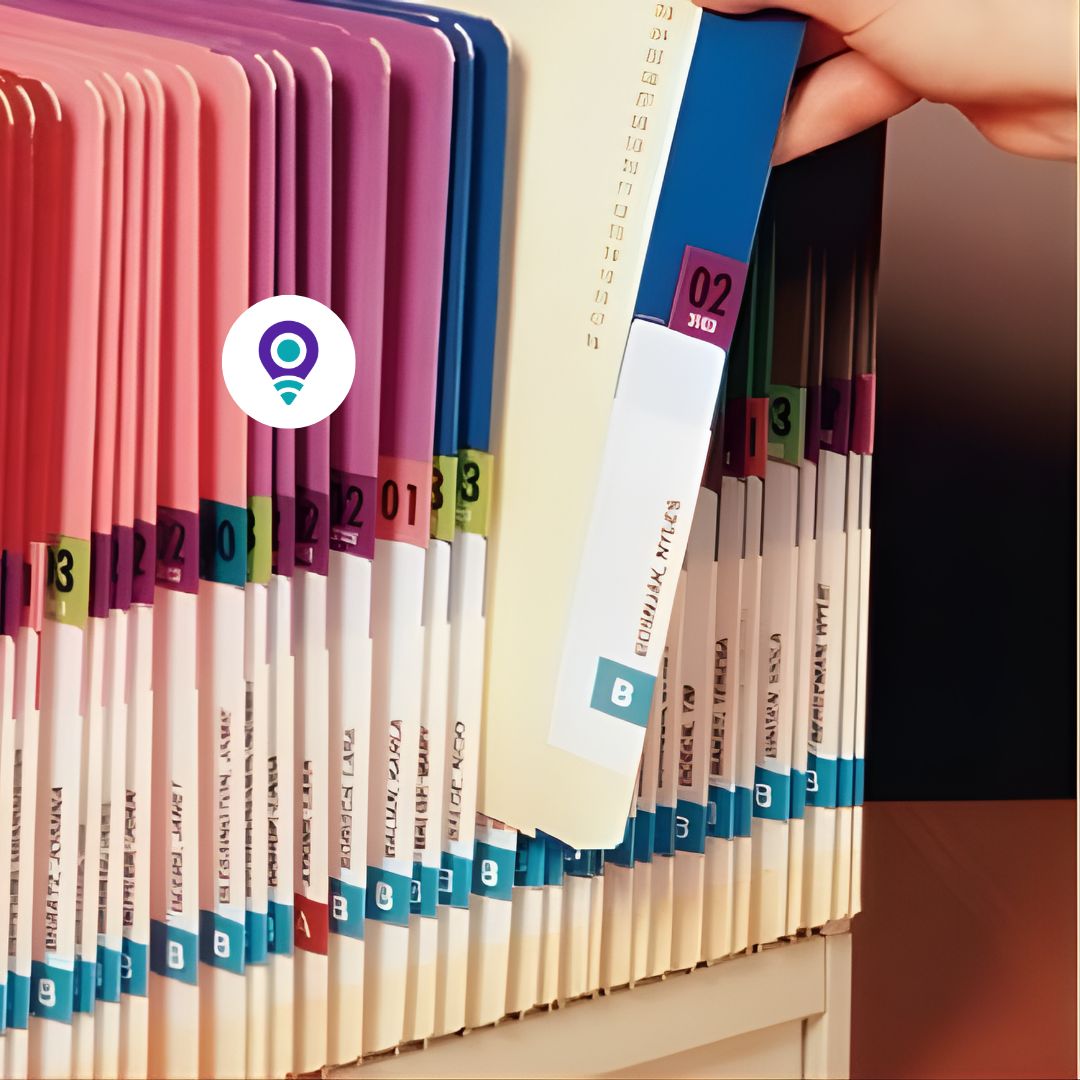
The human brain processes visual patterns significantly faster than it processes text. Traditional filing systems require staff to “read” their way through a drawer to find a specific number or name—a process known as cognitive filing. We transform this into visual filing. By assigning specific colors to data points, we create a system where accuracy is automatic and speed is dramatically increased.
Our system assigns a unique, distinct color to every number (0-9) and alphabet character (A-Z). When these labels are applied to your file folders, they transform raw data into a visual spectrum.
Rapid Retrieval: Staff don’t need to stop and read every label. They simply scan for the specific color combination associated with the file they need. This allows for near-instant navigation of thousands of files.
The “Band of Color” Effect: When files are stored correctly in numerical or alphabetical order, the colored labels align to create continuous, solid bands of color across your shelving.
IoTFileTracker Smart Label Printing System
The “One-Strip” Solution: Our computerized label printing system generates a single, professionally designed label strip that wraps around the folder tab.
On-Demand Batching: Print a single label for a new client or print batches of thousands for a system conversion.
Data Integration: The software pulls data directly from your spreadsheets or backend databases to ensure 100% accuracy.
The "Misfiles Impossible" Guarantee
Instant Error Detection: If a file is placed out of sequence (e.g., a file ending in “3” placed in the “4” section), the color pattern breaks immediately.
Self-Correcting: The clashing color stands out against the uniform band, alerting staff to the error instantly—often from several feet away. You can identify and fix a misfile without even opening the folder.
System Configurations
- Side-Tab Filing (The Efficiency Standard)
Best for: Open shelving, Rotary files, and High-Density Mobile shelving. How it works: Labels are applied to the protruding side tab. This is widely considered the most efficient method of filing, as the bands of color remain fully visible without staff having to touch the folders. - Top-Tab Filing
Best for: Lateral or vertical drawer cabinets.
How it works: Standardizes filing procedures for departmental or personal files stored in drawers. Labels are applied to the top tab of manila folders or the insert tabs of hanging folders, bringing order to otherwise chaotic drawer systems.

60% Space Recovery.
100% Storage Optimization.
High-Density Storage Hardware
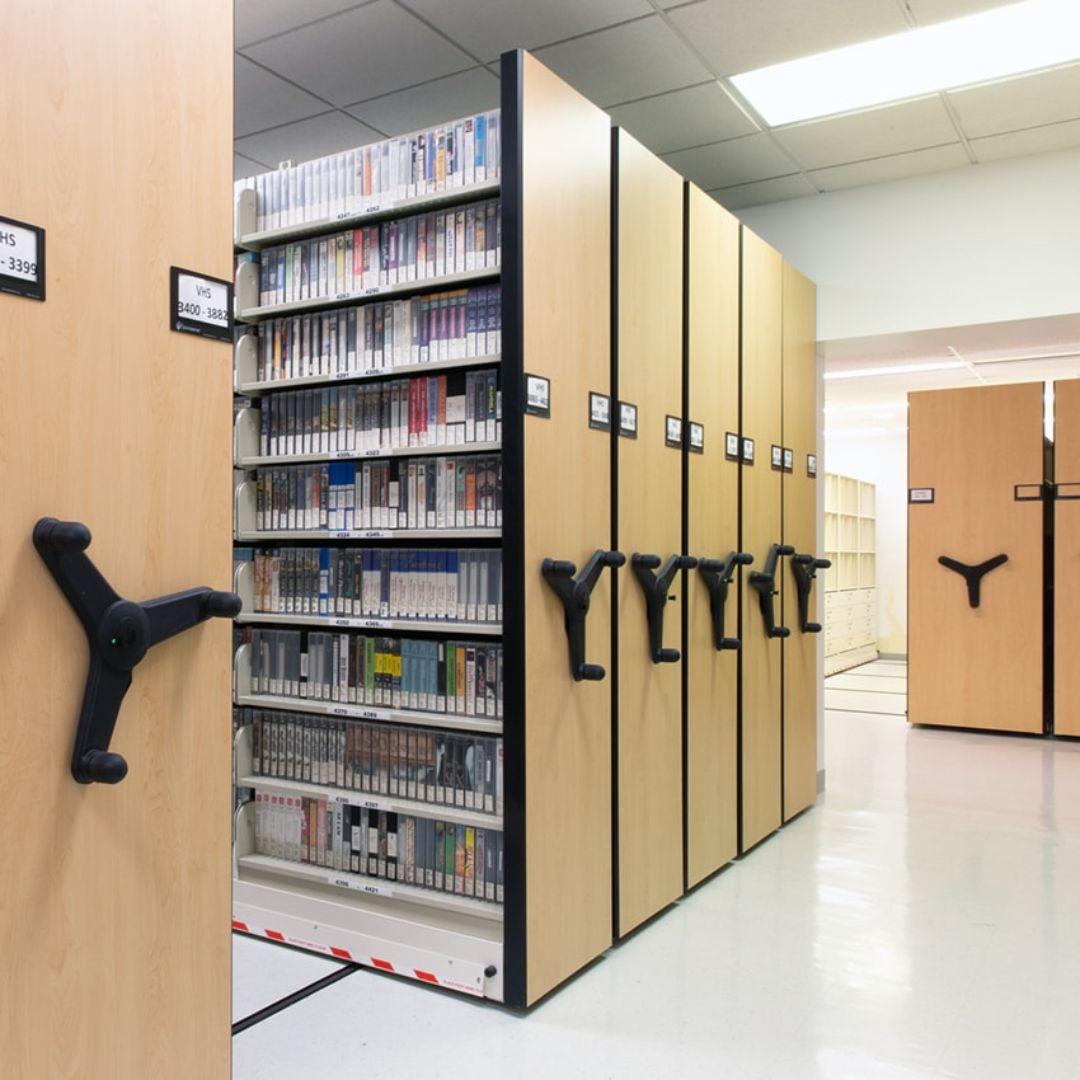
Real estate costs are often the second largest expense for a business. Traditional filing cabinets—with their deep footprints and required drawer-pull space—waste valuable square footage. TrackerIoT offers a suite of advanced storage hardware solutions designed to recover up to 60% of your floor space or double your storage capacity within the existing footprint.
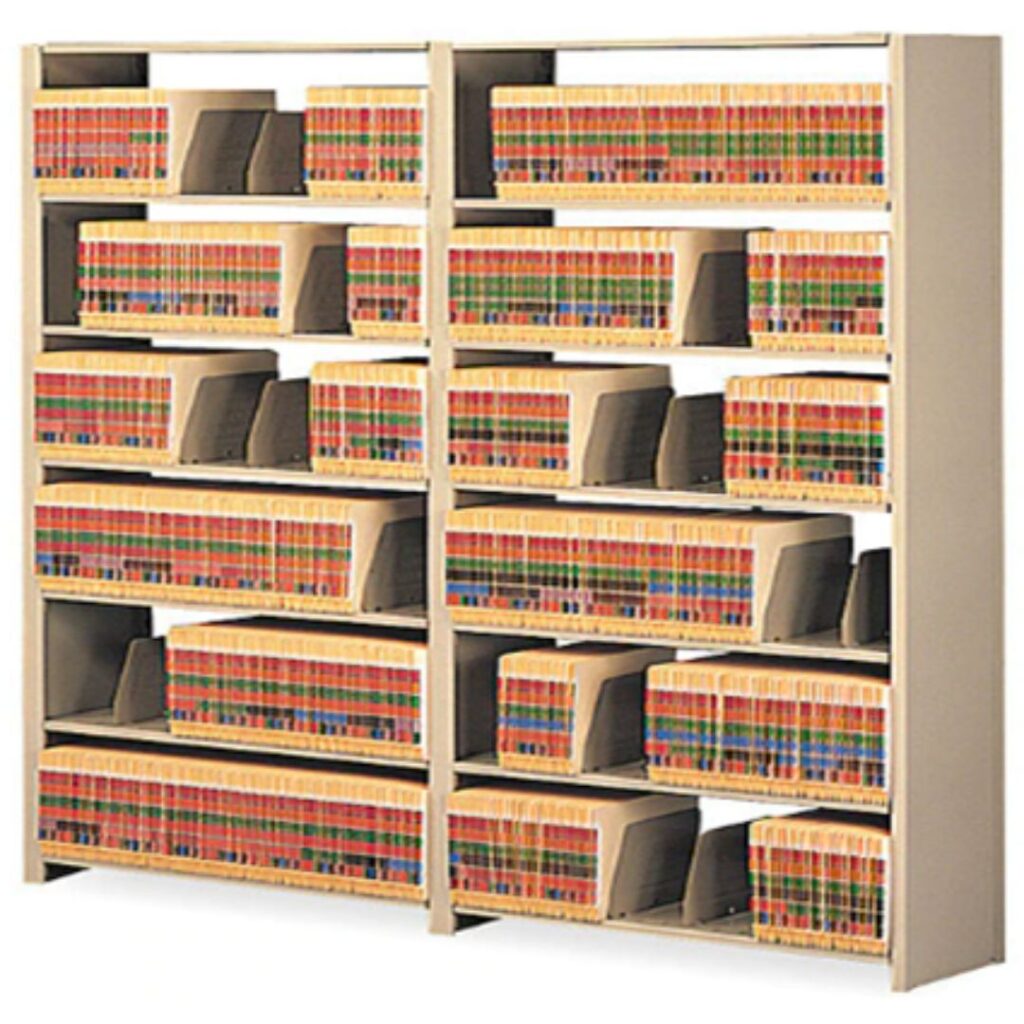
Open File Shelving
Reduced Footprint: Unlike standard cabinets that require roughly 30-42 inches of depth plus aisle space for drawer extension, open shelving has a significantly shallower profile.
Zero “Drawer Space”: Eliminates the need for “pull-out” room. Staff can access files directly without stepping back or maneuvering around open drawers.
Vertical Efficiency: Maximizes vertical wall space with higher stacking options (up to 7, 8, or 9 tiers high), placing active files within easy reach and archival files on higher shelves.
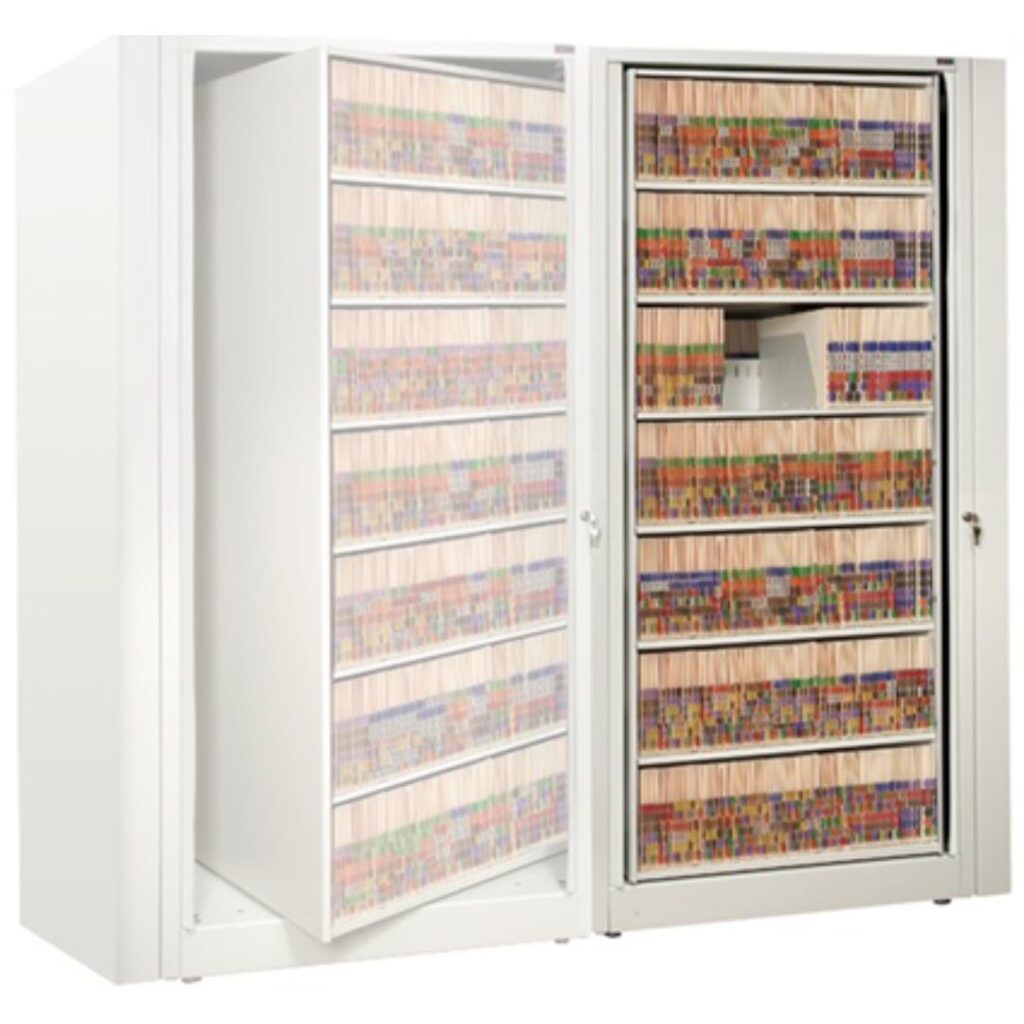
360˚ Rotary Files
Spin-to-Access: A simple touch rotates the inner unit 360 degrees. Staff can access files on one side, then spin the unit to access the second bank of files immediately.
Privacy & Compliance: When not in use, the unit can be rotated a quarter-turn to a “closed” position. In this state, the solid steel panels face outward, completely hiding the files. The entire unit can be locked, making it perfect for HIPAA, GDPR, and secure personnel records.
Back-to-Back Layouts: Units can be placed directly against walls or back-to-back in the center of a room, serving as a functional room divider that stores files on both sides.
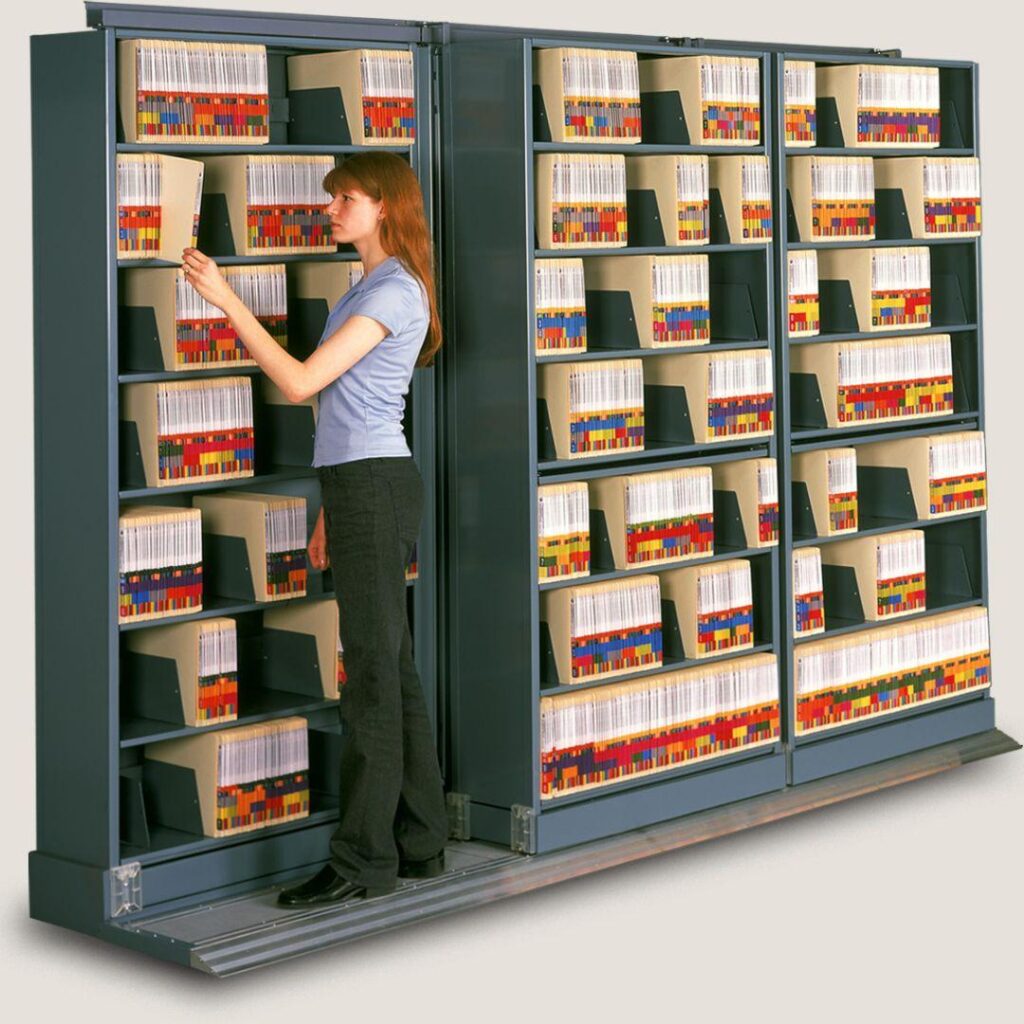
Slide-a-Side (Lateral Sliding) Shelving
The Mechanism: Front units are mounted on a track and carriage system. To access the files in the back row, a user simply slides the front shelving unit left or right.
Multi-Depth configurations: Available in “Bi-file” (two rows deep) or “Tri-file” (three rows deep) configurations.
Aisle Elimination: Because the shelves slide laterally, you do not need to leave aisle space between the rows. This dramatically increases the number of files you can store along a single wall.
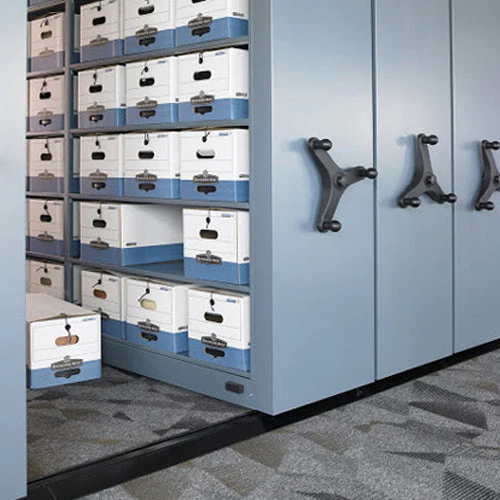
High-Density Compact Shelving
Variable Aisle Access: The system creates a “floating aisle.” By moving the carriages, you open an aisle only where you need to work. This compresses the storage footprint by approximately 50% compared to static shelving.
Massive Scalability: Shelving ranges can be extended to immense depths—up to approximately 25+ shelving units deep (75+ feet)—creating a high-volume archive in a single block.


Accountability Built In. Liability Tracked Out.
Intelligent File Tracking System
A lost file is not just an inconvenience; it is a security breach and a liability. FileTrackerIoT establishes a rigid Chain of Custody for every document in your organization.
Whether you rely on visual manual aids or cutting-edge RFID automation, our system ensures you know exactly where a file is, who has it, and how long they have had it—from the moment of creation until final destruction.
Manual File Checkout: The "Out Guide" System
The “Ghost” of the File: Out guides are durable plastic markers inserted into the specific slot where a file resides. They physically hold the space open, making refiling rapid and accurate.
Charge-Out Pockets: Each guide features a clear pocket to hold a “Charge-Out” slip or a printed request ticket, identifying exactly who removed the file and authorized the access.
Pending Document Storage: A secondary large pocket allows clerks to file new documents (lab results, correspondence) that arrive while the main folder is checked out. When the folder returns, the new documents are waiting in the guide, ready to be interfiled.
Color-Coded Timeline: Out guides are available in various colors to visually signal status.
Date Signaling: Red = Removed in January, Blue = Removed in February. This highlights files that have been missing too long.
Department Signaling: Orange = Contracting Dept, Purple = HR.
Digital Tracking: The IoTFileTracker™ Engine
Barcode Scanning: The industry standard for accuracy. Staff scan the folder and their ID badge upon checkout. This requires “line-of-sight” but ensures positive confirmation of possession.
RFID (Radio Frequency Identification): The game-changer for high-volume management.
Bulk Scanning: Scan an entire shelf, box, or cart of files in seconds without pulling a single folder.
“Geiger Counter” Location: Missing a critical file? Use a handheld RFID reader to walk the aisles. The device will beep faster as you get closer to the missing folder, locating it even if it’s hidden inside the wrong box or behind a desk.
Passive Tracking: Install RFID portals at doorways to automatically trigger an alarm if a restricted file leaves the records room without authorization.
Lifecycle & Retention Management
Retention Rules: Set automated rules based on file type (e.g., Tax Records = 7 Years, Employee Records = Employment + 30 Years).
Disposition Alerts: The system notifies records managers when files are eligible for transfer to deep storage (archives) or ready for secure destruction.
Certificate of Destruction: When a file is purged, the system retains the metadata and generates a final certificate of destruction for the permanent legal record.
Double Your Capacity Without Adding Square Footage.
Recover lost time, ensure compliance, and gain total visibility over your physical assets today.
Tailored Solutions for Mission-Critical Sectors
Every industry manages information differently. Whether you are battling expensive square footage costs, strict government mandates, or life-or-death retrieval speeds, TrackingSystemsIoT configures the filing ecosystem to meet your specific operational demands.
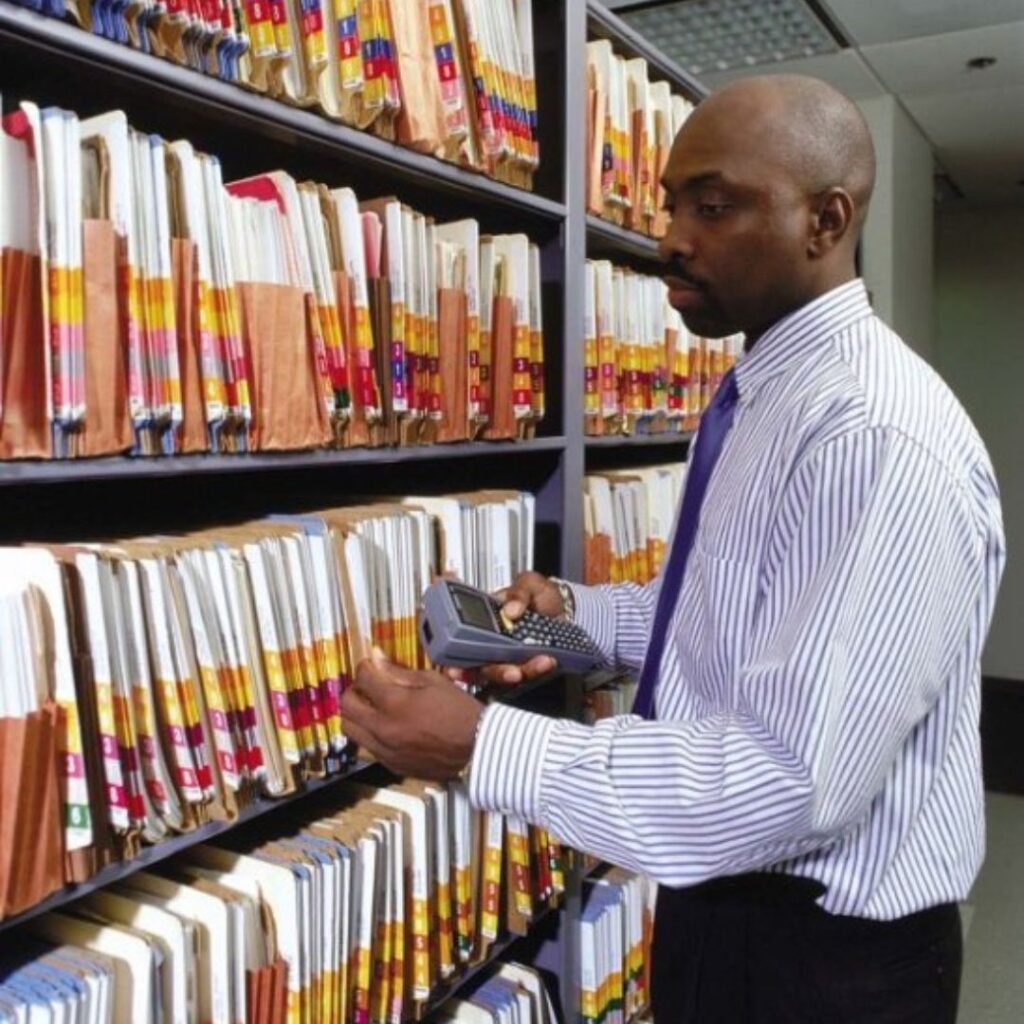
Legal & Law Firms
Law firms are often located in high-rent districts where floor space is at a premium, yet they generate massive volumes of case files that must be retained for years. The recommended solutions are:
- High-Density Mobile Shelving: Condense file storage by 50%, freeing up floor space for additional attorney offices or conference rooms.
- RFID Detection: Locate a missing case file buried on a partner’s messy desk in seconds using a handheld scanner, preventing missed court deadlines.
- Privacy: Lockable rotary files ensure client-attorney privilege is maintained for sensitive cases in shared work areas.

Government Agencies
From municipal clerks to federal bureaus, government agencies manage the permanent record of the public. Accountability and long-term preservation are non-negotiable. The recommended solutions are:
- Chain of Custody: FileTrackingIoT provides an immutable digital audit trail of exactly who accessed a public record and when, satisfying oversight committees.
- Archive Management: Automated alerts for when files reach their disposition date, ensuring agencies don’t spend taxpayer money storing documents past their legal retention period.
- Open Shelving: Cost-effective, high-volume storage for tax records, permits, and licensing documentation.
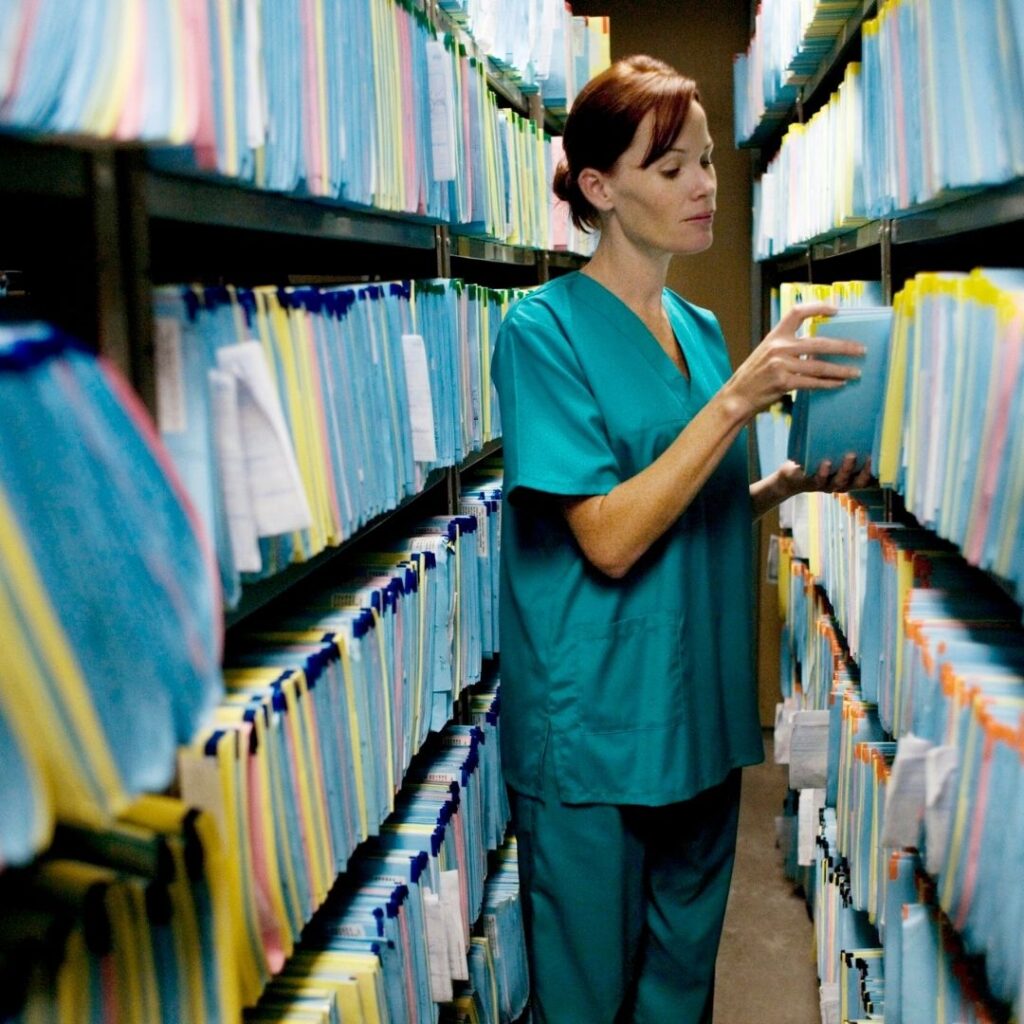
Healthcare & Medical Facilities
Despite the move to EMR, physical records (consent forms, historical charts, legal correspondence) remain vital. In medical environments, speed and hygiene are paramount. The recommended
- HIPAA Security: Locking rotary files allow charts to be kept at the nurse’s station for quick access but spun closed and locked instantly to protect patient privacy.
- Color-Coded Efficiency: Terminal Digit Filing (TDF) with color bands ensures that a patient’s chart is never misfiled under a similar name, preventing critical medical errors.
- Hygiene: Antimicrobial file folders and easy-to-clean metal shelving surfaces support infection control protocols.
Representatives Projects and Customers