In today’s regulatory-driven business environment, organizations face increasing pressure to protect sensitive information and demonstrate strict compliance with data protection laws. From legal records and healthcare files to financial documents and government archives, both physical and digital files must be managed with accuracy, transparency, and accountability.
Manual filing systems and fragmented document management practices are no longer sufficient. They introduce risks such as misplaced records, unauthorized access, incomplete audit trails, and delayed responses to regulatory inquiries. As regulations such as GDPR and other data protection frameworks continue to expand, organizations require technology-driven solutions to maintain control over their information lifecycle.
File tracking system software plays a critical role in strengthening compliance and data security. By providing real-time visibility, automated controls, and secure access management, these systems enable organizations to manage information responsibly while reducing operational and regulatory risk. This blog explores the role of file tracking systems in compliance and data security, with insights aligned to industry best practices and solutions delivered by TrackerIoT.
Barcode and RFID-Based File Tracking Systems
A file tracking system is an advanced solution designed to monitor, manage, and trace the location and status of physical and digital files throughout their lifecycle. These systems use barcode and RFID (Radio Frequency Identification) technologies to assign unique identifiers to each document or file.
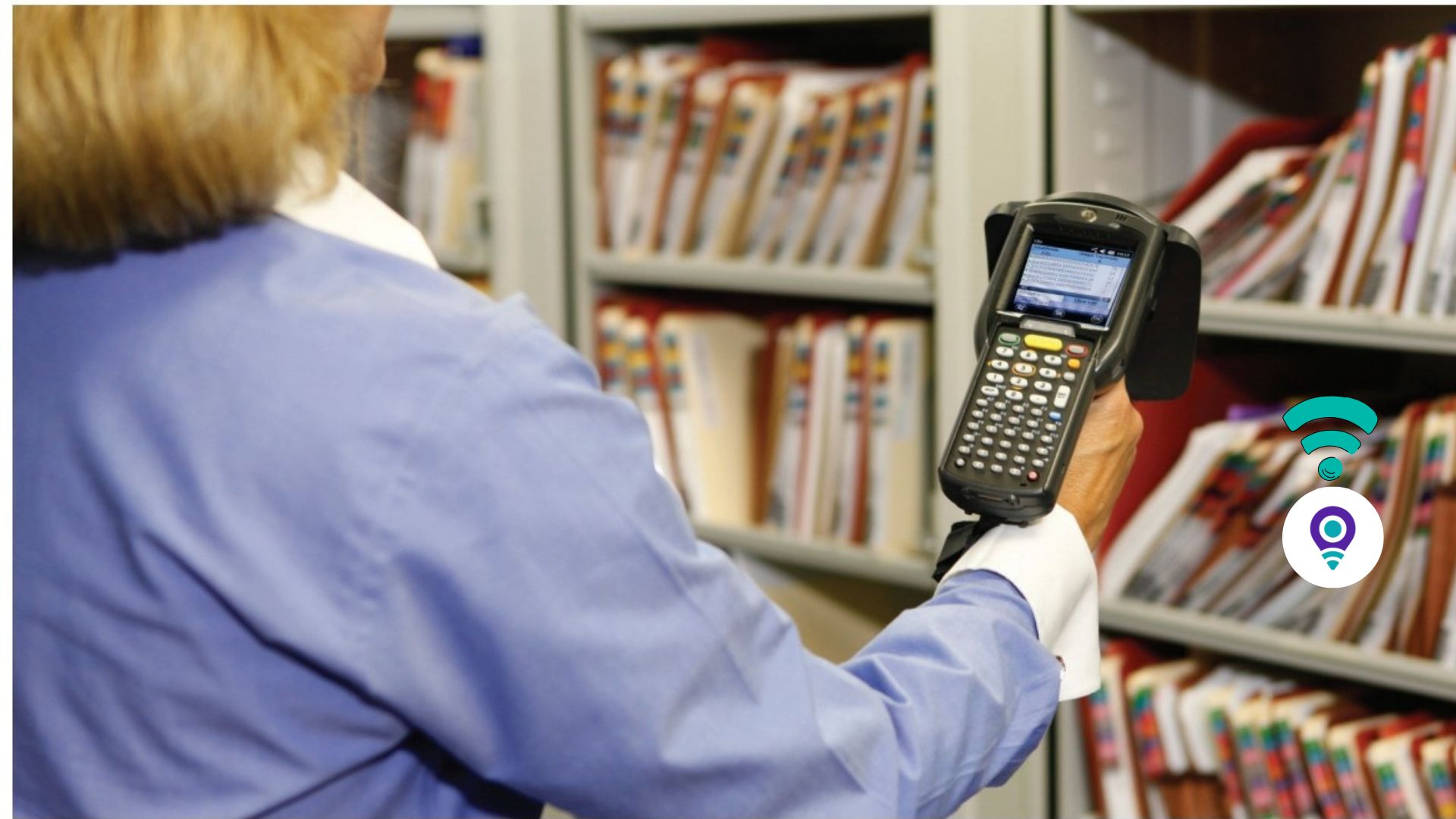
Barcodes provide cost-effective identification and are widely used for basic file tracking, while RFID enables real-time, non-line-of-sight tracking of files without manual scanning. When combined with centralized software, these technologies allow organizations to track file movement, access history, and storage status automatically.
The primary objective of barcode- and RFID-based file tracking is to streamline document workflows—from creation and active use to archiving and final disposition—while ensuring accuracy, organization, and immediate accessibility.
Core Components of File Tracking Systems
Centralized Software Platforms
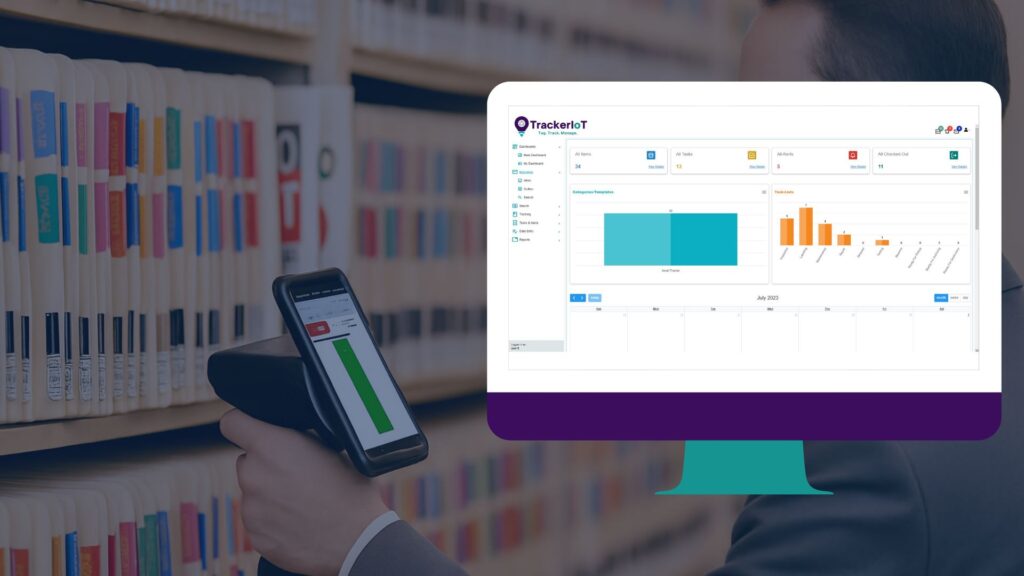
Powerful file tracking software manages all document data through a centralized database. These platforms provide organizations with real-time dashboards, reporting tools, and analytics that support compliance and governance requirements.
Key software capabilities include audit trails, user access controls, file classification, retention scheduling, archiving, destruction workflows, and permanent record management. By automating these processes, organizations reduce reliance on manual oversight and minimize the risk of compliance failures.
Tracking Technologies
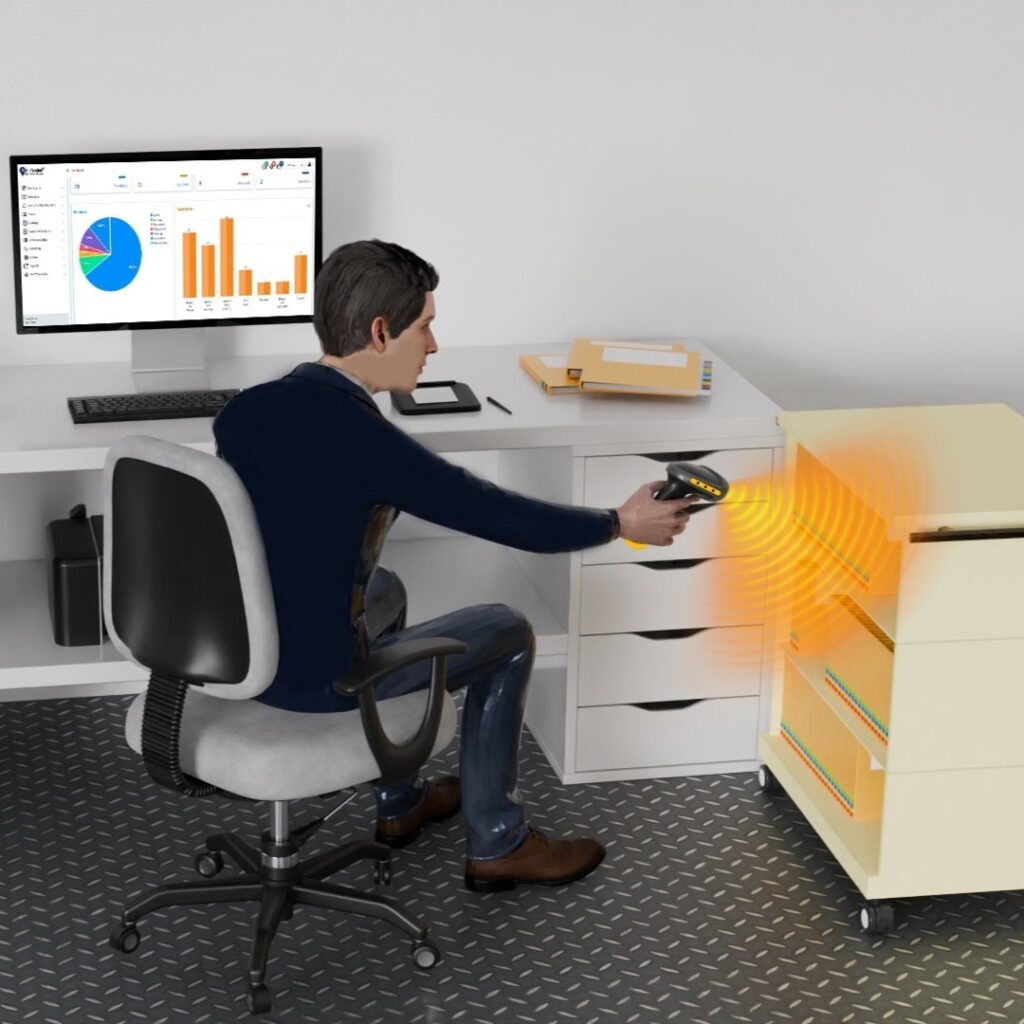
Barcode labels and RFID tags serve as the foundation of modern file tracking systems. Each tag or label uniquely identifies a document, enabling rapid detection and precise location tracking. RFID technology significantly reduces search time by allowing multiple files to be detected simultaneously, even when stored inside cabinets or boxes.
File tracking systems also support legal hold functionality, ensuring that documents placed on hold by legal or compliance teams cannot be moved, altered, or destroyed prematurely. This capability is essential for litigation readiness and regulatory compliance.
Built-In Security Measures
File tracking systems incorporate advanced security mechanisms to safeguard sensitive information. These include role-based access permissions, user authentication, encryption, and activity logging. Only authorized users can access or move specific files, ensuring sensitive records remain protected at all times.
The Role of File Tracking Systems in Regulatory Compliance

Enhanced Data Visibility and Control
File tracking systems provide organizations with clear visibility into what data exists, where it is stored, its current status, and who has access to it. This level of transparency is fundamental to regulatory compliance.
Automated discovery and classification of sensitive data help organizations identify high-risk records and apply appropriate controls. Maintaining a complete and accurate file inventory reduces compliance gaps and minimizes exposure to regulatory penalties.
Rapid Inventory of Active, In-Circulation, and Archived Files
File tracking systems enable organizations to rapidly inventory files across active storage areas, file rooms, and archives. RFID-based systems can scan thousands of files in seconds, providing instant confirmation of file presence and location.
This capability is essential during audits, inspections, or legal discovery processes, where organizations must demonstrate accurate records management without disrupting daily operations.
Streamlined File and Document Management
Compliance depends on consistent enforcement of retention and disposal policies. File tracking systems automate retention schedules and ensure documents are archived or destroyed in accordance with regulatory requirements.
They also support efficient management of Data Subject Access Requests (DSARs) by quickly identifying and retrieving relevant records. Automation improves audit readiness, reduces administrative burden, and allows organizations to respond to regulatory inquiries promptly and accurately.
Risk Mitigation and Breach Prevention
Effective file tracking significantly reduces the risk of data breaches by ensuring sensitive information is continuously monitored. Strict access controls, real-time tracking, and automated alerts prevent unauthorized handling or removal of files.
This level of protection is especially critical in highly regulated industries such as healthcare, finance, and legal services, where data exposure can lead to severe penalties and reputational damage.
Impact of File Tracking System Software on Data Security

Granular Access Controls
File tracking systems enforce role-based access permissions that control who can view, retrieve, edit, or move files. This aligns with data protection regulations that require limited and documented access to personal and confidential data.
By restricting access to only authorized personnel, organizations reduce insider threats and accidental data exposure.
Preventing Unauthorized File Movement with RFID
RFID-based file tracking systems actively prevent unauthorized movement of documents within or outside facilities. This is achieved by deploying RFID antennas, alarms, and cameras at strategic locations, including:
- File rooms and archive room doorways to automatically track files entering or leaving storage areas
- Elevators, stairwells, and emergency exits to detect unauthorized file movement
- Building exits to prevent the removal of documents, files, or archives through real-time alerts, visual indicators, and audible alarms
These measures create a secure perimeter around sensitive information and ensure immediate response to policy violations.
Comprehensive Audit Trails and Accountability
A defining feature of file tracking systems is the ability to maintain complete audit trails covering the full document lifecycle—from creation and access to transfer and final disposition.
Every interaction with a file is logged automatically, enabling audits and early detection of security anomalies. Many systems also integrate biometric authentication or electronic signature capture to validate custody transfers, strengthening accountability and evidentiary value.
Improved Incident Response and Risk Reduction
In the event of a security incident or suspected data breach, file tracking systems enable rapid investigation and response. Detailed access logs and movement histories allow organizations to identify affected files quickly and take corrective action.
By supporting faster containment and remediation, file tracking systems help reduce liability, insurance costs, legal exposure, and regulatory penalties.
Strategic Value of File Tracking System Software
Beyond compliance and security, file tracking systems contribute to overall operational efficiency and governance maturity. Organizations benefit from improved data accuracy, reduced administrative workload, and stronger stakeholder confidence.
As regulatory expectations continue to rise, file tracking solutions are becoming a strategic requirement rather than a discretionary investment.
Conclusion
Implementing file tracking system software is not simply a technology upgrade—it is a strategic necessity for organizations seeking stronger compliance and data security. By delivering enhanced visibility, automated document control, and robust security mechanisms, file tracking systems simplify modern data governance.
As organizations manage increasing volumes of sensitive information under tighter regulations, file tracking solutions will play an increasingly critical role in protecting data, improving efficiency, and strengthening trust with regulators, clients, and stakeholders.
Computerized, technology-driven file management is the foundation of effective compliance and data security in today’s information-driven world.