Track and Manage Documents, Files and Archives with File Tracking system
Total File Management Visibility.
Real-Time Tracking & Rapid Location of Files.
Complete Audit Trail Histories and Reporting
Improves operations, reduces costs and enhances customer service.
40+ Years of Successful, Proven Experience providing file management solutions

Proven implementations across high-profile government, legal, and commercial organizations worldwide.
Avoid the risks of custom development. Our robust platform is ready to configure to your exact needs today.
Additional credentials include being recipient of U.S. Patent for ‘Innovative Filing System Innovation’. In 1998, invented and developed the world’s first cloud-based document, folder and archive labeling system and gained #1 market share in the USA. Staff have received multiple credentials through the prestigious Institute of Certified Records Managers.
Our team has worked intimately with many government and commercial organizations worldwide, and our file tracking system has been continually enhanced based on what we learn through working with our customers and in meeting their broad requirements. All features that we add for any specific customer become core capabilities of IoTFileTracker for all future customers ‘out of the box’.
Our File Tracking System uses advanced RFID technology to help you:
Locate files instantly – no more manual searching or misplacement.
Track every movement – real-time updates for file transfers and retrievals.
Enhance security – automatic alerts for unauthorized file removal.
Cut operational costs – reduce time spent on audits and inventory counts.
Whether you manage legal archives, government records, or corporate documentation, our platform ensures your files are tagged, tracked, and always accessible, giving you full control and measurable cost savings.

Zone Tracking via Fixed RFID
Eliminate 'Where Is It?': Instantly know the last location of any file without manual check-in. Software even tracks the Direction-of-Travel.
Instant Location Guidance
Time Savings: Reduce file retrieval time from hours of searching to seconds of finding, boosting staff productivity by up to 40%.
Inventory in Seconds
Audit Readiness: Complete full-room audits in minutes, not days. Generate instant discrepancy reports for any file that is missing or misplaced.


Built for scale, built for security – built for your records.
IoTFileTracker Software Platform: The Intelligence of Records Management
Custom Templates: Define separate data screens and field requirements for different asset classes (e.g., Documents/Folios, Active Files, Archive Boxes, Personnel).
Data Entry Control: Utilize text entry, date pickers, drop-down lists, and Yes/No checkboxes. This enforces data precision, preventing the manual errors common in spreadsheets.
Hierarchical Relationships: Easily establish and track parent-child relationships (e.g., Document A is inside File Folder B, which is inside Archive Box C).
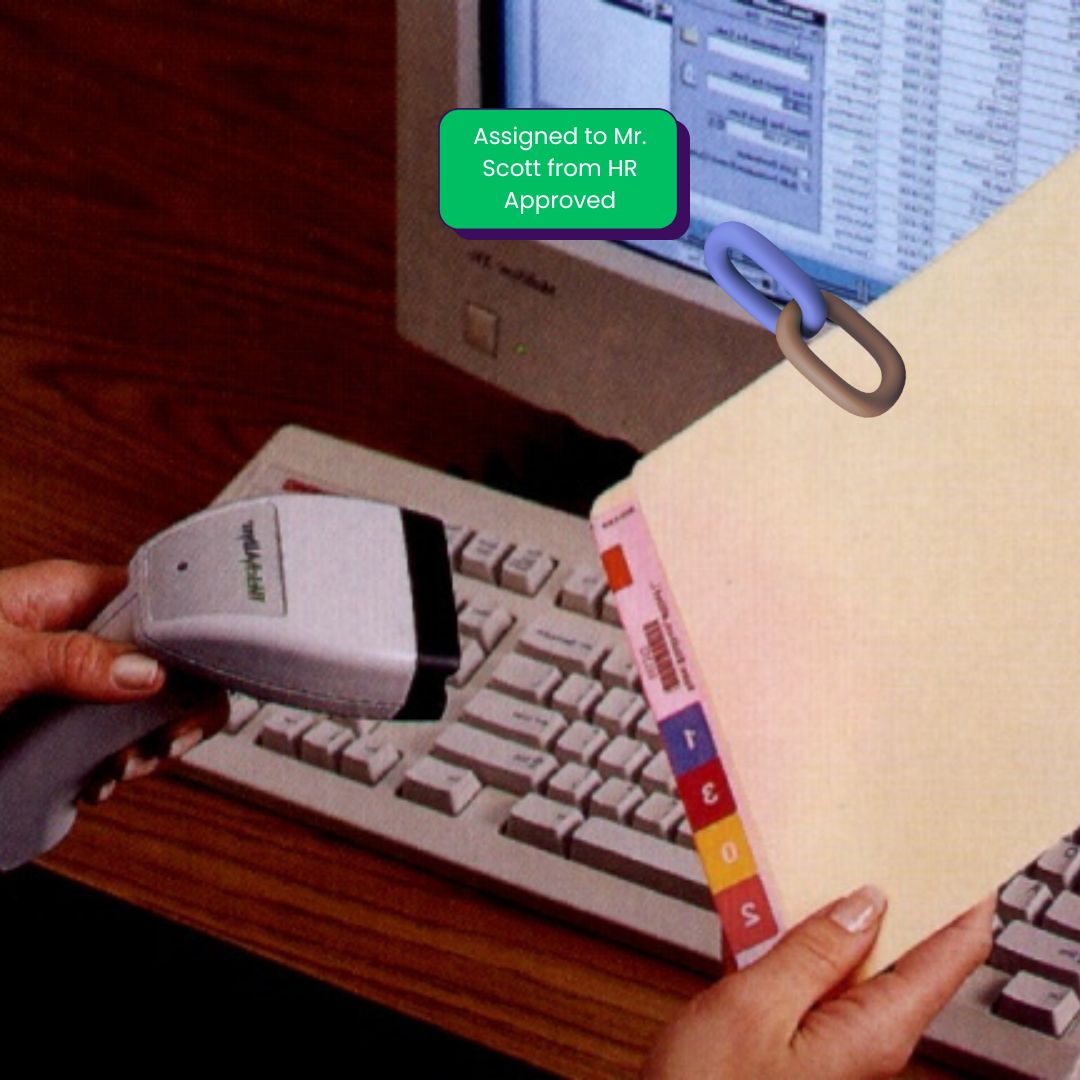

Complete document, file and archives visibility
Barcode File Tracking: Accurate and Rapid File Management Processes
Barcode technology represents the most established, reliable, and cost-effective method for establishing an auditable chain-of-custody for physical files and archives. As the entry point into automated records management, Barcode File Tracking system significantly reduces human error, slashes file retrieval times, and enforces accountability across your entire organization.
Barcode file tracking systems connect documents, files and archives to a powerful digital database via a simple point-and-scan action. Software and barcoding replaces slow, error-prone manual operations with fast, accurate barcode scanning for check-out/check
in, inventories and archiving.


Transcendent file management automation through passive, automated RFID (radio wave) technology.
RFID (radio wave) Technology: Records Management and File Tracking
RFID file tracking system is most importantly based on the ability to detect many tags/folders/documents/archives all-at-once from-a-distance of up to 50’.
Most importantly, how do you locate files when they are missing or needed? Staff go through files and archives one by one with hands and eyes in storage and in circulation? Imagine being able to enter a file ID to a mobile scanner that transmits radio waves 25’+ so that you can rapidly locate needed files…always…fast and dependably. Being able to rapidly located needed files is a primary benefit of RFID technology.
How do you track files as they move from person-to-person and/or place-to place? RFID sensors can be placed on desks, in offices, along hallways or anywhere within facilities for real-time tracking of file locations. Mobile RFID scanners have a detection distance of 25’+, enabling rapid tracing/inventory of files.
Is the information in files confidential…do you need to prevent unauthorized file movements within or when exiting facilities? Utilize RFID sensors and alarms at choke-points and exit-points to prevent the unauthorized movement or removal of files/archives.

RFID Check-in/Check-Out

Trace-Inventory Files-in-Circulation

Automated Door Tracking of
Files & Archives

Track Files on Desks and in Offices

Automated In-Facility Tracking

Prevent Unauthorized File Moves and Exits


Rapidly Locate Missing-Needed Files from 25’+ distance with RFID Radio Wave Technology
Rapidly Locate Missing Needed files.
How do you locate files when they are missing or needed? Staff go through files and archives one by one with hands and eyes in storage and in-circulation? Imagine being able to enter a file ID or archive # to a mobile scanner that transmits radio waves 25’+ so that you can rapidly locate needed files and archives…always…fast and dependably. Being able to rapidly locate needed files is a primary benefit of RFID technology.
Cold-Warm-Hot indicators identify needed files from 25’/8 meters+:
- Color graph indicating cold-warm-hot proximity to a needed file, with graph size and color changing as the mobile scanner is nearer or further from needed files
- Scanner beeps slower or faster based on proximity of file to scanner, the closer to a needed file, the faster the scanner beeps
- Numerical index 0 to 100 indicates proximity of file to scanner, the higher the number, the closer the scanner is to the file


One platform for the integrated management of physical and electronic documents.
Electronic Document Management System (EDMS): Blending Physical and Digital Records
In today's highly regulated industries—legal, healthcare, and government—the reality is that critical documents (signed originals, evidence, patient histories) must exist in both physical form (for legal integrity and authentication) and electronic form (for search, collaboration, and remote access).
IoTFileTracker is the only solution that seamlessly manages this Hybrid Records Environment, combining world-class physical asset tracking (Barcode/RFID) with a robust, feature-rich Electronic Document Management System (EDMS).


File folder design, colour-coding, misfile prevention: Document Lifecycle management
Storage & Supplies: The Physical Foundation of File Management
We provide expert consultation and high-quality products to ensure your file room and archive storage systems are maximized for capacity, speed, and seamless integration with our tracking technology.
FAQ's
How does a paper file tracking system improve record retrieval?
A paper file tracking system uses barcode or RFID labels on physical folders so when these files are scanned, the system immediately updates their current location in the database. This eliminates manual searching and speeds up retrieval significantly.
How does a file tracking system in government departments benefit public records management?
In government environments, a file tracking system in gov departments enables:
- Transparent tracking of case files and public records
- Compliance with retention policies
- Faster branch-to-branch workflows
This enhances accountability and reduces processing delays.
What makes a government file tracking system critical for compliance?
A government file tracking system enforces strict audit trails, user access permissions and retention scheduling to comply with legal and regulatory requirements — ensuring public records are secure and traceable.
Why is an office file tracking system important for internal operations?
An office file tracking system cuts time spent locating forms or records, reduces misplacement, improves accountability for file borrowers, and automates routine tasks like check-in/check-out.
How does an archive file tracking system manage long-term storage?
An archive file tracking system catalogs inactive files and boxes with RFID/barcode tags so they can be quickly identified, located, and tracked, even in deep storage ensuring preservation and controlled access.
Are there systems that track file uploads and permissions?
Yes. IoTFileTracker advanced file tracking and management system software not only tracks physical tag movements but also traces digital file uploads and maintains permission controls so only authorized users can access, modify, or share documents.
What is the difference between a file tracker and a traditional filing method?
A file tracker uses automated scanning and software to log each file’s status and location digitally, while traditional file tracking methods rely on manual logs or memory, which are error-prone and time-intensive.
What is legal file tracking and how does it help law firms?
Legal file tracking manages case files, evidence, motions, and discovery documents securely and efficiently, ensuring that attorneys always know the current location, access history, and custody of legal records.
How does a paper file tracking system improve record retrieval efficiency?
A paper file tracking system assigns a unique barcode or RFID identifier to each physical file. The identifier is linked to a centralized database containing metadata such as department, file owner, status, and storage location.
When a file is scanned using a reader, the system updates its location and transaction history in real time. Indexed search functionality enables users to locate files by file number, name, or category. This reduces manual dependency, minimizes errors, and decreases retrieval time.
What features IoTFileTracker file tracking system software include?
File tracking system software should include:
- Real-time tracking visibility
- Check-in/check-out workflows
- Audit trail history
- User access control
- Reporting and compliance dashboards
- Integration with barcode/RFID hardware
These features help automate and secure file movement and management.
Representatives Projects and Customers





One Tracking Ecosystem. Infinite Possibilities.
Whether you’re tracking weapons in an armory, files in an archive, assets in production, personnel in the field, or inventory in a warehouse, Tracker IoT unifies them all.
By combining precision tracking with real-time analytics, compliance assurance, and seamless integration, Tracker IoT becomes the central nervous system of your operations — helping you achieve greater visibility, efficiency, and control than ever before.