Enterprise Barcode Records Management & Tracking Solutions
Speed up operations, ensure absolute accuracy, and mitigate risk with the industry’s most advanced barcode file tracking and RFID ecosystem.
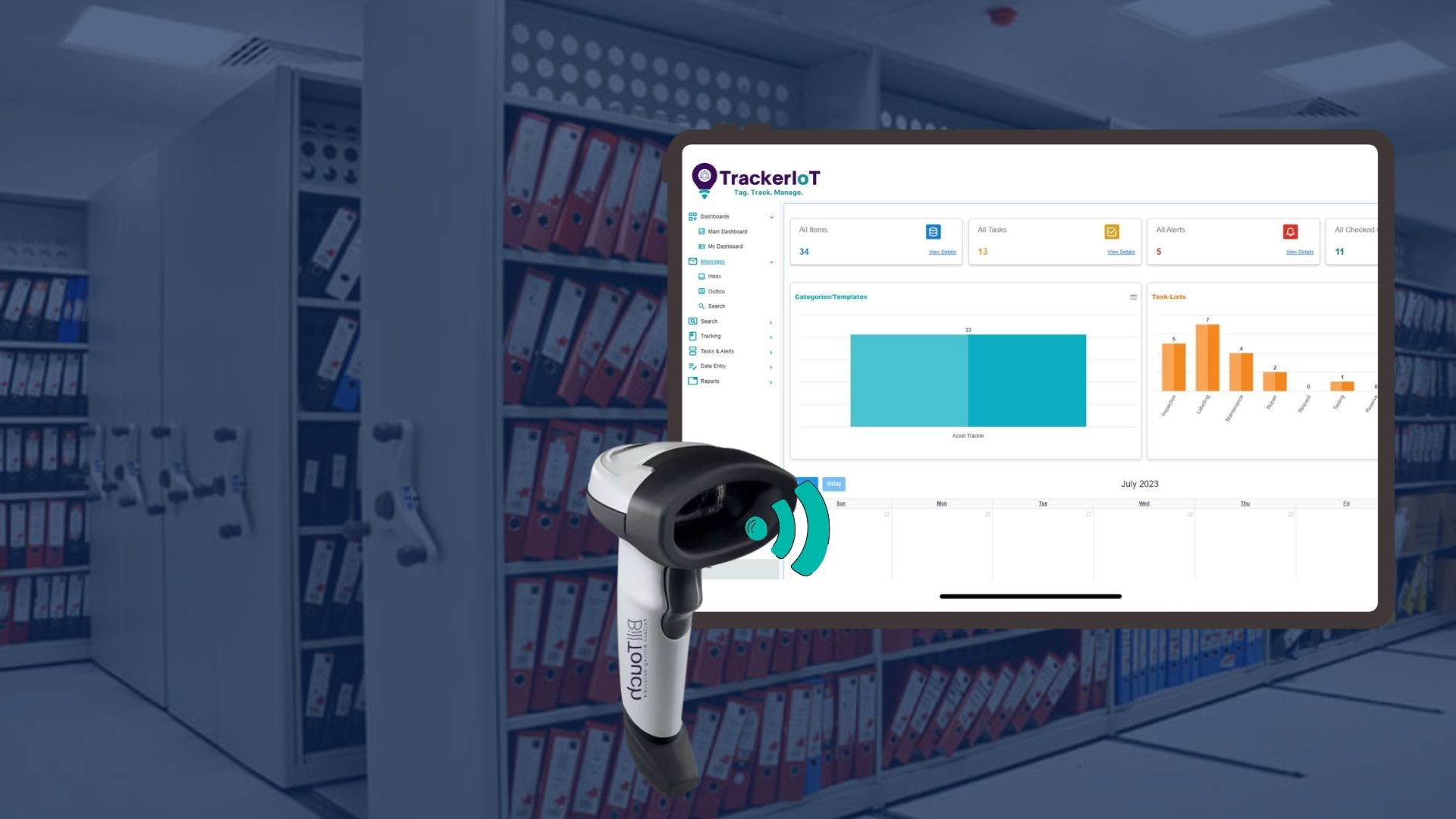
Computerized Records Management Software
At the heart of FileTrackingIoT lies a sophisticated, enterprise-grade architecture. We move beyond the static limitations of spreadsheets and legacy logbooks to create a dynamic, living inventory of your physical assets. Our centralized database is engineered for zero-latency performance, capable of managing millions of records across multiple global sites without compromising speed or stability.
Holistic Data Import and Entry
Parent-Child Hierarchies
- The Document (Child): Individual papers or correspondence.
- The File Folder (Parent): The folder containing the documents.
- The Archive Box (Grandparent): The storage unit containing multiple folders.
- The Shelf/Location: The physical space housing the box.
This relational database structure means that when you move a "Parent" (like a box), the software intelligently understands that all "Children" (folders and documents) inside that box have moved with it. This eliminates the need to scan every single item during bulk moves.
The IoT Integration
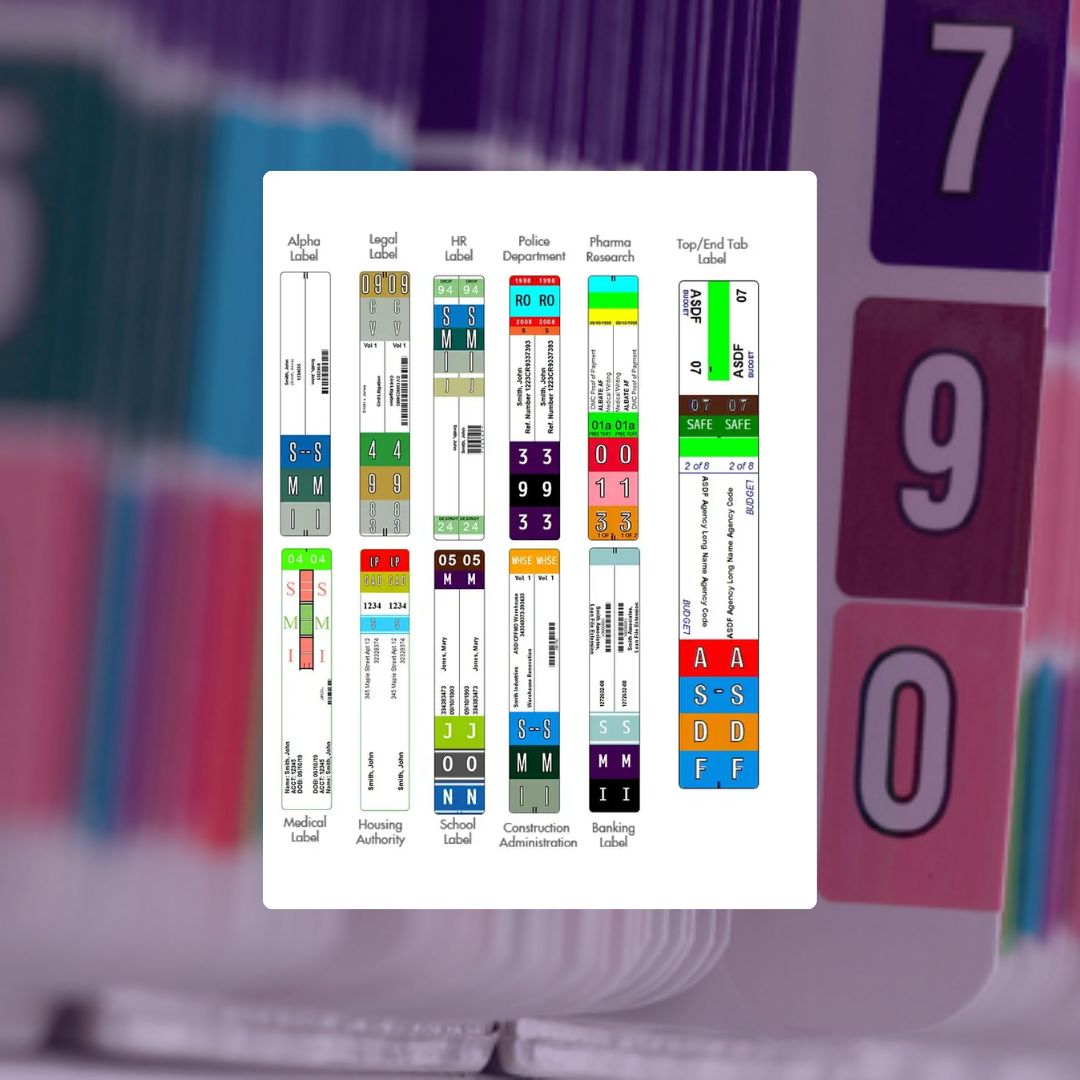

The DNA of Your Filing System
Advanced Barcode Labeling Technology
A tracking system is only as robust as its input method. If the label is unreadable or the data is insufficient, the system fails. FileTrackingIoT offers the market’s most versatile labeling engine, transforming standard manila folders into “Smart Assets.”
On-Demand Label Versatility
- Symbology Support: We support all major barcode standards, including 1D (Code 39, Code 128) for standard scanning and 2D (DataMatrix, QR Codes) for holding high-density data in small spaces.
- Hybrid Printing: High-Volume: Utilize thermal transfer roll printers for rapid, ink-free printing of thousands of sequential labels. Office-Standard: Use standard laser or inkjet printers with sheet labels for on-demand, day-to-day folder creation.
- Durability: Our labels are designed to last the lifecycle of the record. We support durable synthetic materials that resist fading, peeling, or tearing, ensuring the barcode remains readable even after 20 years in deep storage.
Strategic Placement & Sub-Divisions
- Ergonomic Placement: Labels can be configured for End Tabs (shelf filing), Top Tabs (drawer filing), or flat-front application.
-
Granular Sub-Division: Complex files (like Medical or Legal records) often have multiple sections. We allow for “Sub-Folder” labeling (e.g., File 1001-A for “Labs”, 1001-B for “Insurance”). This allows you to track the movement of just part of a file if necessary.
The Psychology of Efficiency: Color-Coded Barcoding
-
Visual vs. Cognitive Processing: Reading alphanumeric text (e.g., “File 14920”) is a “cognitive” process—it is slow and prone to fatigue. Recognizing a pattern of colors is “visual”—it is instant and subconscious.
-
The Color Algorithm: Our system assigns a unique, high-contrast color to every digit (0–9) and letter (A–Z).
-
Speeding Up Retrieval: When an employee looks for file “34…”, they don’t read numbers. They scan the shelf for the Orange and Green band. This reduces retrieval time by up to 40%.
-
The Self-Correcting Shelf (Misfiles): This is the ultimate failsafe. A filing system is ruined when files are put back in the wrong place. With color-coding, a misfile screams for attention.
Proven Impact: How Industry Leaders Utilize FileTrackingIoT
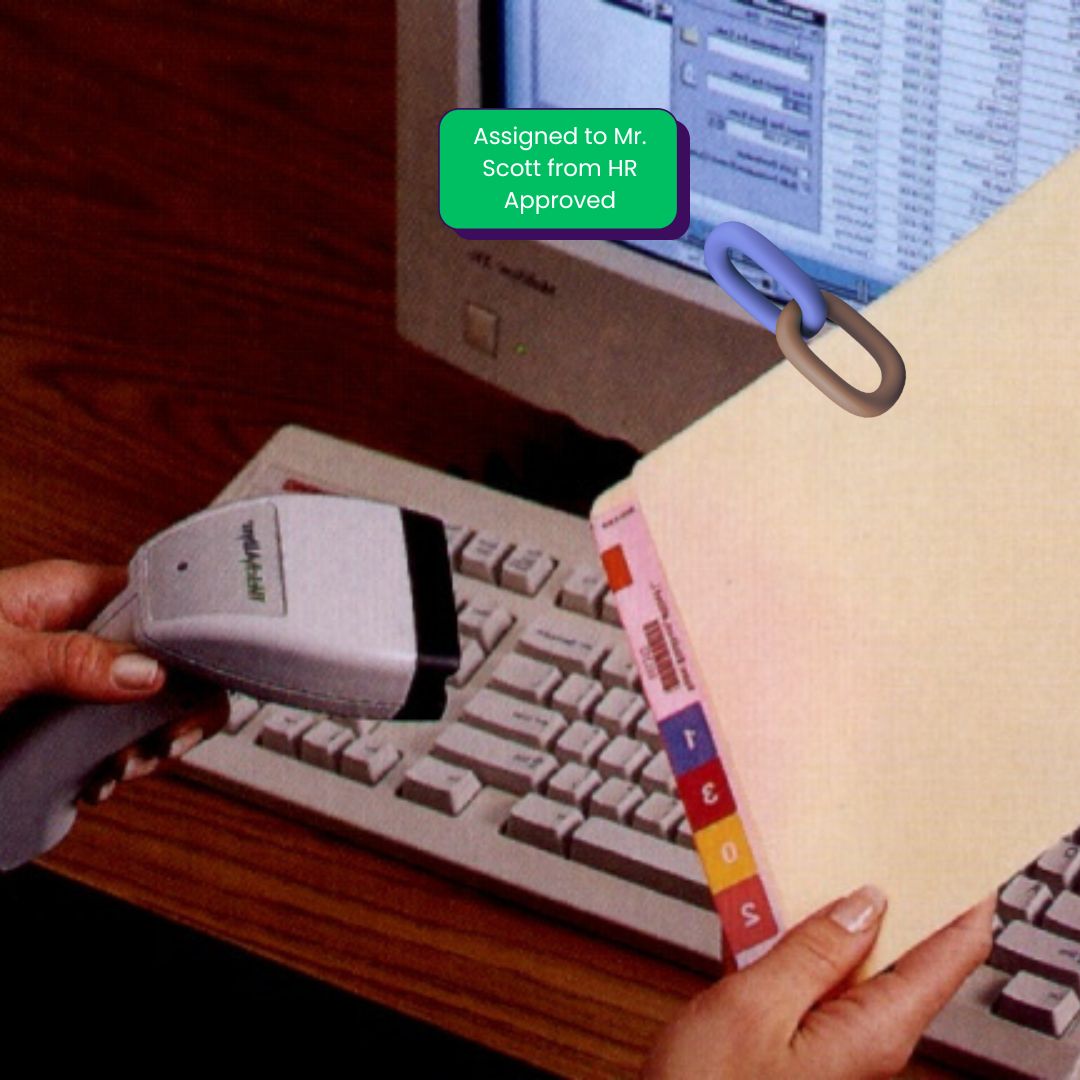
Chain of Custody with complete accountability
Check-In, Check-Out, and Chain of Custody
The integrity of any records management system relies entirely on accountability. If you cannot prove where a file is, who has it, and when it was moved, your system has failed. FileTrackingIoT transforms this vulnerability into a strength.
We replace manual logbooks and spreadsheet inputs with an unalterable, forensic-level digital audit trail. Every interaction with a record—whether it is a viewing, a transfer, or a permanent move—is timestamped and logged against a specific user ID. This ensures total transparency and meets the strictest compliance standards for chain-of-custody.
Streamlined Check-Out Protocols
When a file leaves the central library, it must be accounted for.
Scan: The user scans the folder barcode.
Assign: The user scans the “Destination Barcode” (a badge or location tag) or selects the user from a drop-down list.
Batch Processing: Need to check out 50 files for a court case? Scan them in rapid succession as a single transaction.
Streamlined Check-Out Protocols
Returning files is just as fast. Scanning the folder automatically updates its status to “In Repository” or its specific shelf location. All transfers update the file locations in the database instantly, ensuring that if someone searches for the file five seconds later, the location data is accurate.
Trace and Inventory: The Mobile Advantage
Finding missing files is the bane of records management. With FileTrackingIoT mobile scanners:
Location Labels: We place barcode labels on office door frames, desks, and shelves.
The “Sweep”: Staff can walk through an office scanning the “Location Label” (e.g., “John Doe’s Desk”) and then scan every file on that desk. The database immediately updates the location of those files to “John Doe’s Desk.”
Inventory Reconciliation: Regularly scan shelves to reconcile the physical inventory against the database. The system will alert you to missing files or files that are on the wrong shelf.
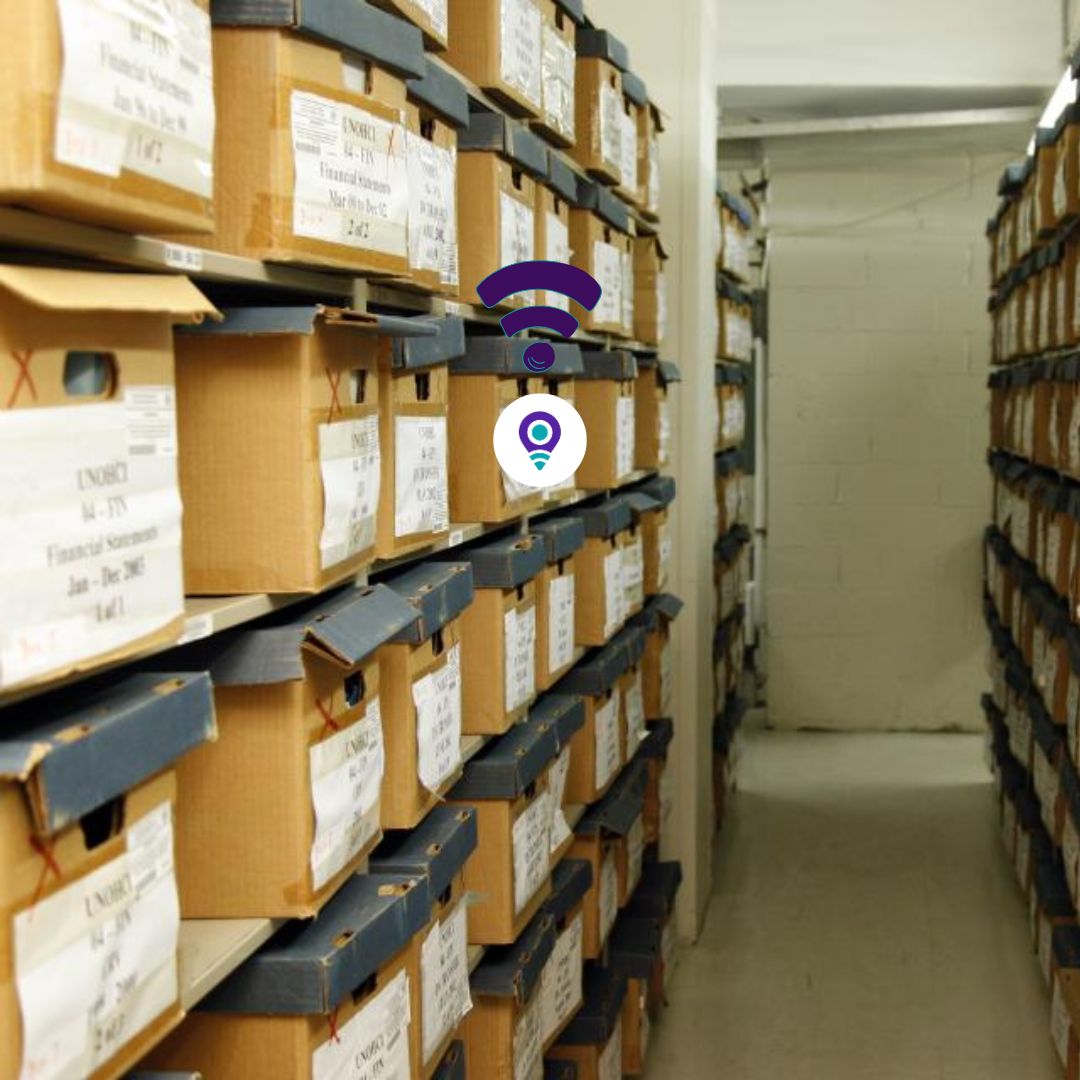
Find. Retrieve and Archive.
Transferring files to archives
Records are living assets with a distinct lifespan. They begin as high-touch “Active” files, transition to low-touch “Storage” or “Archival” records, and eventually reach their end-of-life “Destruction” date. Managing this transition manually is a recipe for disaster—files get lost in transit, storage costs balloon with obsolete records, and companies face liability for keeping data longer than legally allowed.
FileTrackingIoT manages the entire “cradle-to-grave” lifecycle seamlessly. We provide a structured digital governance framework that ensures you know exactly what is in your archives, where it is located, and when it needs to be destroyed.
Digitizing the Archive Transfer Process
Transferring files to offsite storage or a basement archive is the single most common point of failure in record management. “Box lists” taped to the side of cardboard cartons often don’t match the actual contents.
- Step 1: Box Association (The Container): The process begins by creating a digital container. Users scan a unique Archive Box Barcode. The system recognizes this as a “Parent” object—a vessel that will hold other records.
- Step 2: Rapid Association (The Fill): As users pack the box, they scan the barcode of every individual file folder being placed inside.
- Step 3: The “Parent-Child” Link: This is the system’s most powerful logic. FileTrackingIoT creates a permanent, dependent link between the box and the files. The Benefit: You no longer need to scan 50 individual files to move them. You simply scan the Box Barcode, and the system understands that all 50 “Children” files inside have moved with it.
- Step 4: Precise Location Mapping: Finally, the box is placed in the archive. The user scans the Shelf Location Barcode (e.g., “Aisle 4, Shelf B”) and then the Box Barcode. The database is instantly updated: users can now search for a specific file and be directed not just to the room, but to the exact box on the exact shelf.
Intelligent Retention Scheduling
Keeping files forever is not a strategy; it is a liability. Every industry has legal retention guidelines (e.g., GDPR, HIPAA, Sarbanes-Oxley) dictating how long a record must be kept—and when it must be destroyed.
-
Automated Rules Engine: FileTrackingIoT allows you to set retention schedules based on file type. For example, you can configure “Employee Tax Records” to have a retention period of “7 Years from Creation.”
-
Proactive Alerts: You don’t need to run reports manually. When a box or file hits its expiration date, the system proactively flags it. Administrators receive alerts regarding which boxes are eligible for destruction, preventing the accidental indefinite storage of expired liabilities.
-
Space Optimization: By systematically identifying and destroying expired records, you free up valuable real estate and reduce offsite storage fees.
"Needle in a Haystack" Retrieval
The ultimate test of an archive is retrieval. When a 5-year-old file is urgently needed for an audit, you cannot afford to rummage through hundreds of boxes.
-
Search & Retrieve: Users type the file name or number into the software.
-
Targeted Direction: The system provides the precise coordinates: Archive Room B > Aisle 12 > Shelf 3 > Box #9942.
-
Refile Logic: Once the file is returned to storage, it doesn’t have to go back to the exact same spot. It can be placed in any available box or open shelf space, and a quick scan updates its new location. This “Chaotic Storage” capability maximizes shelf density and eliminates the need to keep empty spaces reserved for specific alphabetical ranges.
Representatives Projects and Customers